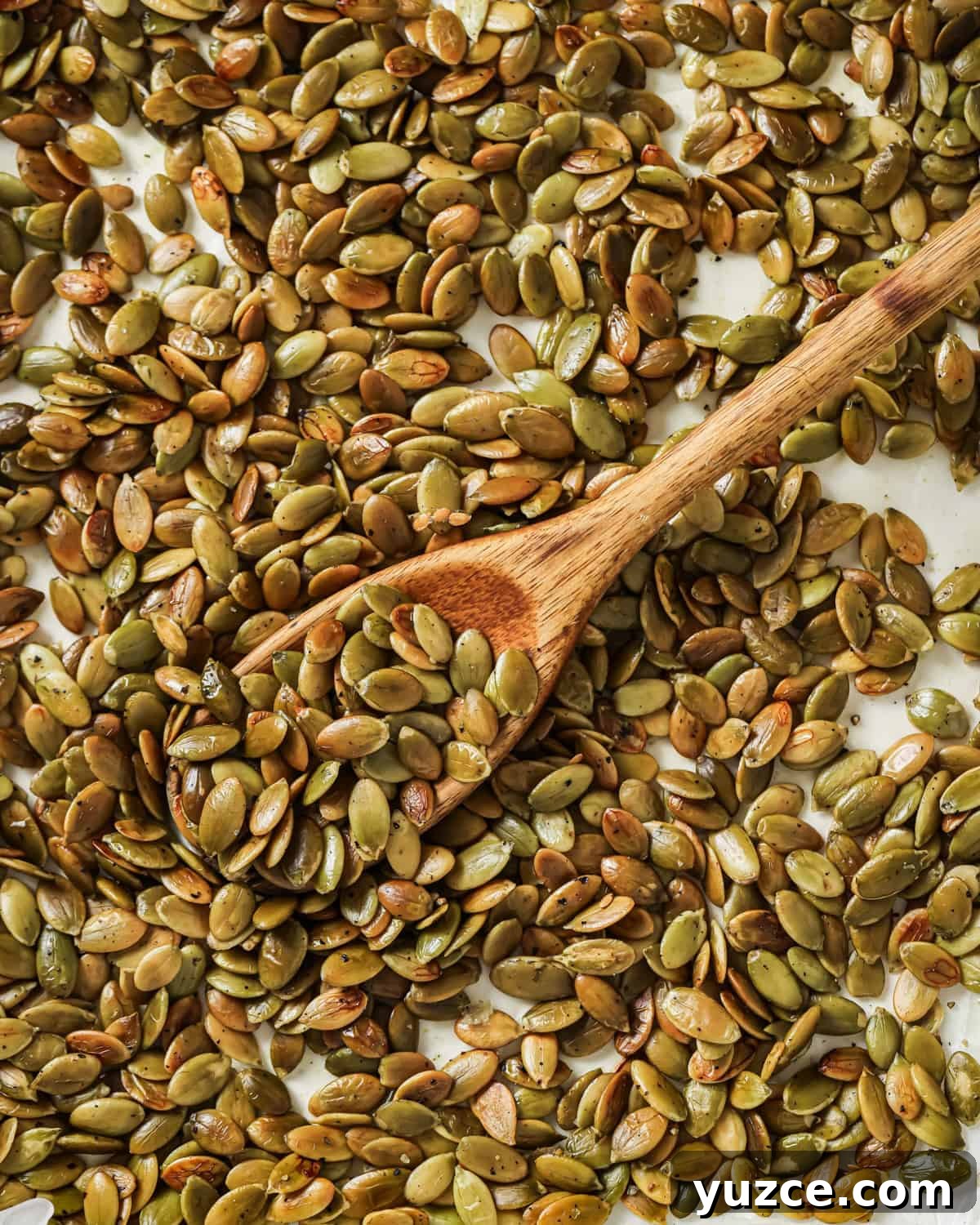
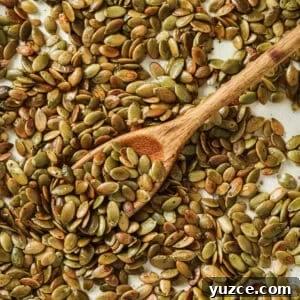
These roasted pepitas showcase the power of simplicity: just two core ingredients (plus salt and pepper) and about 15 minutes of mostly hands-off oven time yield a nutrient-dense, salty-crunchy snack.
Scatter a handful over grain bowls, brighten a salad with their crunch, or use them to finish creamy soups and roasted vegetables. They’re also perfect for snacking straight from the jar when you want something satisfying and crunchy.
In this post:
- Ingredient notes
- Step-by-step instructions
- Tips for making roasted pepitas
- How to use these roasted pepitas
- Frequently Asked Questions
- Roasted Pepitas Recipe
One of my meal prep MUSTS
I care deeply about texture—so much that I devoted a chapter to it in my cookbook. Texture brings variety and interest to food, and crunch is a sensation our brains are wired to enjoy.
The crisp bite of these roasted pepitas keeps you coming back for more, and their nutrient profile means your body benefits too.
I include these high-protein, iron-rich seeds in my meal prep every other week, alternating with roasted walnuts for variety.
Below you’ll find ideas for enjoying them, but feel free to reach for them anytime you want a salty, crunchy pop in a dish.
Ingredient notes
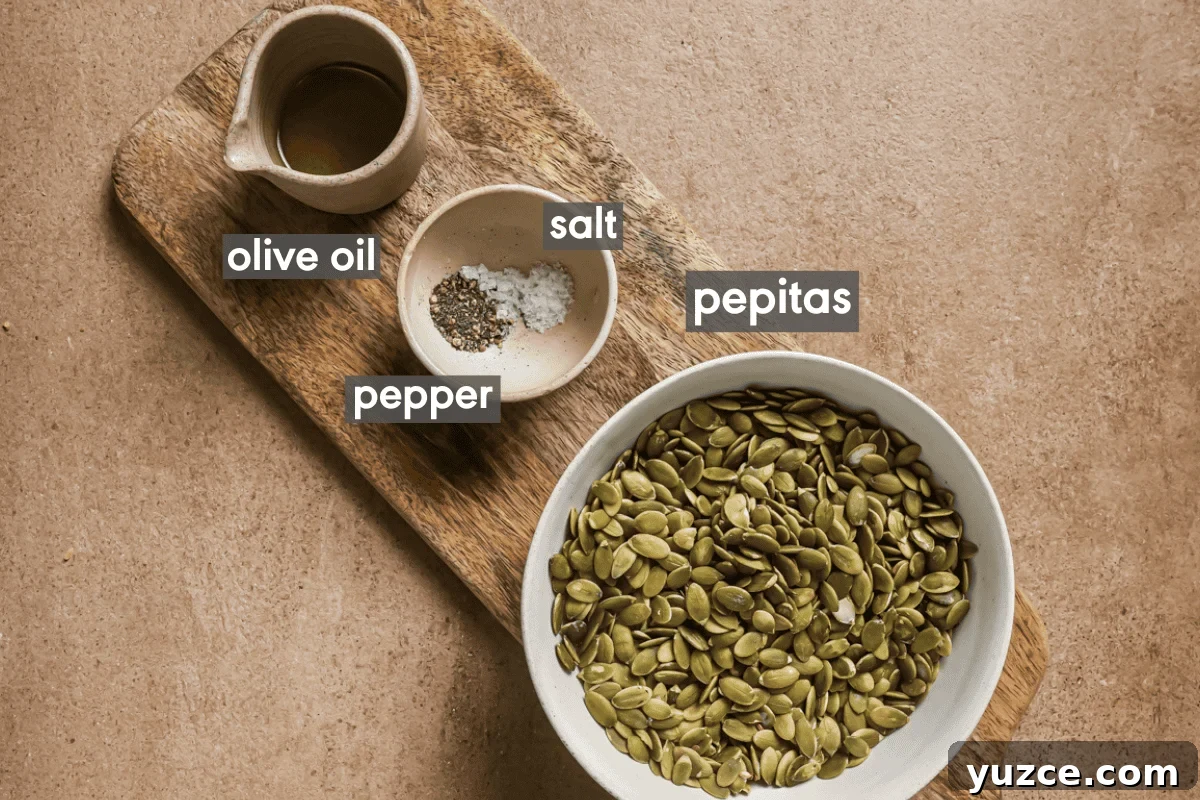
Pepitas
Pepitas are pumpkin seeds from specific thin‑skinned, hulless pumpkin varieties. Unlike the hulled seeds from carving pumpkins, pepitas grow without a hard shell.
They offer a strong nutritional profile, including protein, fiber, magnesium, antioxidants, and heart‑healthy polyunsaturated fats.
Shopping Tip
Pepitas are widely available, but premium Styrian (European) pumpkin seeds have an exceptional flavor. They can be darker in color, which makes visual doneness harder to judge, but their taste is worth seeking out.

Extra virgin olive oil
A light coating of oil before roasting keeps the seeds from drying and helps the salt and pepper stick. Use a very small amount—about 2½ teaspoons for 1½ cups of pepitas.
Salt and pepper
Keep the seasoning simple. Salt and freshly cracked black pepper are all you need to highlight the pepitas’ flavor without compromising their crispness.
Step-by-step instructions
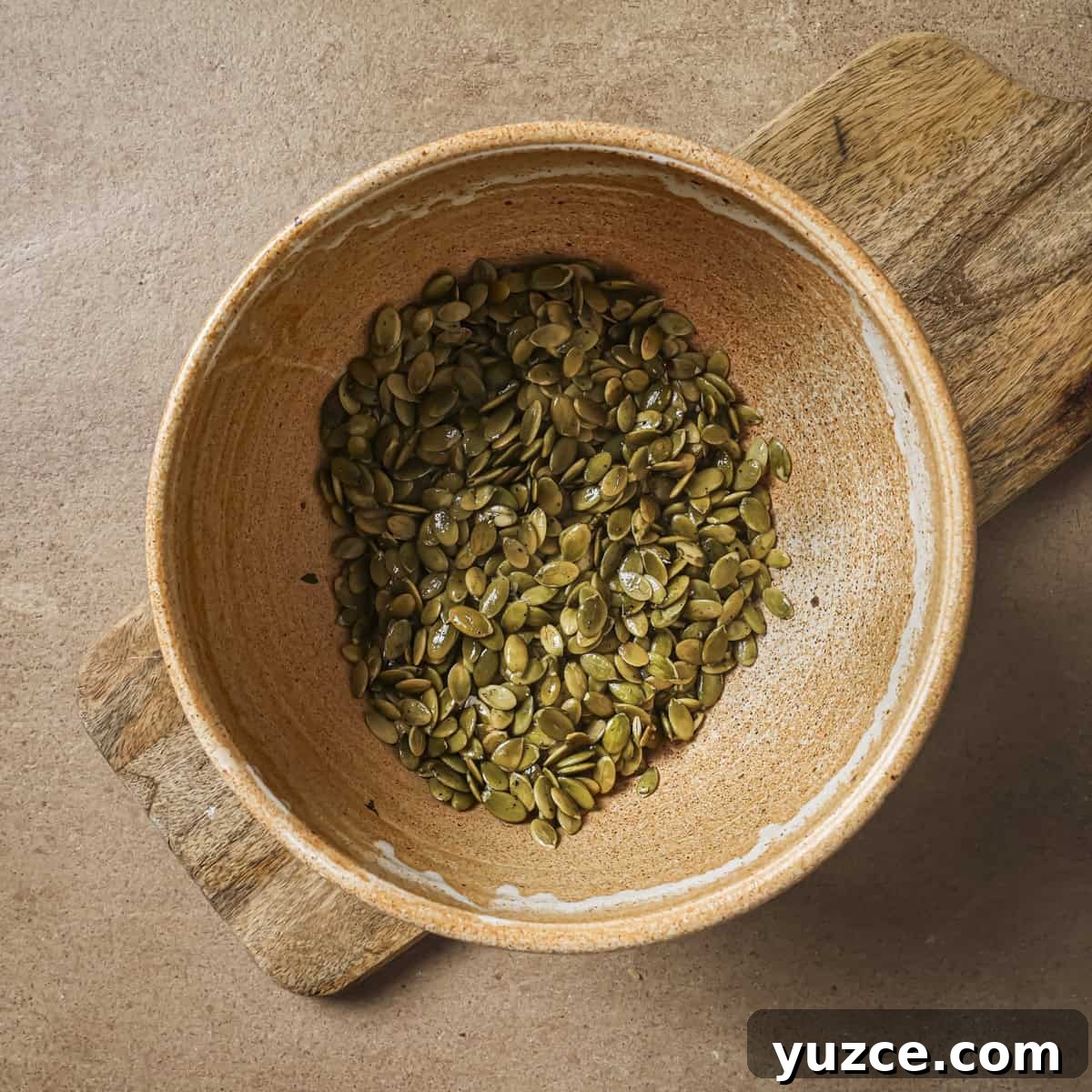
- Combine the pepitas, olive oil, salt, and freshly cracked black pepper in a bowl and toss to coat evenly.
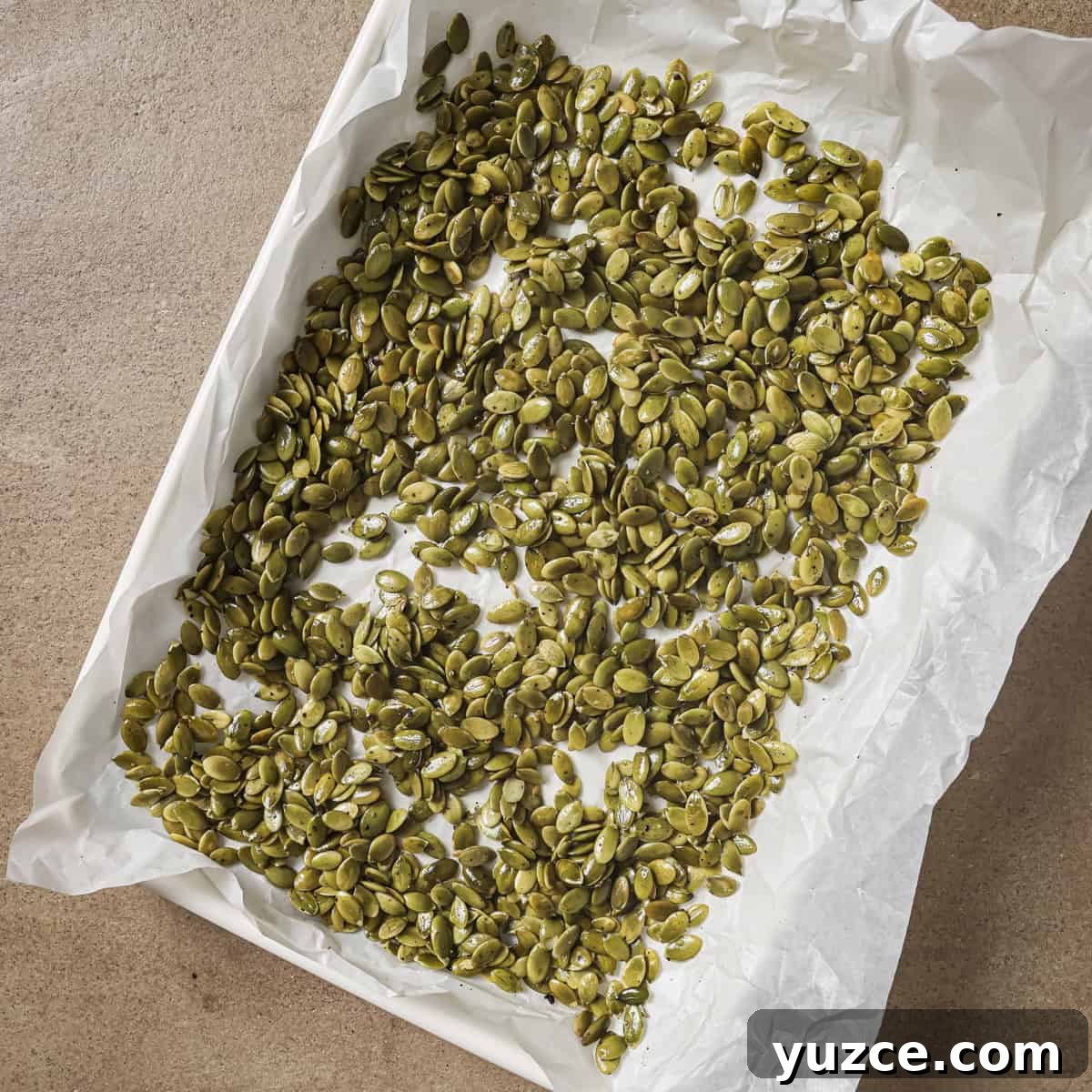
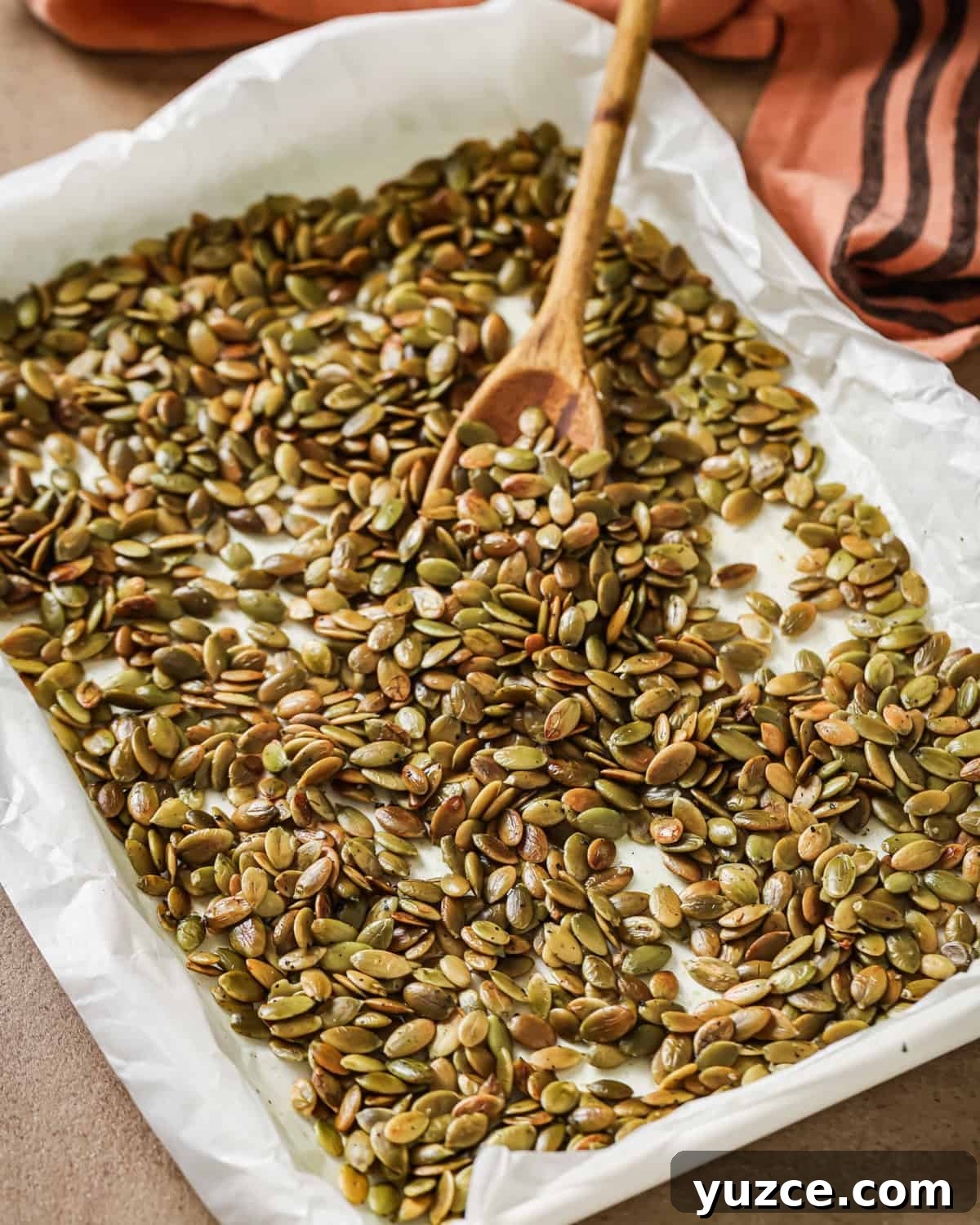
- Spread the seeds in a single layer on a parchment‑lined baking sheet for easy cleanup.
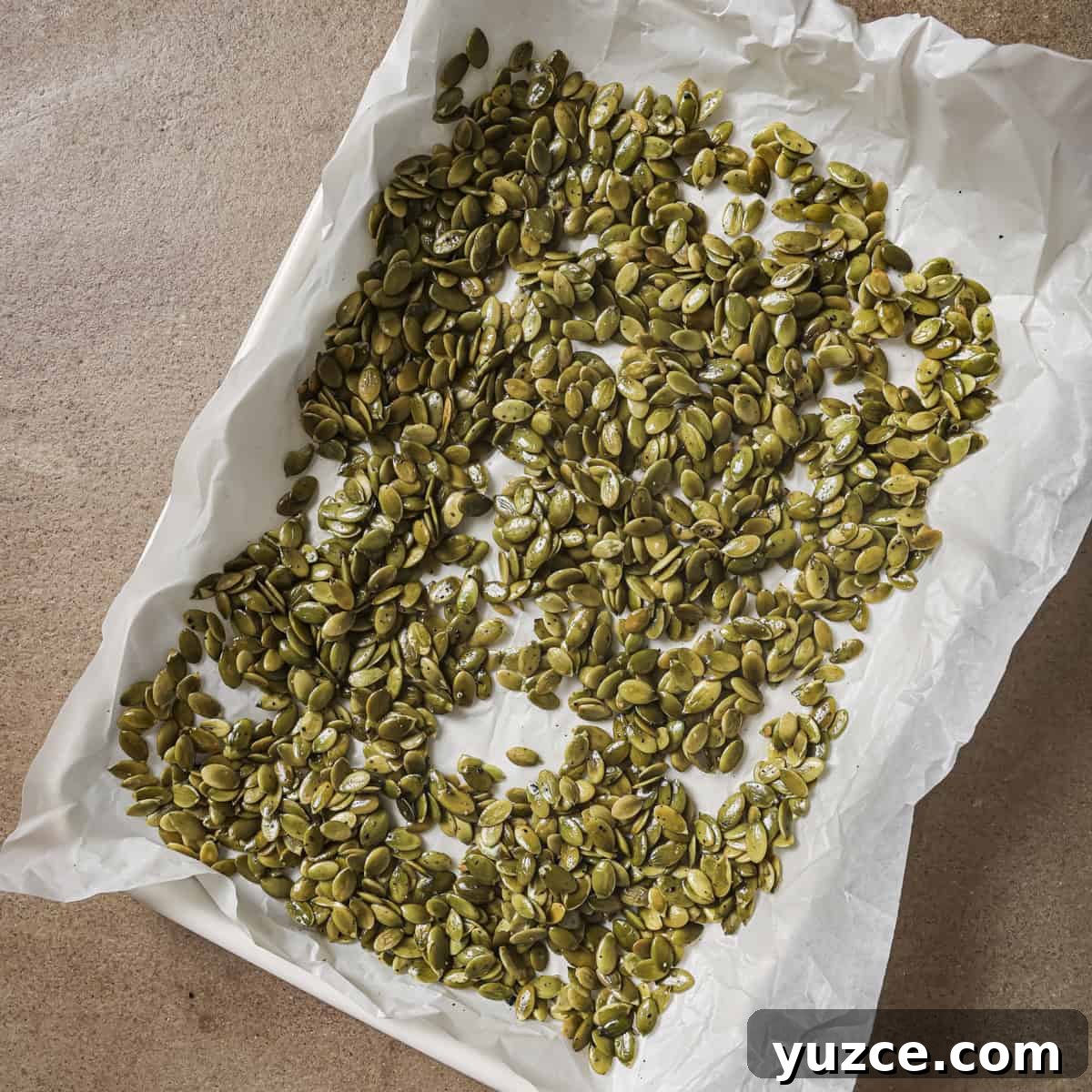
- Roast on the middle rack at 350ºF / 175ºC for 8 minutes, then toss the seeds to promote even browning.
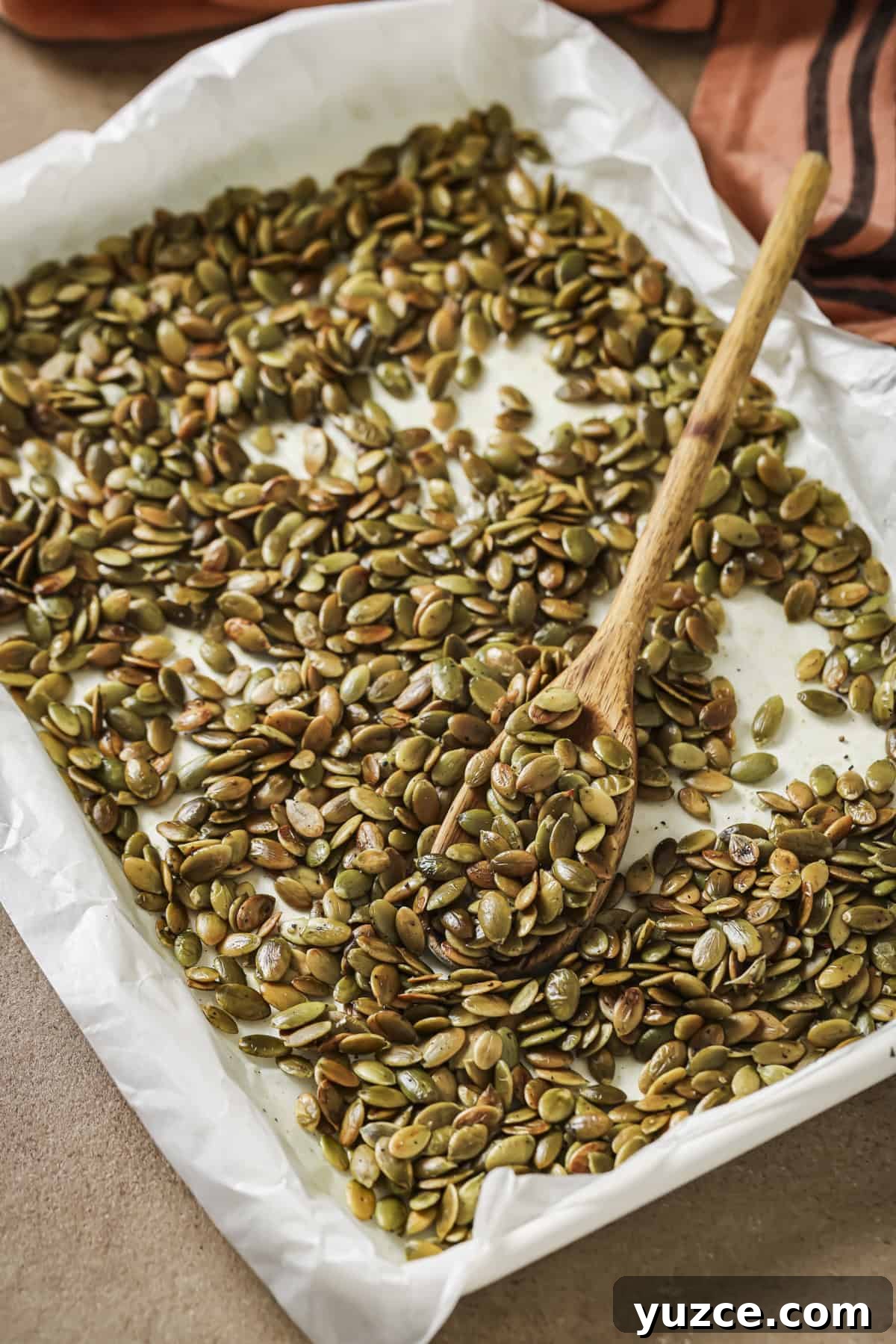
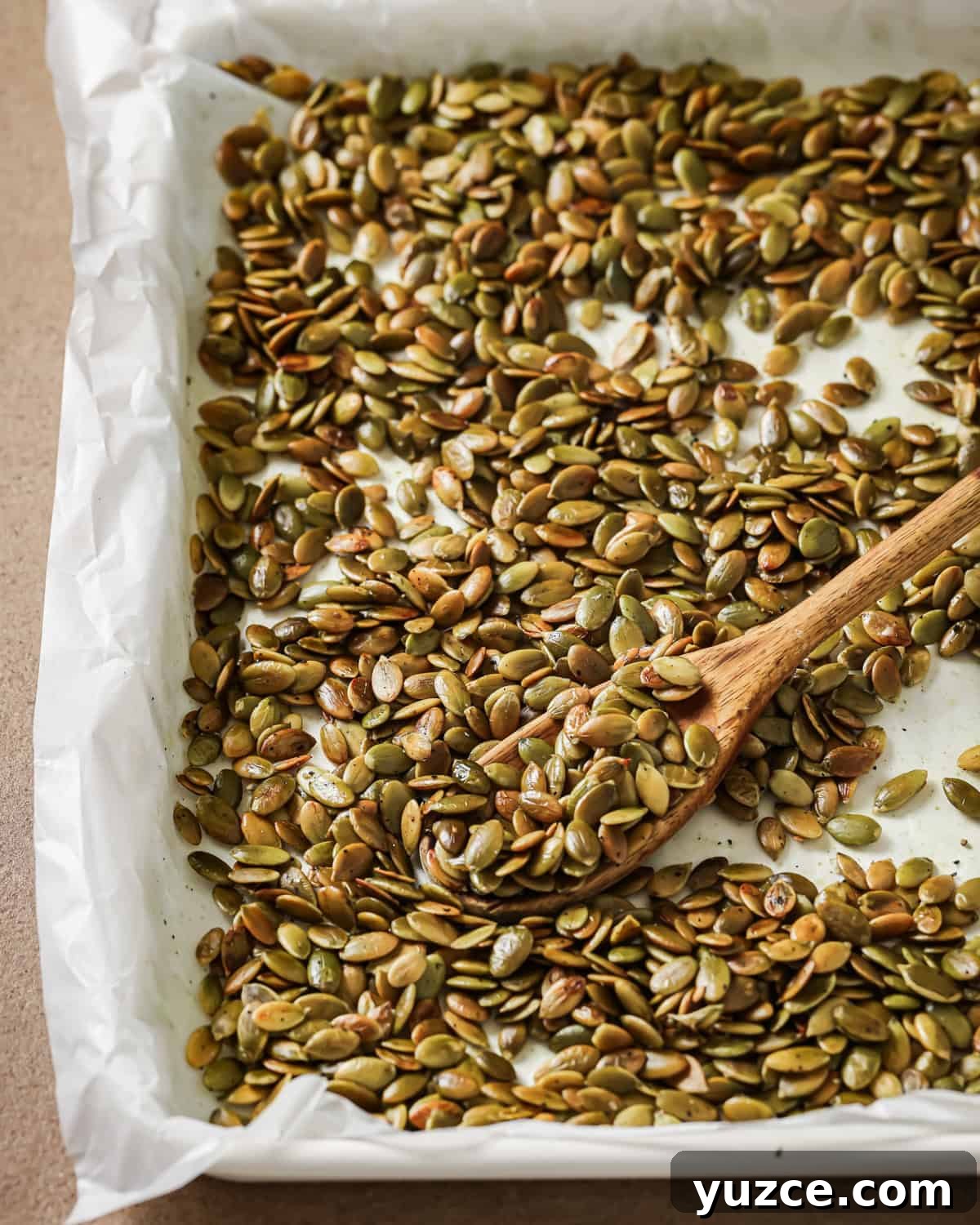
- Continue roasting another 5 to 11 minutes, checking after 5 minutes and stirring every 2 minutes until the pepitas are golden brown in most spots. Remove and cool slightly before enjoying.
Tips for making roasted pepitas
Watch them near the end
After the initial 8 minutes and a toss, roast in short intervals and check frequently. Oven temperatures vary, and short 2‑minute checks help you achieve even, toasty browning without burning.
Keep the seasonings simple
Spice blends can make pepitas feel dry and reduce crispness. For the best texture and flavor, stick to salt and pepper.
How to use these roasted pepitas
Short answer: whenever you want a crunchy lift.
Soup topper
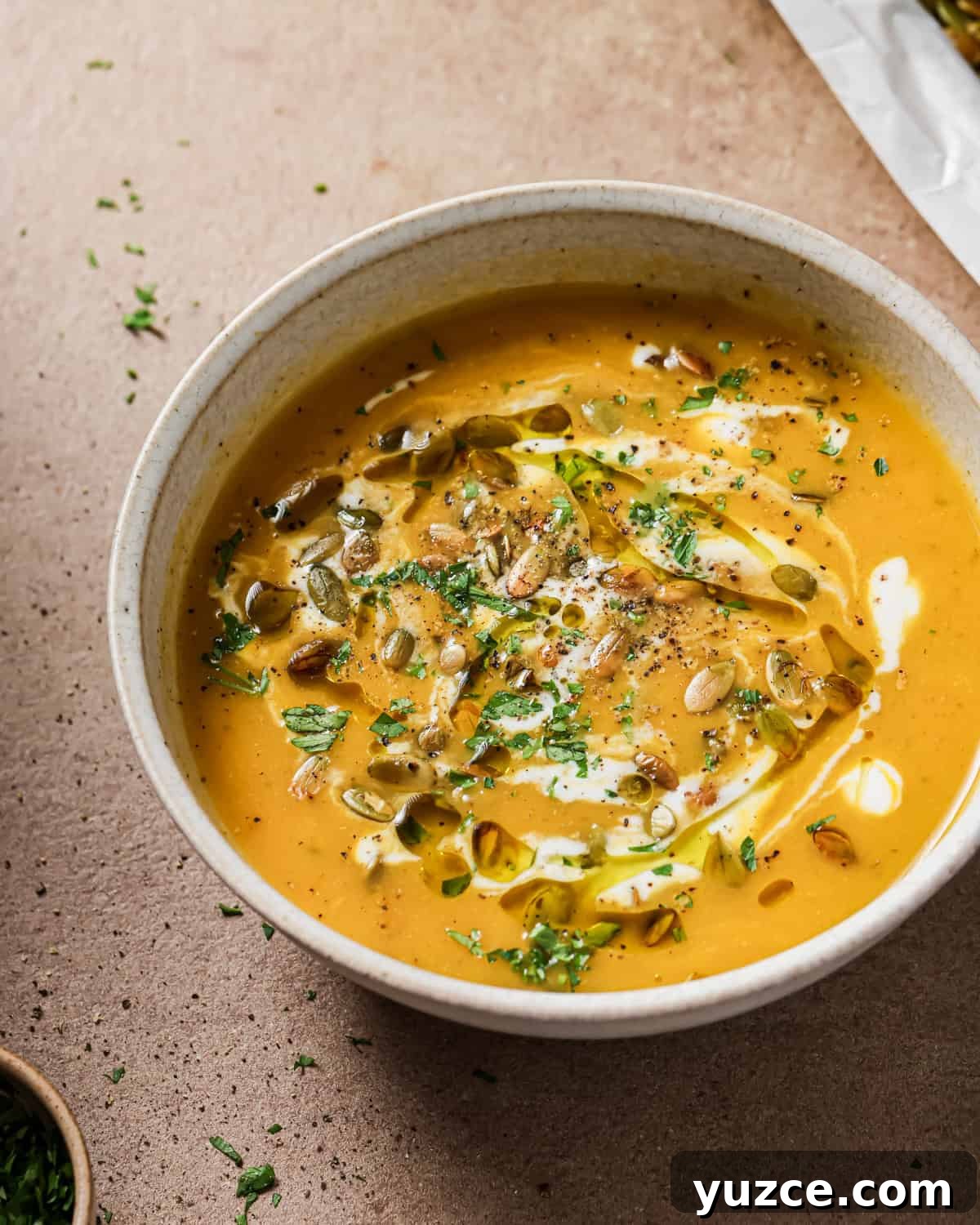
- Sprinkle on creamy soups—broccoli, cauliflower, carrot harissa, or red lentil soups benefit from the texture contrast.
- They also work as a savory alternative to chili or nut toppers on pumpkin or other pureed soups.
Salad topper
- Add pepitas to winter salads like kale and Brussels sprouts, broccoli salads, or grain-forward salads for extra crunch.
- A favorite combination: little gem lettuce, shredded kale, red wine vinaigrette, shaved fennel, a sprinkle of vegan feta if you like, and a generous handful of roasted pepitas.
Grain bowl topper
- Use them on bowls of brown rice or farro with baked or air‑fried tofu, a drizzle of cashew crema, and roasted vegetables for a satisfying, crunchy finish.
Breakfast topper
- Scatter over yogurt and fruit bowls, chia puddings, or oatmeal. The salt and pepper add a pleasant contrast to sweeter breakfasts and also pair well with savory oats.
Trail mix
- Mix roasted pepitas with dried berries, chopped dates, and chocolate chips for a balanced, craveable trail mix.
Frequently Asked Questions
Yes. This basic method works well for most seeds and nuts, but roast times vary by size, density, and oil content. For best results: chop larger nuts before roasting, keep seeds whole, toss halfway through roasting, and watch for visual doneness—look for an even toasty golden color. For example, chopped walnuts often need a shorter overall time and benefit from stirring midway.
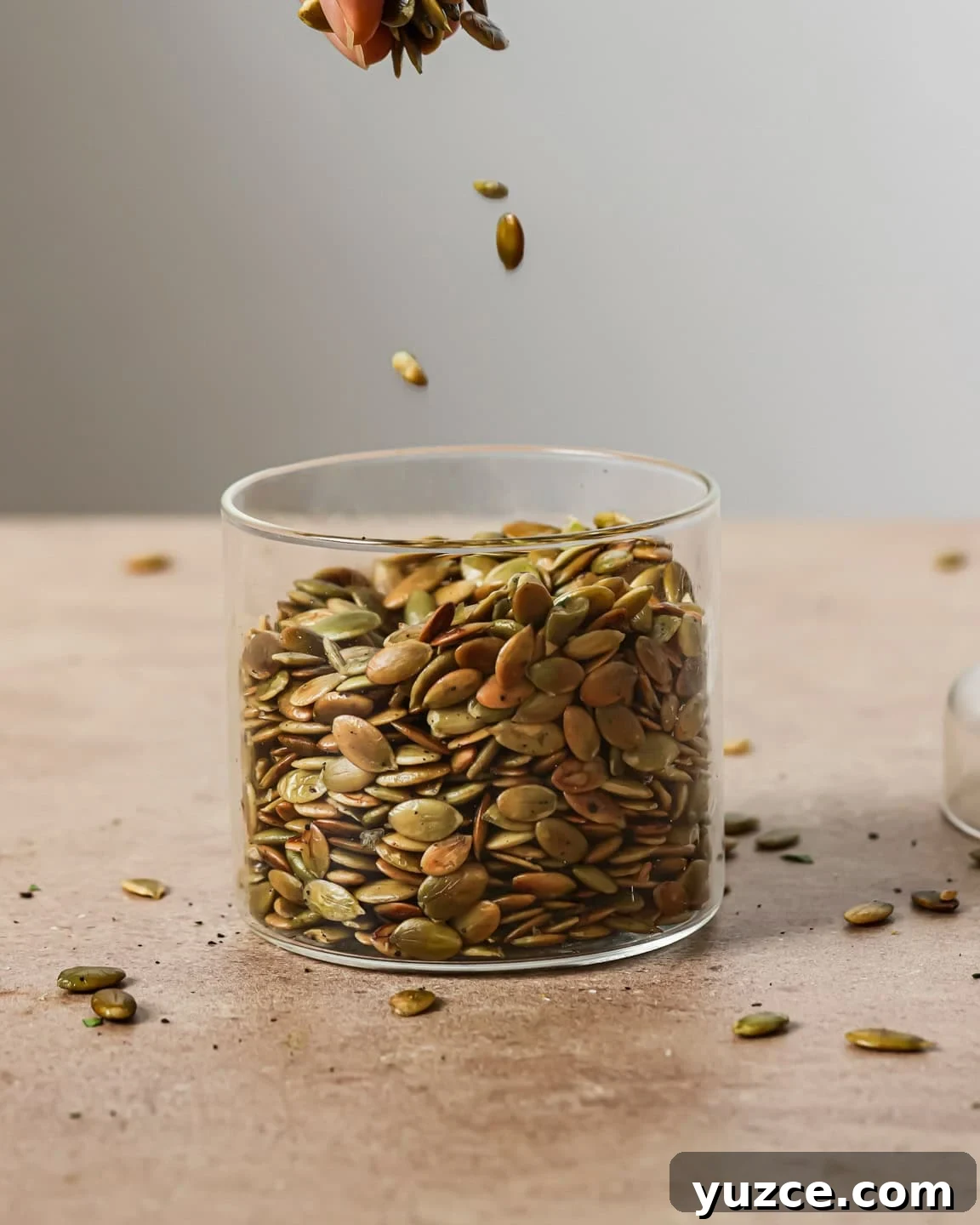
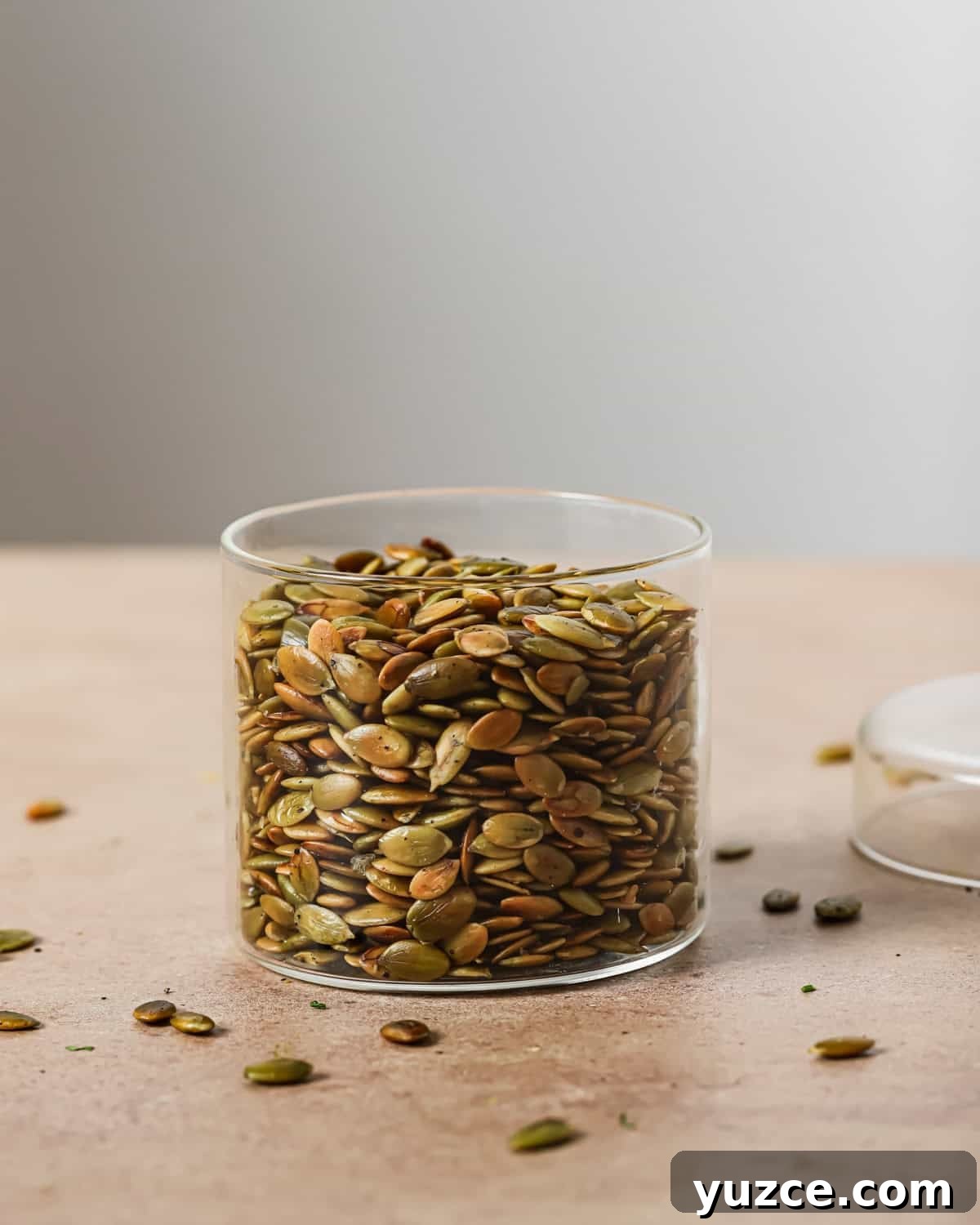
Once cooled, store roasted pepitas in a sealed jar or airtight container in the pantry for up to two weeks.
Yes. Double the ingredients and spread the seeds across two sheet pans. Swap the pan positions in the oven when you toss at the 8‑minute mark for the most even browning.
Have these roasted pepitas earned a spot in your meal prep? Leave a rating and review below and share how you enjoy them—I love hearing from readers.
Roasted Pepitas
Made it? Click the stars to leave a review!
Review
Ingredients
- 1 ½ cups (210g) pepitas
- 2 ½ teaspoons (11.5g) extra virgin olive oil
- 1 scant teaspoon kosher salt
- Freshly cracked black pepper
Instructions
-
Arrange a rack in the middle of the oven and preheat to 350ºF / 175ºC. Line a rimmed sheet pan with parchment paper.
-
In a bowl, combine the pepitas, oil, salt, and a generous amount of black pepper, tossing well to coat.
-
Spread the pepitas on the lined sheet pan. Roast for 8 minutes, toss, then roast another 5 to 11 minutes until toasty and golden brown in most spots.
Note: I often check at 7 minutes and then roast in 2‑minute intervals until satisfied—every oven is different.
-
Transfer the parchment to a flat surface to cool. Once cool, store in an airtight container or jar in the pantry for 1 to 2 weeks.
Notes
- If using table salt, use half the amount: a scant ½ teaspoon. If using Morton’s kosher salt or sea salt, use ½ teaspoon.
Nutrition
Nutrition information is automatically calculated and should be used as an approximation.
 Love this? Leave a rating below!