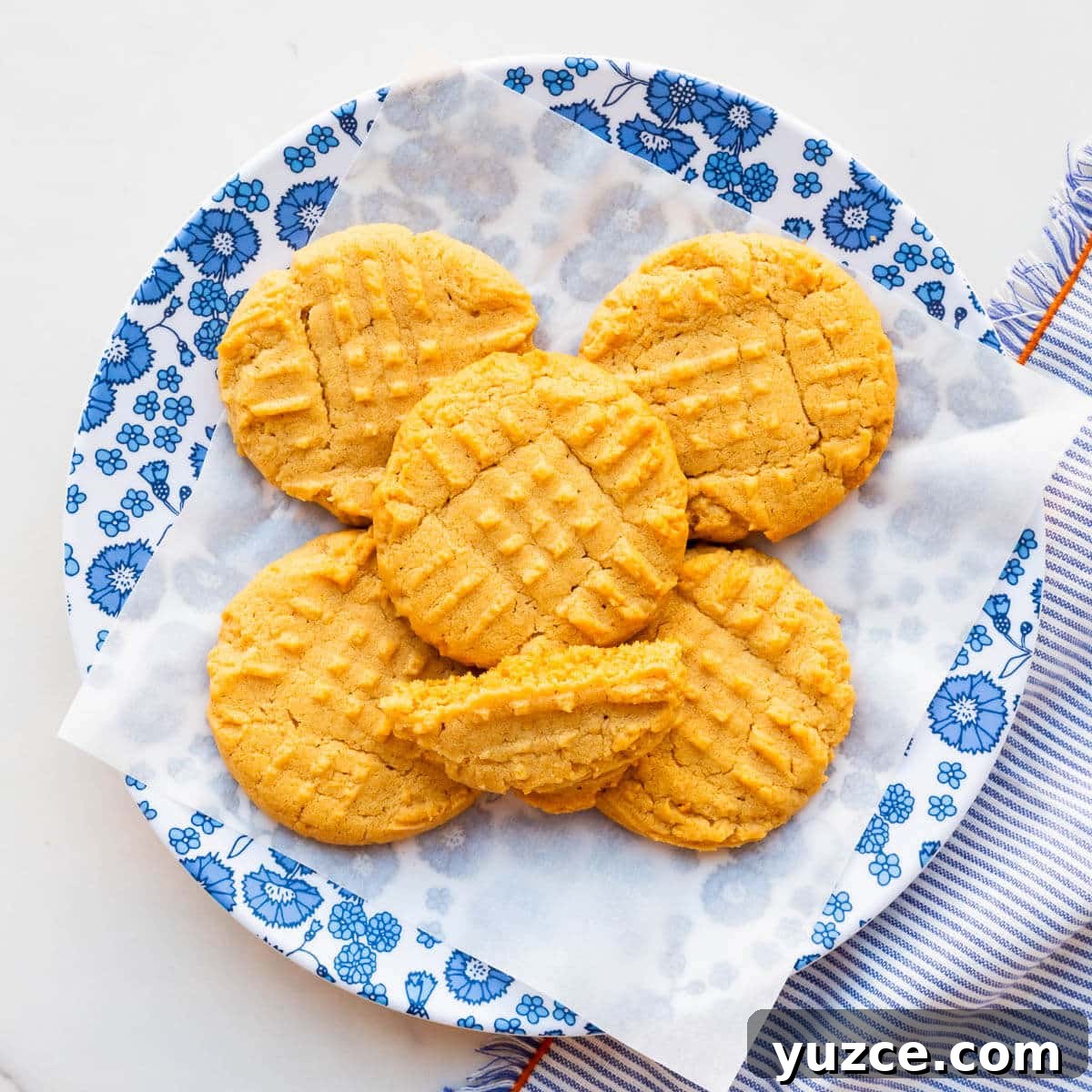
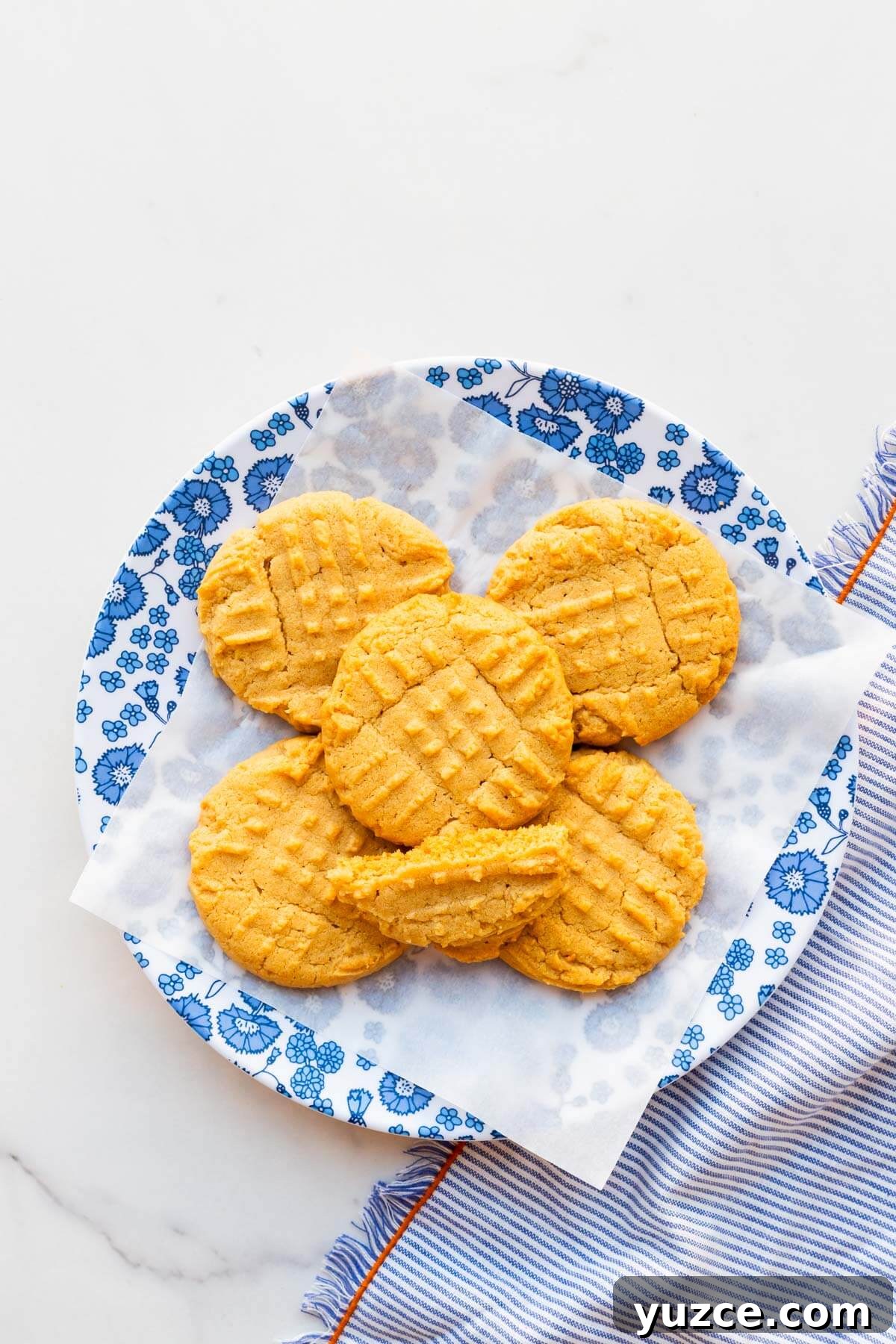
Learn how to make classic peanut butter cookies using natural peanut butter with this easy, reliable recipe. These cookies are slightly thicker and spread less thanks to an adjusted flour amount, and they get the familiar criss-cross fork pattern that defines peanut butter cookies.
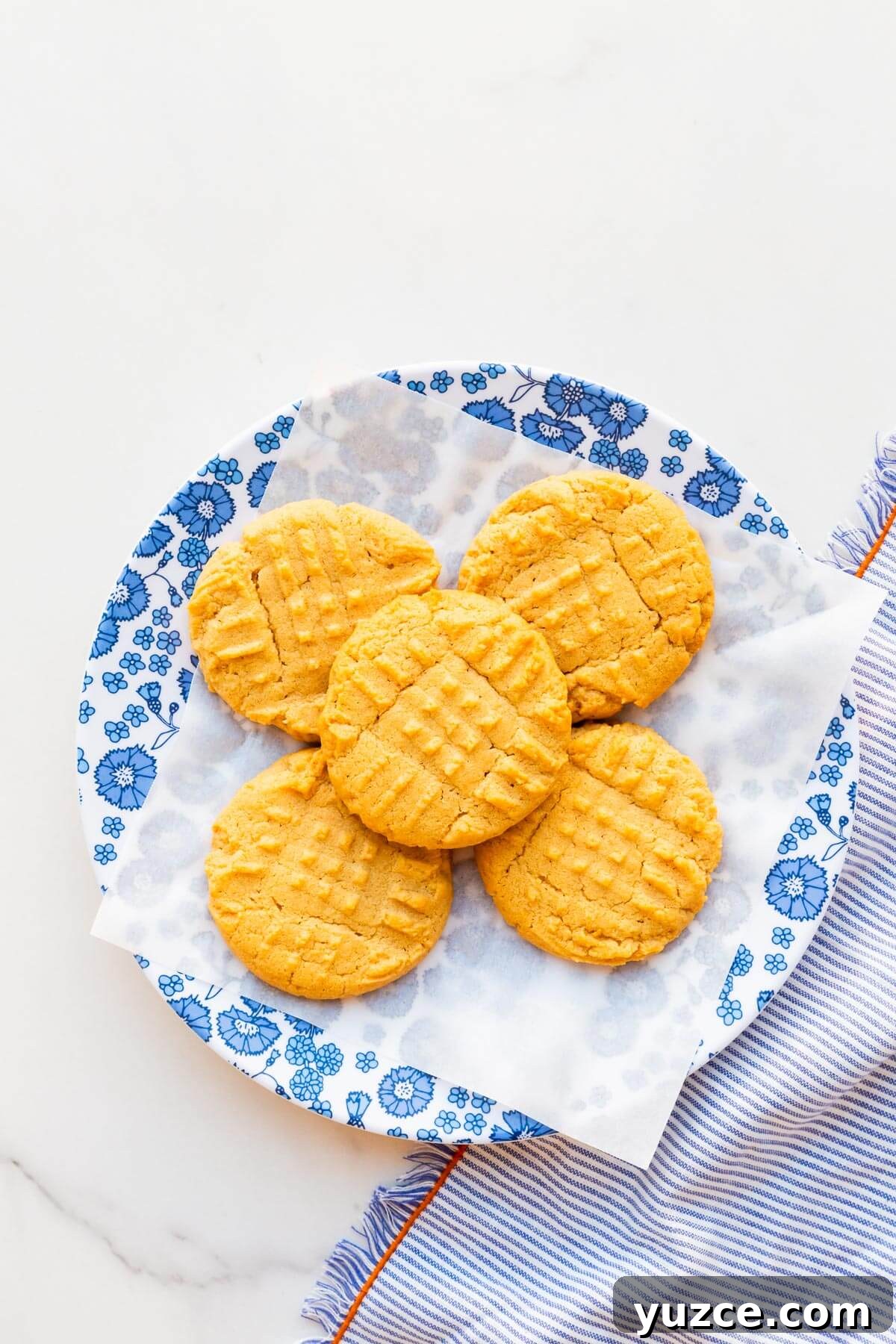
This recipe comes from a family recipe box and is a classic version of the peanut butter cookie many of us grew up with. It uses both butter and natural peanut butter, plus eggs, flour, sugar, and baking soda to produce a familiar, chewy cookie with a clean peanut flavor.
Ingredients
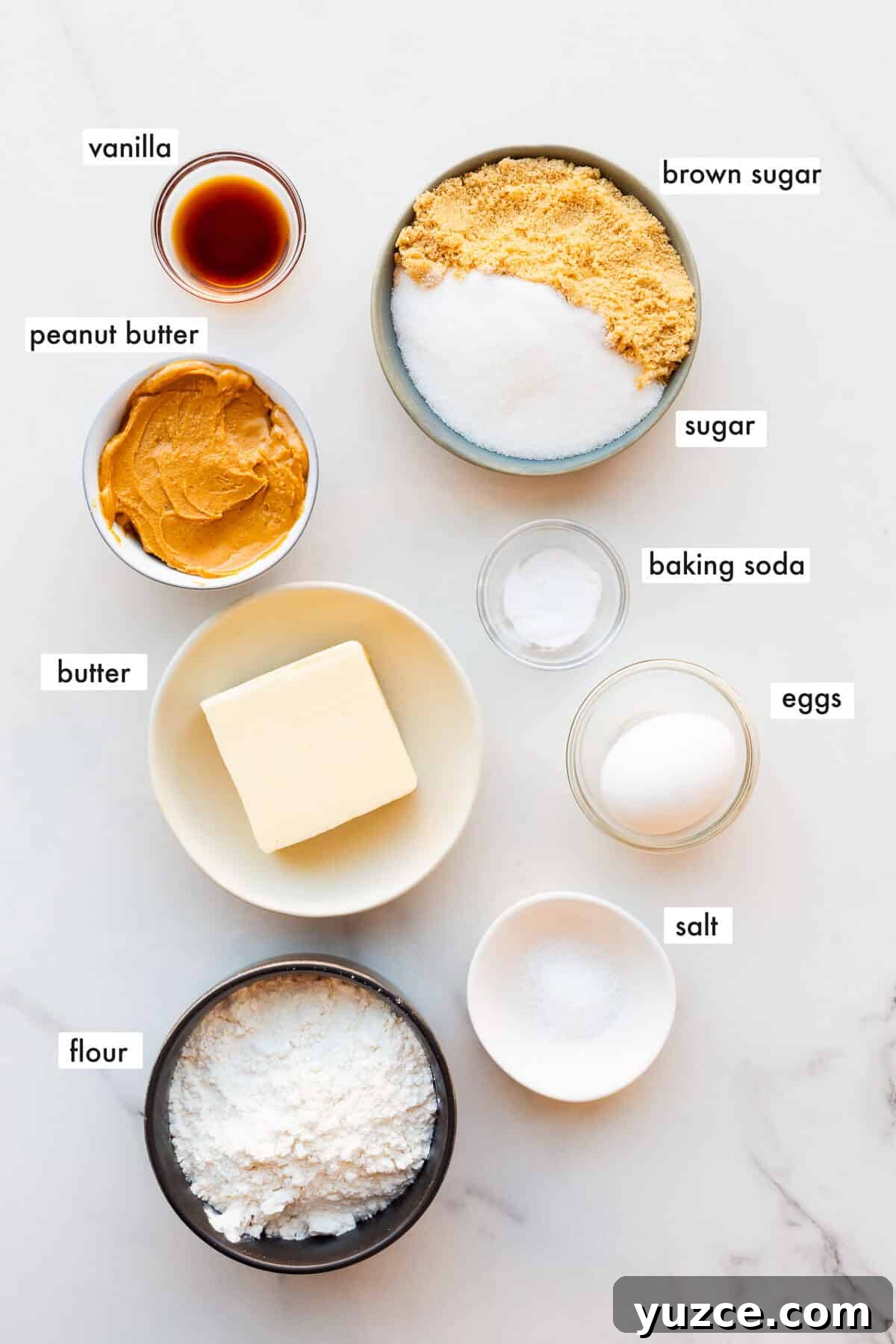
- Butter – Unsalted butter is recommended; if you use salted butter, reduce the added salt.
- Peanut butter – Use all-natural, unsweetened smooth peanut butter (the kind that separates and needs stirring). Regular sweetened peanut butter will make the cookies sweeter.
- Sugar – A mix of granulated and light brown sugar gives the best texture, though you can use all granulated or all brown sugar if preferred.
- Eggs – Recipe tested with large eggs; different sizes may change the result.
- Leavening – Baking soda (not baking powder) provides the gentle rise and texture.
- Salt – Fine kosher salt (such as Diamond Crystal) is suggested; if using table salt, use half the measured amount.
- Flour – All-purpose flour (bleached or unbleached). The amount of flour affects spread and chewiness; see notes below for options.
See the recipe card for exact ingredient weights and measurements used in testing.
Substitutions and Variations
- Peanut-free: Replace peanut butter with almond butter or sunflower seed butter. Note: sunflower seed butter can react with baking soda and may darken or turn slightly green, but the flavor is fine.
- Chocolate: Stir in up to 175 g (1 cup) chocolate chips or chopped chocolate. Dark/semisweet works well; white chocolate is a sweet alternative.
- Shortening: Using shortening instead of butter yields thicker cookies that spread less. If using shortening, reduce the flour to about 125 g (1 cup) so the cookies still spread adequately.
Testing Notes
Flour amount strongly influences spread and texture. In testing I compared a lower-flour version (125 g / 1 cup) with a higher-flour version (188 g / 1½ cups):
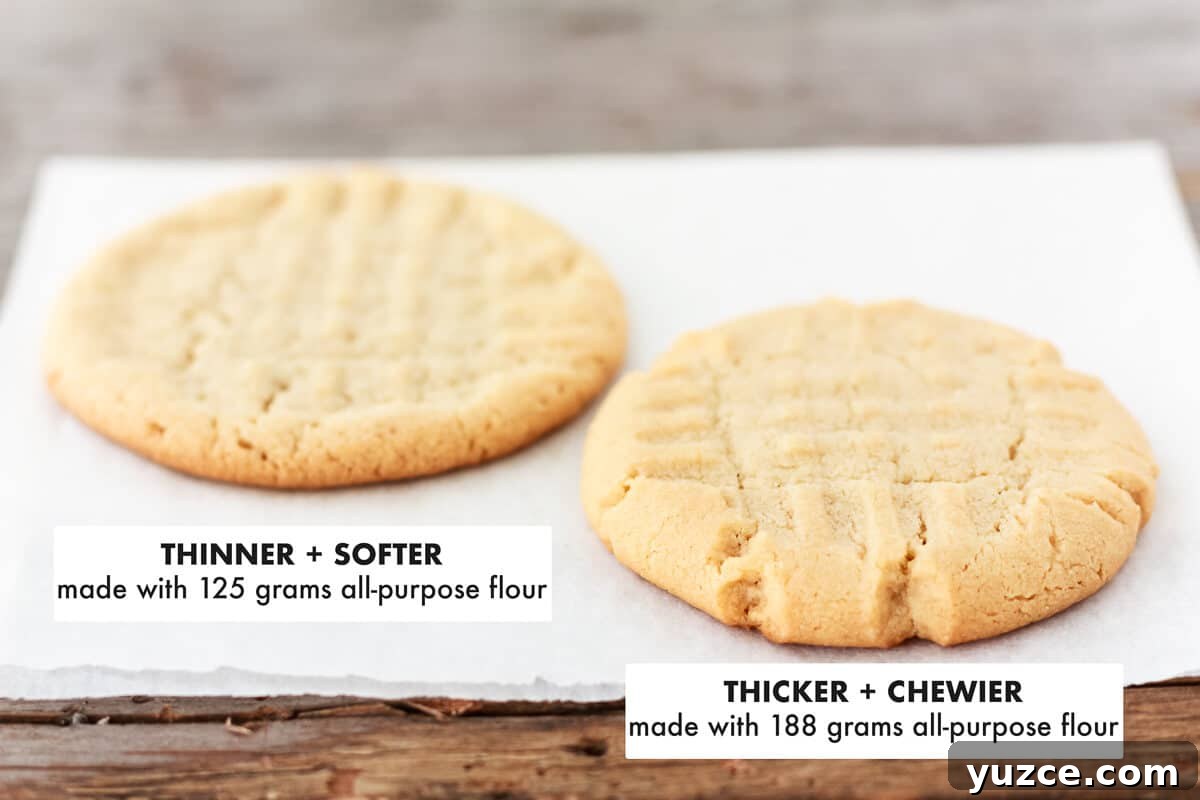
- Less flour (125 g): Cookies spread more and bake thinner and softer, with a bit of chew.
- More flour (188 g): Cookies spread less and bake thicker, firmer, and chewier.
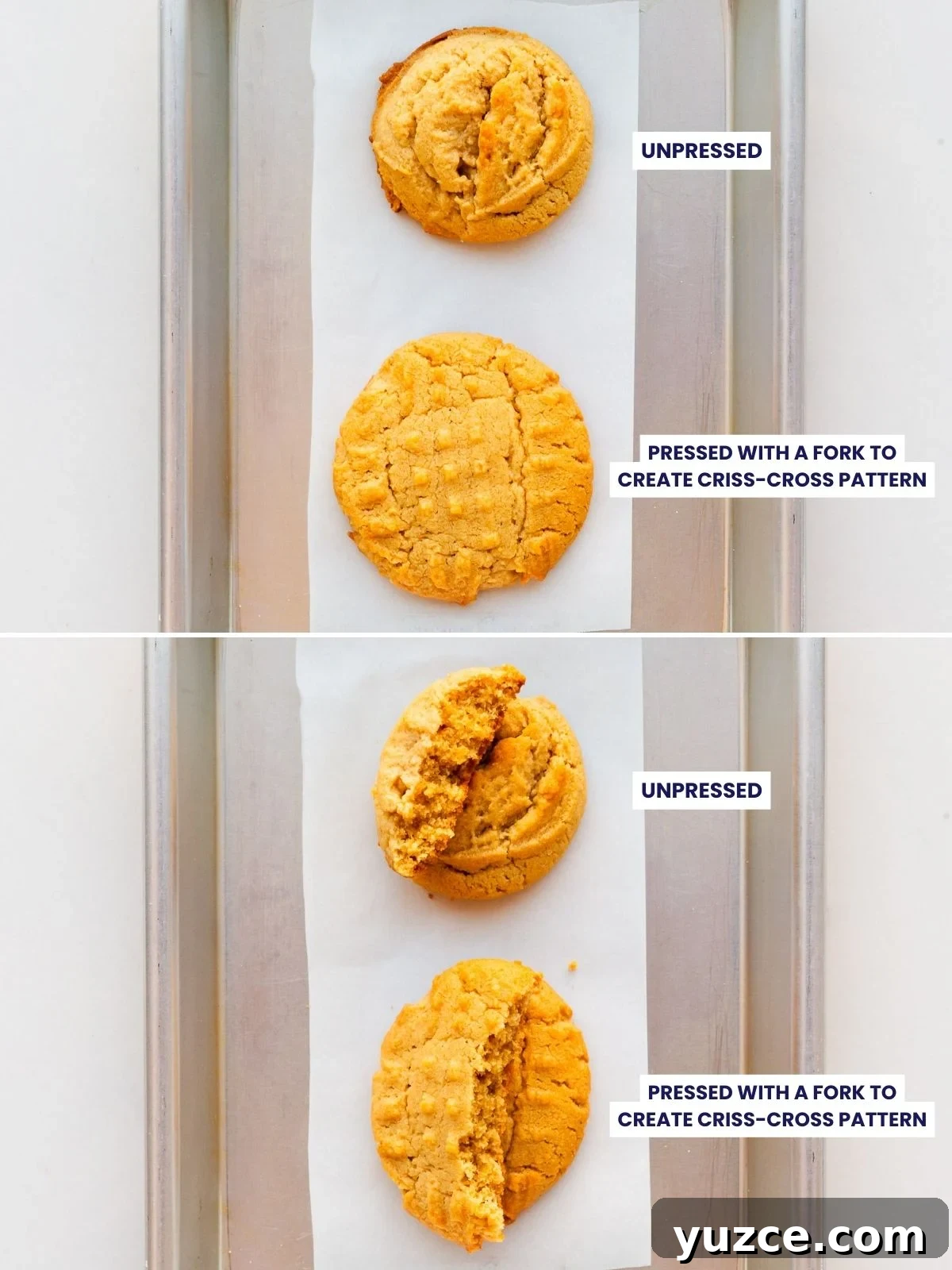
I also tested whether pressing the dough with a fork is necessary. Pressing creates the classic criss-cross look and encourages modest spreading. If you skip this step, the cookies bake taller and rounder and retain the scoop shape.
How to Make Classic Peanut Butter Cookies
This is a beginner-friendly recipe that mixes easily by hand or with a mixer. You can use a wooden spoon, spatula, hand mixer, or stand mixer.
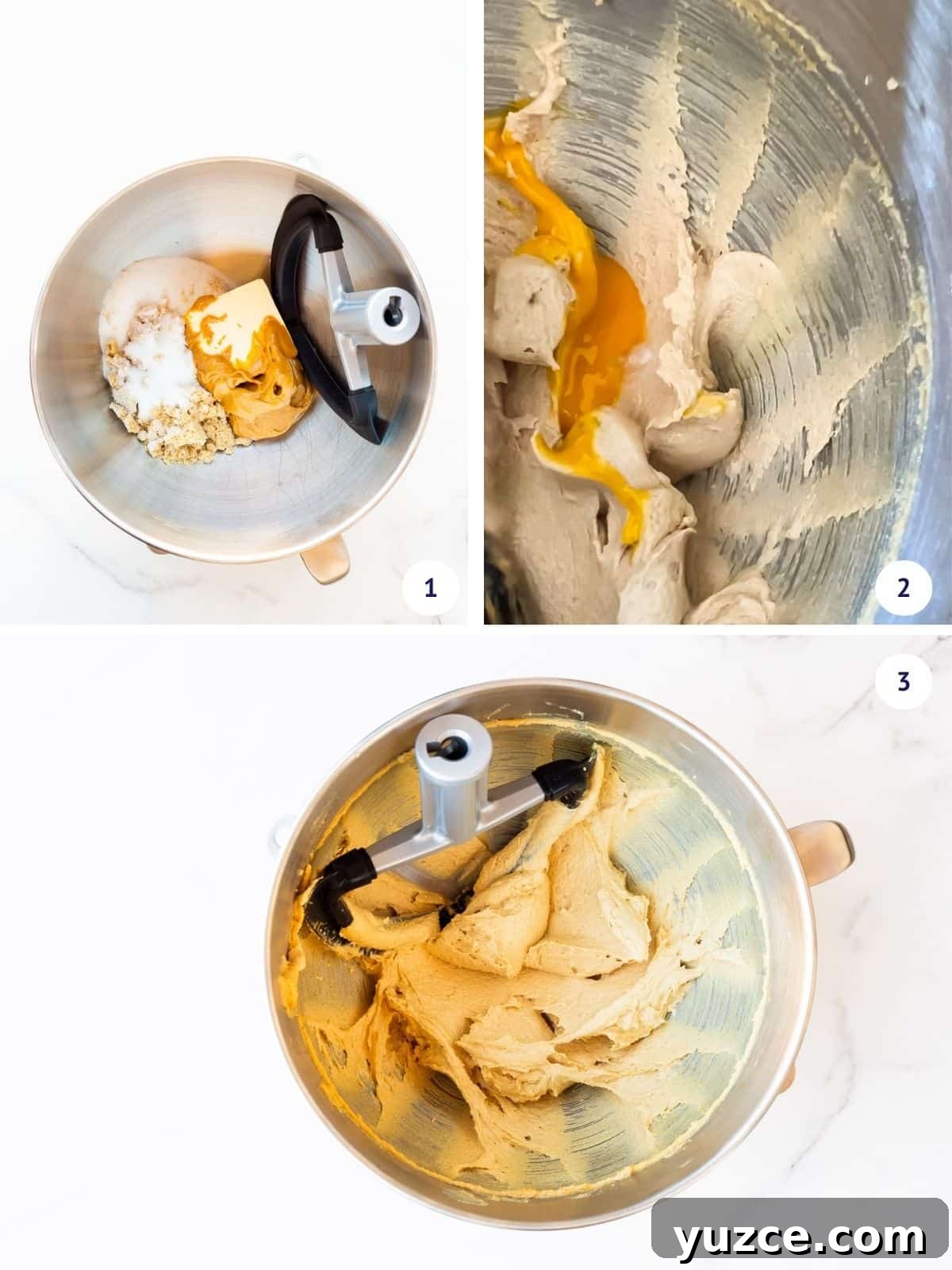
Step 1: Cream butter, peanut butter, and sugars until smooth and fluffy. Add the egg and vanilla and beat until well combined.
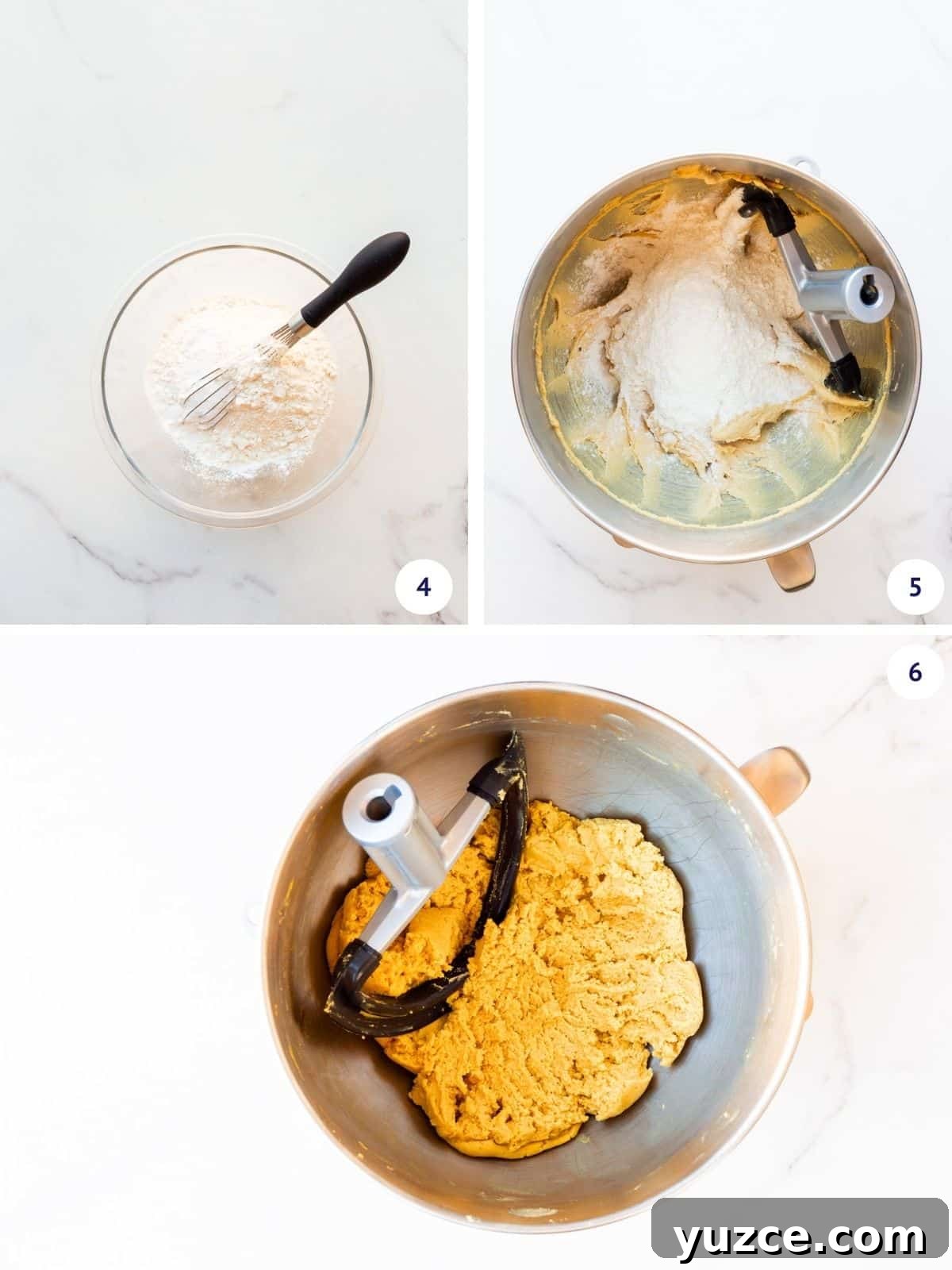
Step 2: Whisk together flour, baking soda, and salt in a separate bowl. Add the dry ingredients to the butter mixture and stir until a thick dough forms.
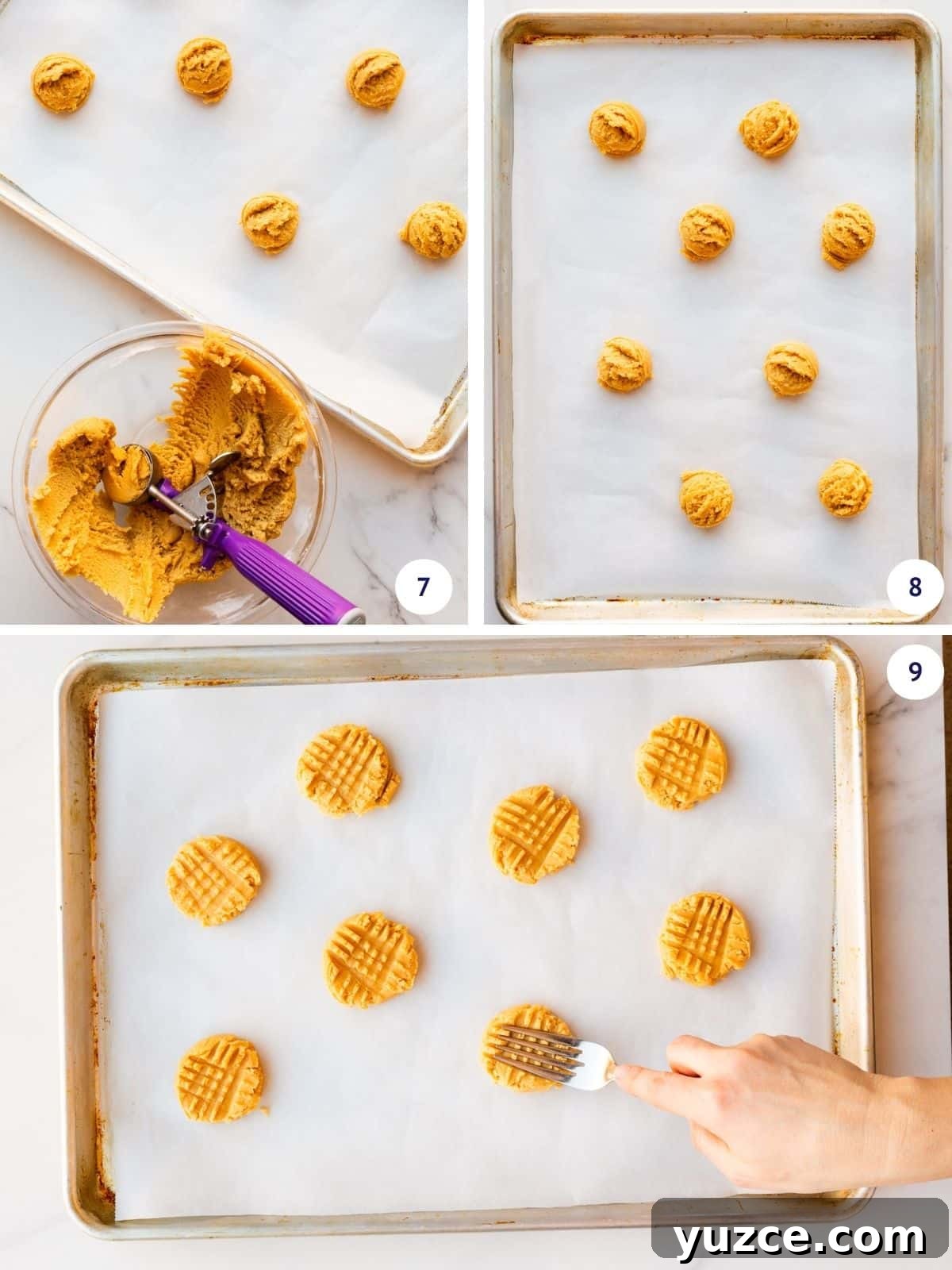
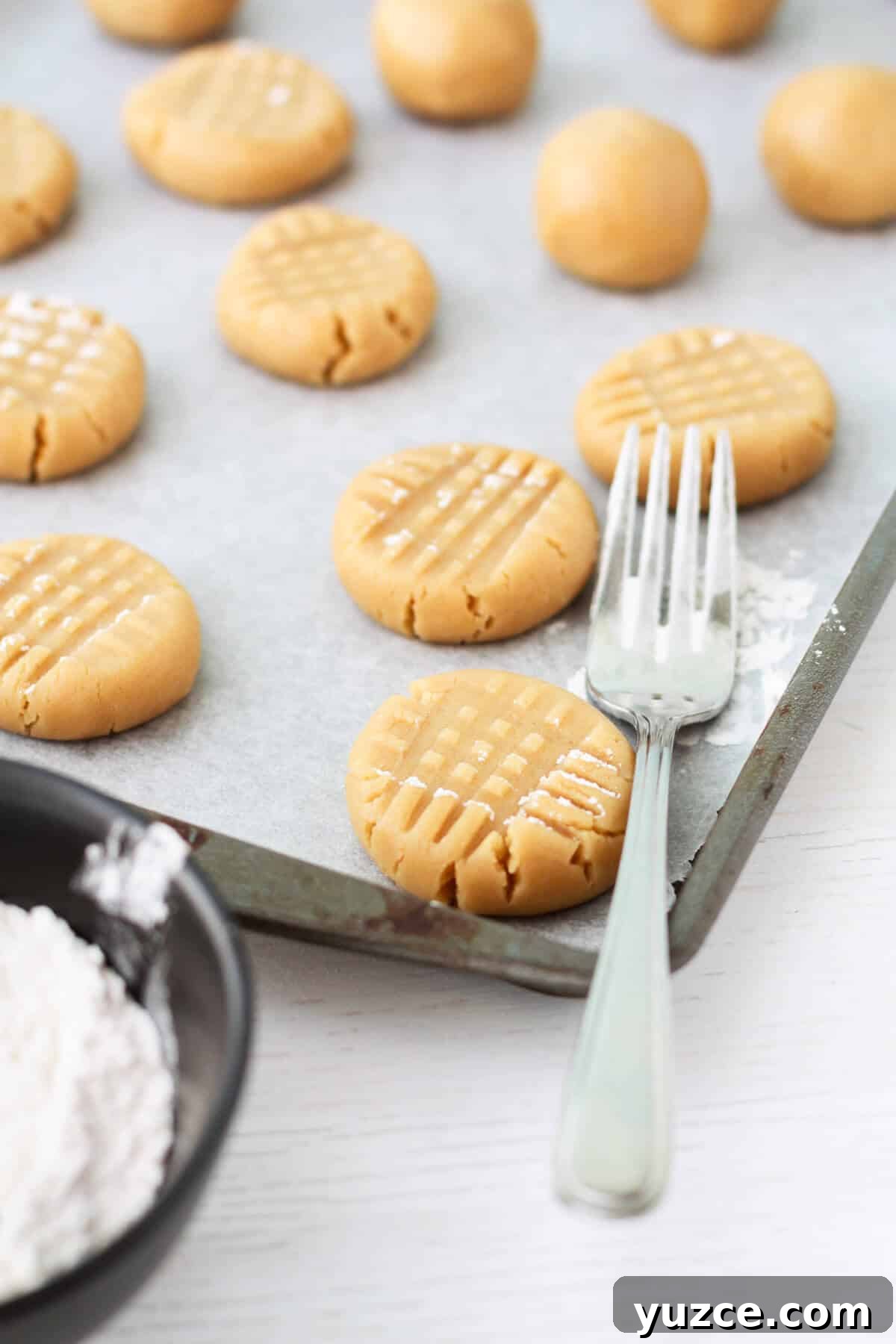
Step 3: Scoop dough with a small cookie scoop (about 30–35 g). Space scoops evenly on a parchment-lined half sheet pan (about eight per pan). Flatten each mound with a fork to create a criss-cross pattern. Rolling the dough in granulated sugar first can help prevent sticking and encourage surface cracking.
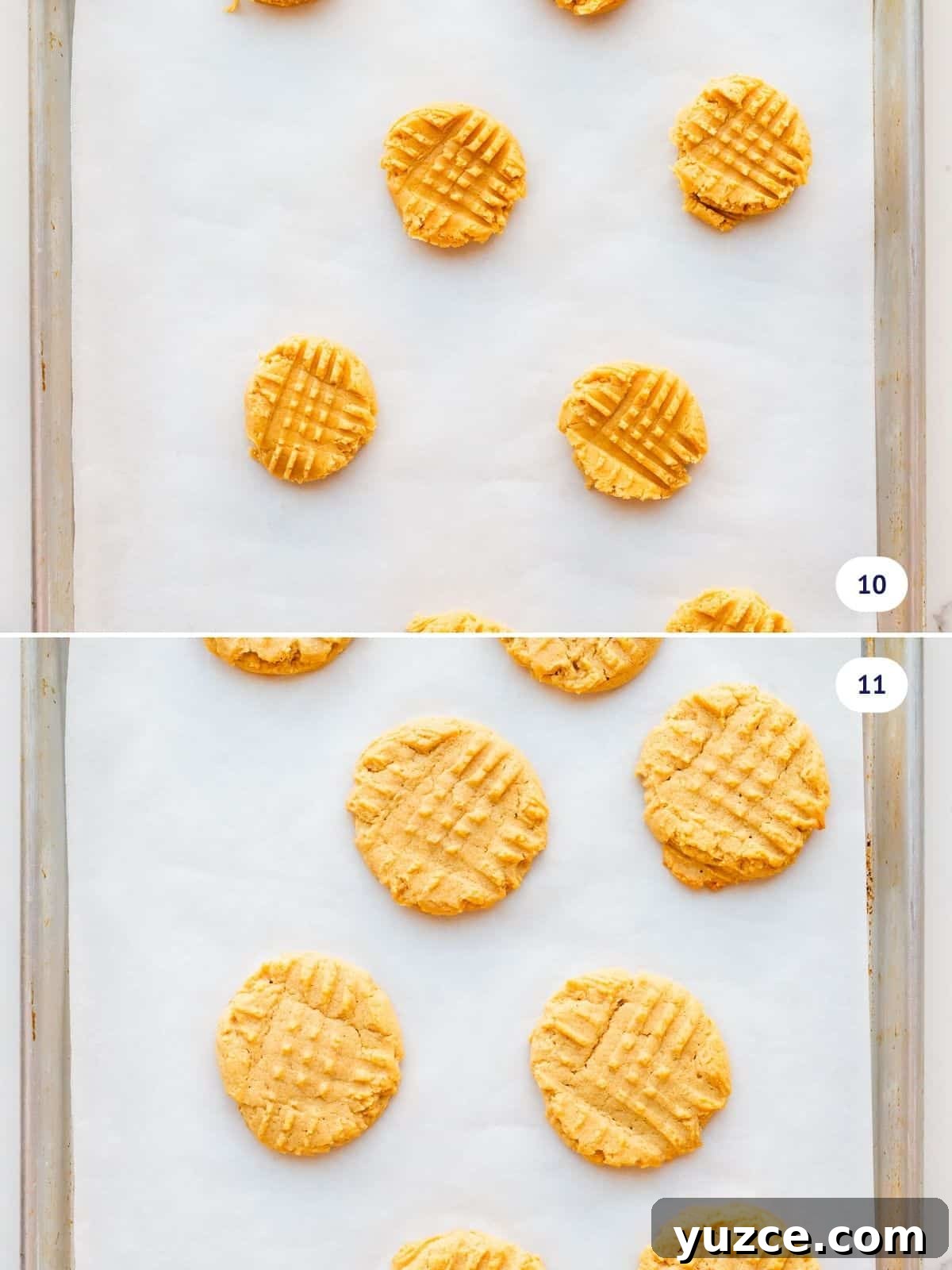
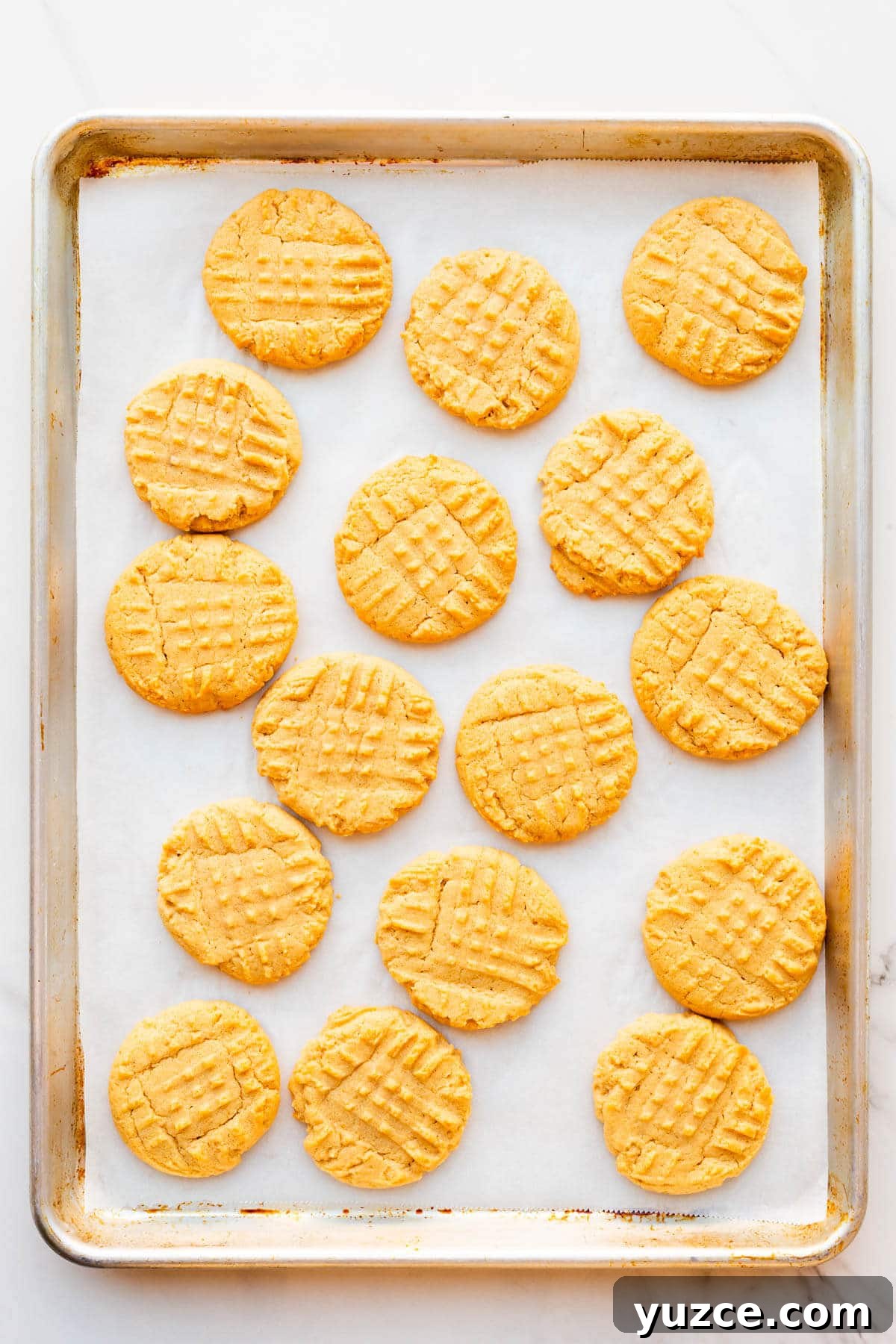
Step 4: Bake the cookies until the edges are set and the surface appears dry. For a chewy texture bake about 10–12 minutes at 350°F (175°C); for crisper cookies bake 13–15 minutes. Let cool on the pan a few minutes before transferring to a rack to cool completely.
Baking with Natural Peanut Butter
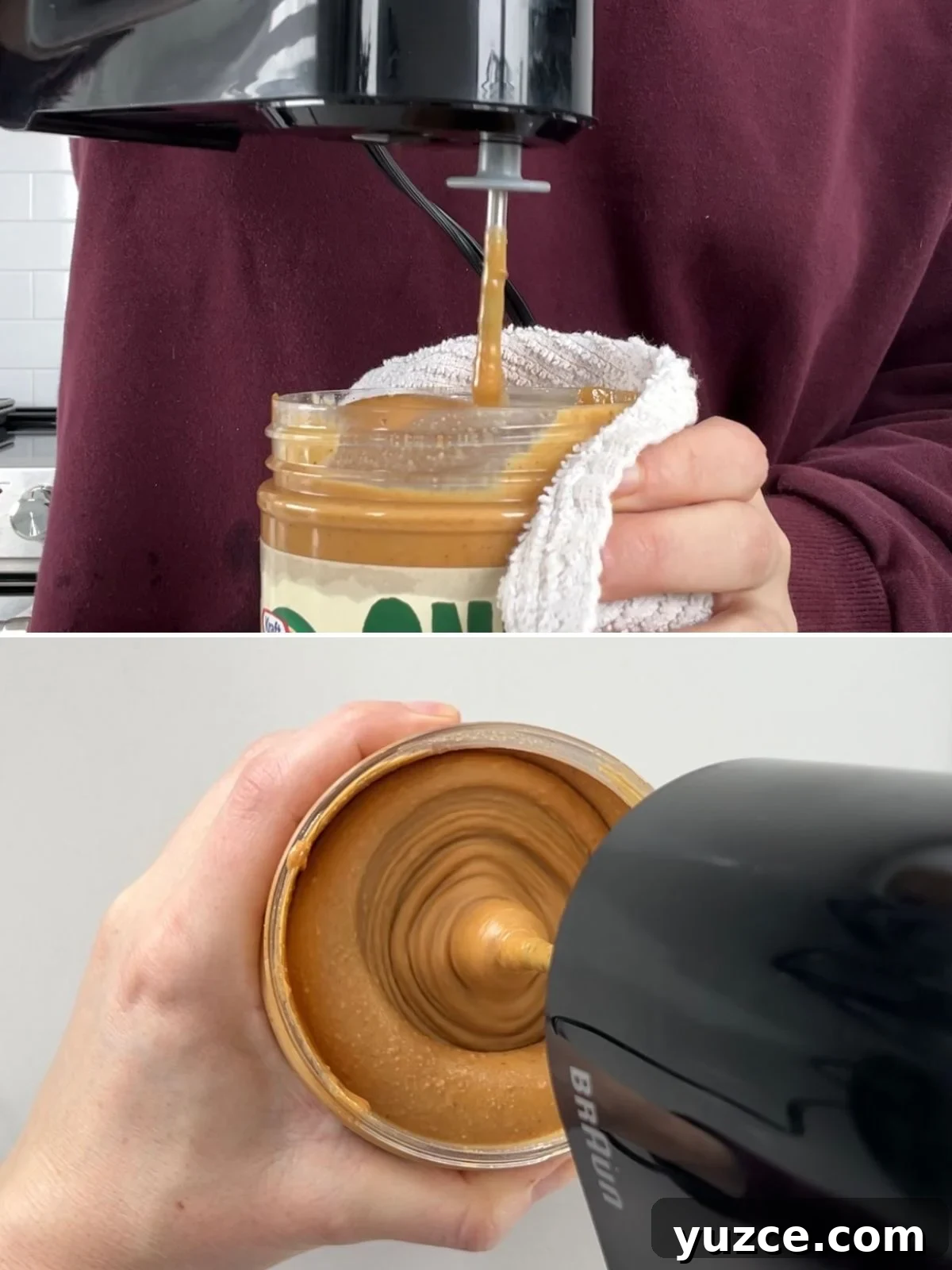
Natural peanut butter is simply ground peanuts and tends to separate, with oil rising to the top. To use it in baking, you must remix the jar so oil and solids are evenly combined. You can stir vigorously by hand with a spoon or use an electric hand mixer (one whisk attachment is helpful). If using a mixer, consider transferring the peanut butter to a bowl first to avoid oil splatter and to make mixing easier.
Peanut Butter Cookie Tips
The criss-cross pattern is both traditional and practical: pressing the dough helps the cookies spread and prevents them from staying too tall and round. If fork tines stick, lightly dust the back of the fork with flour and brush off excess before pressing.
Adjust baking time to control texture. Around 10–12 minutes at 350°F yields a soft, chewy cookie. Baking longer yields a crisper cookie.
Peanut Butter Cookie FAQs
Store fully cooled cookies in an airtight container for up to one week.
Yes. For freezing dough: portion and press the dough on a parchment-lined sheet pan, freeze until firm, then transfer to a freezer bag and bake from frozen (add about 1 minute to bake time). For baked cookies: cool completely, then freeze in a sealed bag for up to three months.
Other Easy Drop Cookie Recipes to Try
This recipe is a variation on a thick, chewy cookie base that works well for many adaptations. Once you have the base, try versions such as oatmeal cookies with chocolate and peanuts, blueberry cookies with white chocolate, or chocolate chip cookies with pecans. For even thicker peanut butter cookies, try a bakery-style chewy version with white chocolate and nuts. For a flourless option, try three-ingredient peanut butter cookies made with peanut butter, sugar, and egg.
If you tried this recipe for classic peanut butter cookies made with natural peanut butter, please leave a star rating and share how it went in the comments. I love hearing from readers!
📖 Recipe
Classic Peanut Butter Cookies
Equipment
- Stand mixer or hand mixer (optional)
- Whisk
- Small cookie scoop (≈ ¾ oz / 30–35 g)
- Parchment-lined sheet pan
Ingredients
- 115 g unsalted butter, room temperature
- 125 g natural unsweetened smooth peanut butter
- 100 g granulated sugar
- 100 g light brown sugar
- 1 large egg
- 2.5 mL pure vanilla extract
- 2.5 mL baking soda
- 2.5 mL fine kosher salt (or half that amount if using table salt)
- 188 g all-purpose flour (use 125 g for a thinner, softer cookie; use 188 g for thicker, chewier cookies)
Instructions
- Preheat the oven to 350°F (175°C).
- In a mixer fitted with the paddle attachment (or using a hand mixer or by hand), cream the butter, peanut butter, and both sugars until smooth, starting on low and increasing to medium. Scrape the bowl as needed.
- Add the egg and beat until incorporated, then add the vanilla and scrape the bowl again.
- In a separate bowl, whisk together baking soda, salt, and the chosen amount of flour. Add the dry ingredients to the wet and mix until just combined.
- Scoop dough onto parchment-lined baking sheets (about 30–35 g per scoop). Flatten with a lightly floured fork to make a criss-cross pattern. Optionally roll in granulated sugar first to reduce sticking.
- Bake 10–12 minutes for chewy cookies or 13–15 minutes for crisper cookies. Edges should be set and the surface dry. Cool on the pan a few minutes, then transfer to a wire rack to cool completely.
Notes
- Use fine kosher salt for the recipe measurements; reduce salt if using table salt.
- Natural peanut butter separates; stir or mix thoroughly before measuring. Mixing in a bowl with a hand mixer can be easier and cleaner than mixing in the jar.
- If fork tines stick to the dough, lightly dust the fork with flour and brush off excess before pressing.
- If you bake on darker pans, reduce oven temperature to 325°F (165°C) to avoid over-browning.
- For peanut-free cookies use almond or sunflower seed butter. For a flourless option see three-ingredient peanut butter cookie variations.
Nutrition
Nutrition is an estimate and should be used as a guideline only.