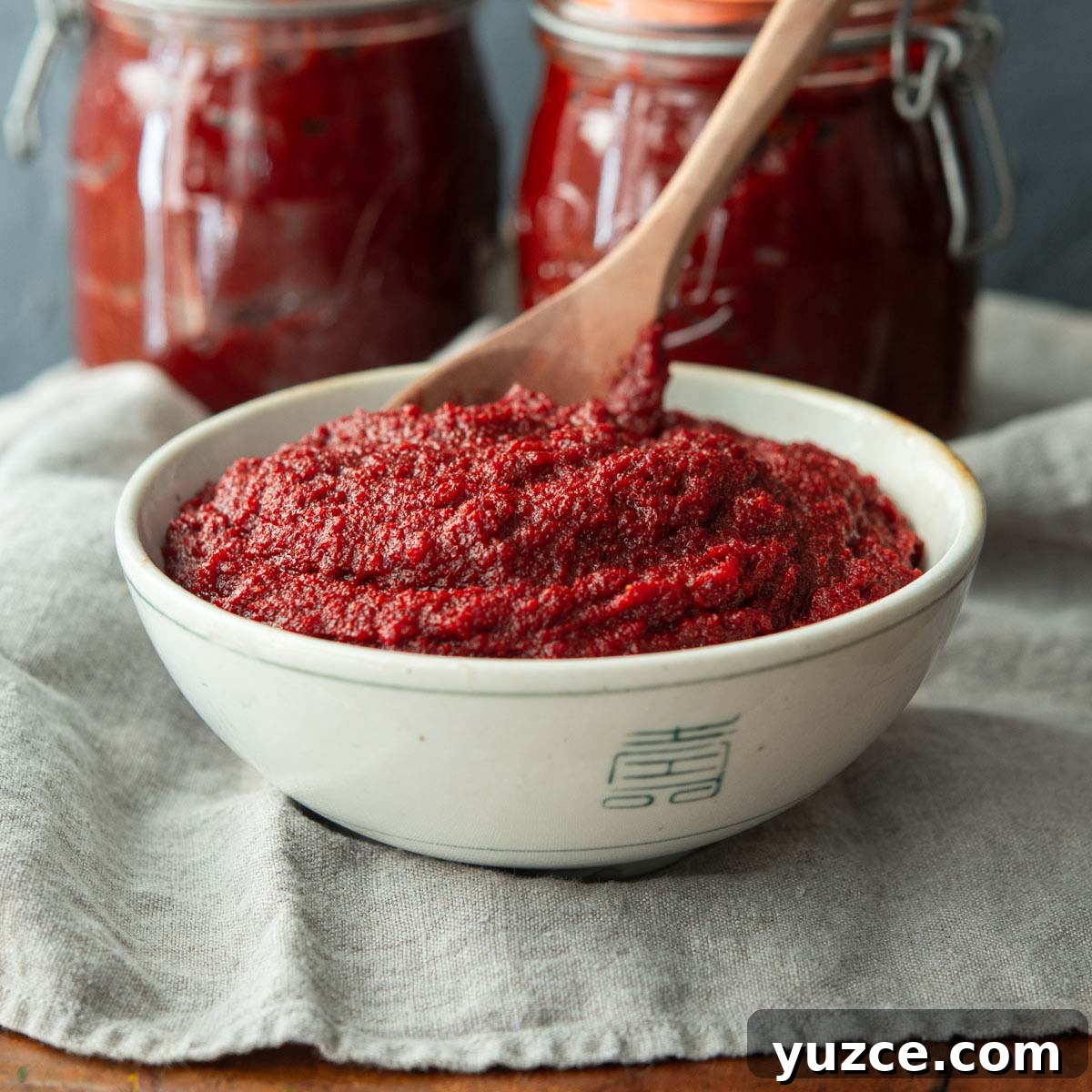
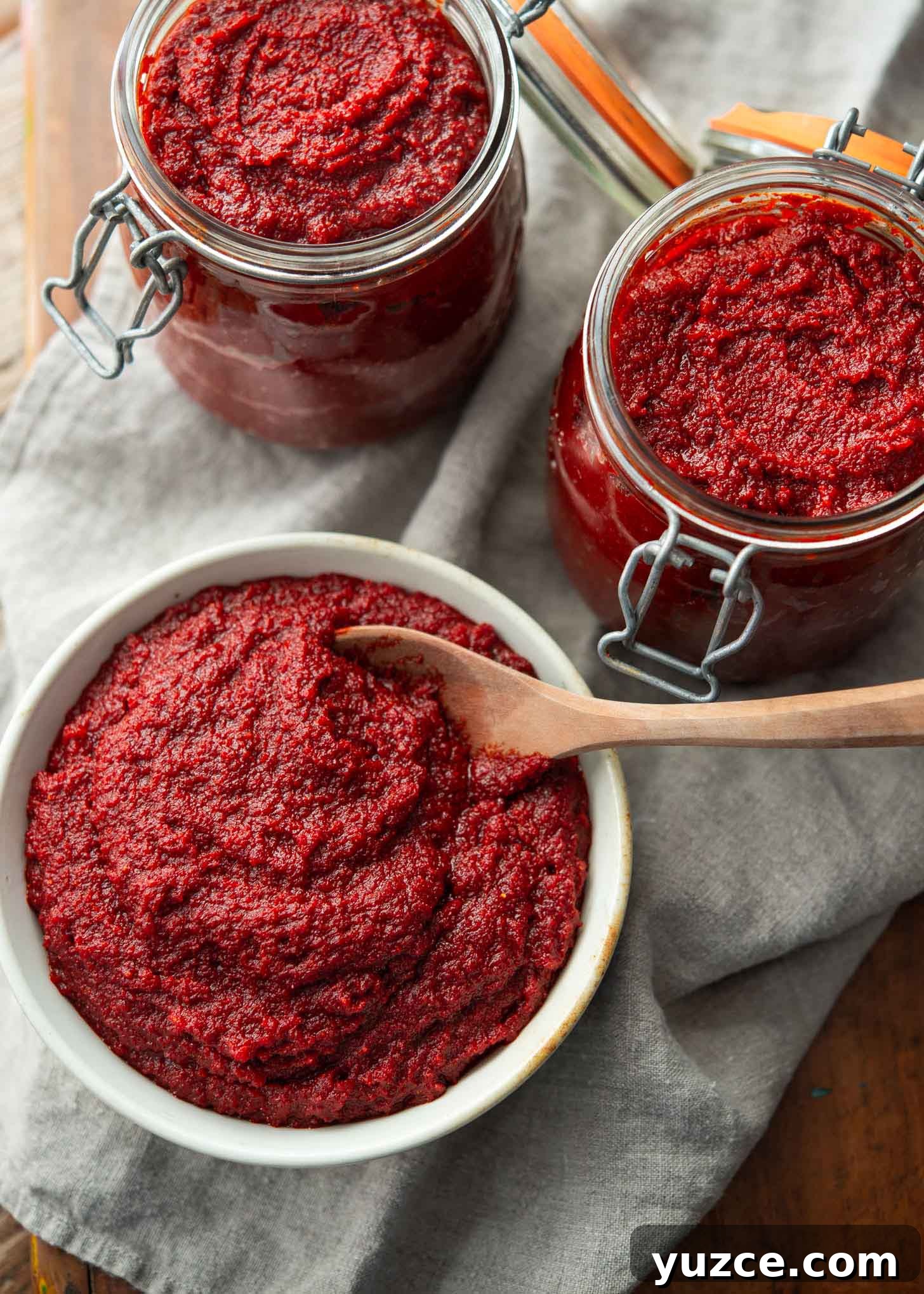
Learn how to make gochujang in just 10 minutes. This easy homemade Korean chili paste delivers the deep, savory, slightly sweet and spicy umami of traditional gochujang without the long fermentation time—an excellent fresh alternative to store-bought paste.
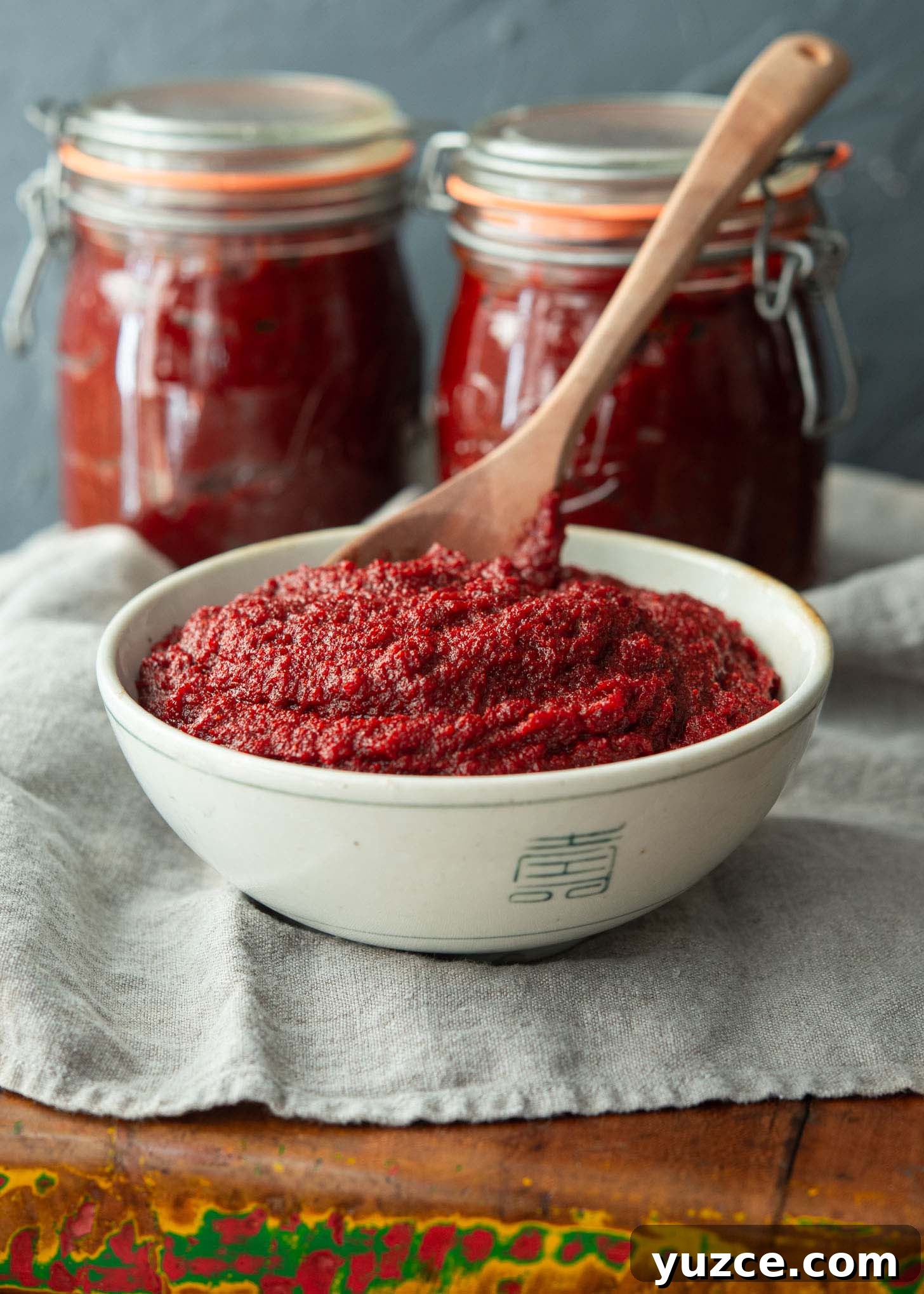
Gochujang is a staple of Korean cooking alongside soy sauce (ganjang) and fermented soybean paste (doenjang). Its complex balance of heat, savory depth, and sweetness makes it ideal for sauces, marinades, stews and many fusion dishes. While commercial gochujang is convenient, making it at home yields a fresher, purer flavor without additives.
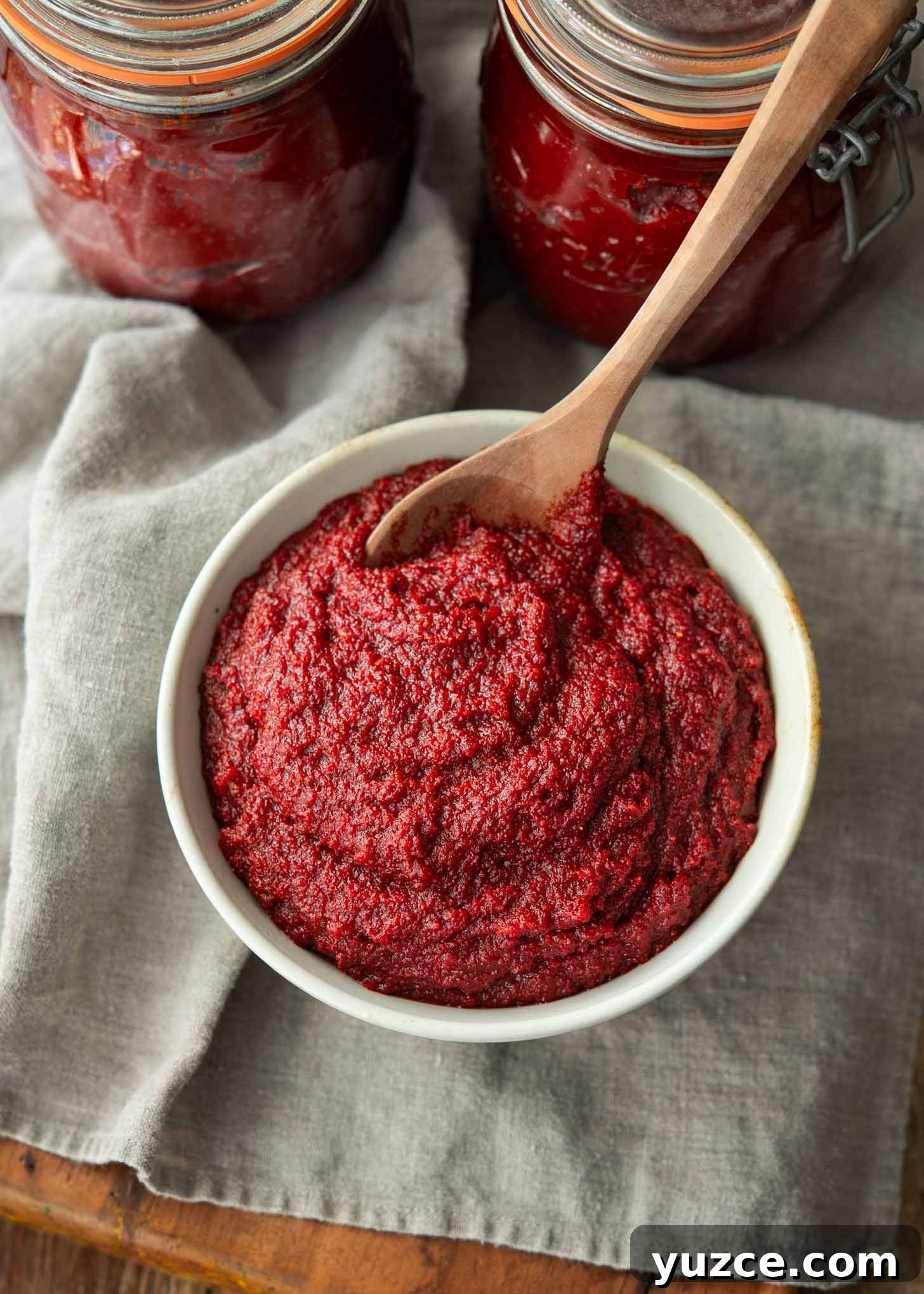
Many assume authentic gochujang requires lengthy, complicated fermentation, but this simplified method produces a flavorful paste in minutes and then allows the flavors to develop further as it ages. It also makes a thoughtful DIY gift for friends who enjoy bold Korean flavors.
Gochujang Ingredients
Most ingredients are available at Korean or large Asian groceries; if you can’t find them locally, you can order them online. The key components are listed below, with notes on why each matters.
Gochugaru (Korean fine chili powder)
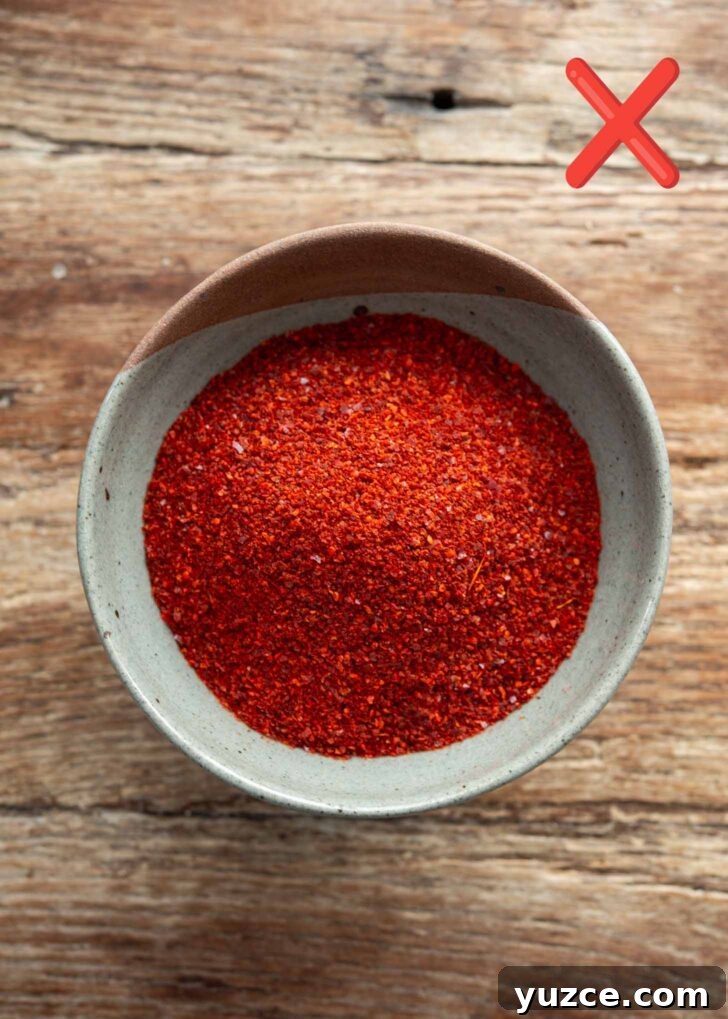
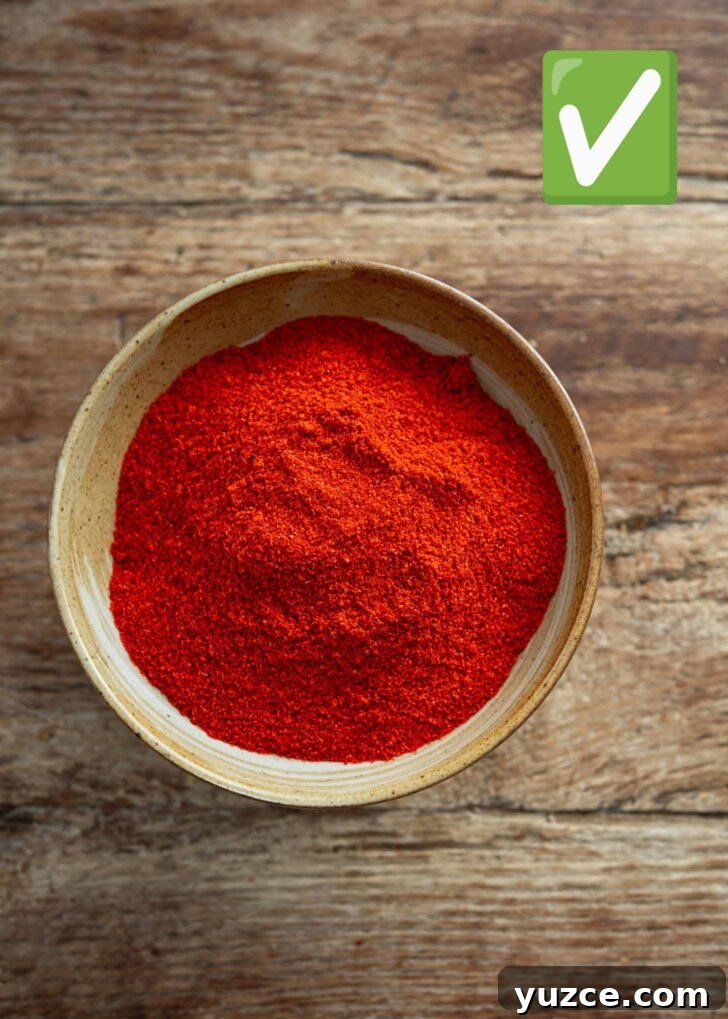
Select fine gochugaru (고운 고춧가루) rather than coarse flakes for the smooth texture needed in paste. Fine powder integrates more easily and gives a vivid, balanced heat.
Fermented Soybean Powder (Mejugaru)
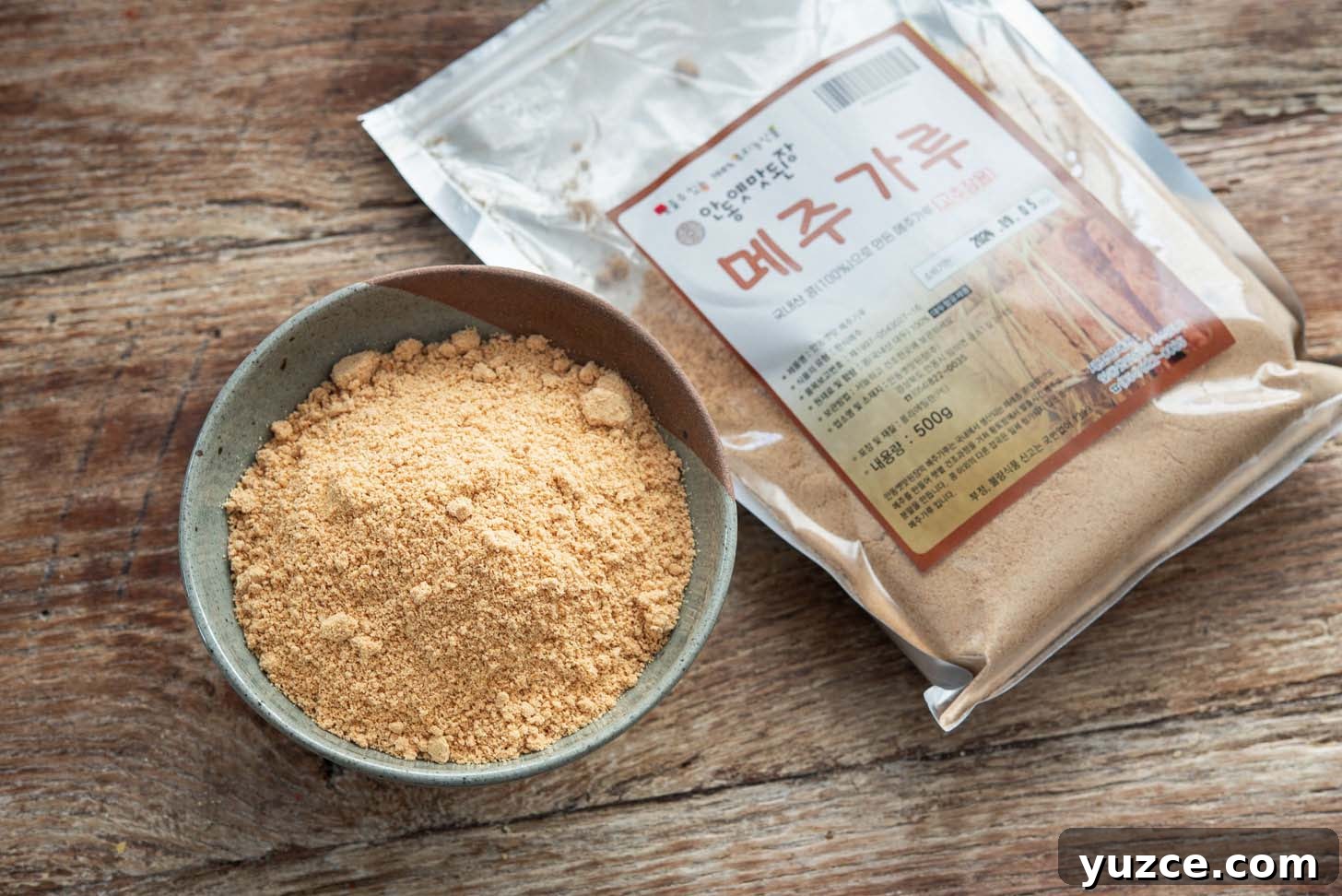
Mejugaru (메주가루) is fermented soybean powder that contributes earthy, savory depth and helps thicken the paste. Sifting it before mixing avoids lumps and promotes an even texture.
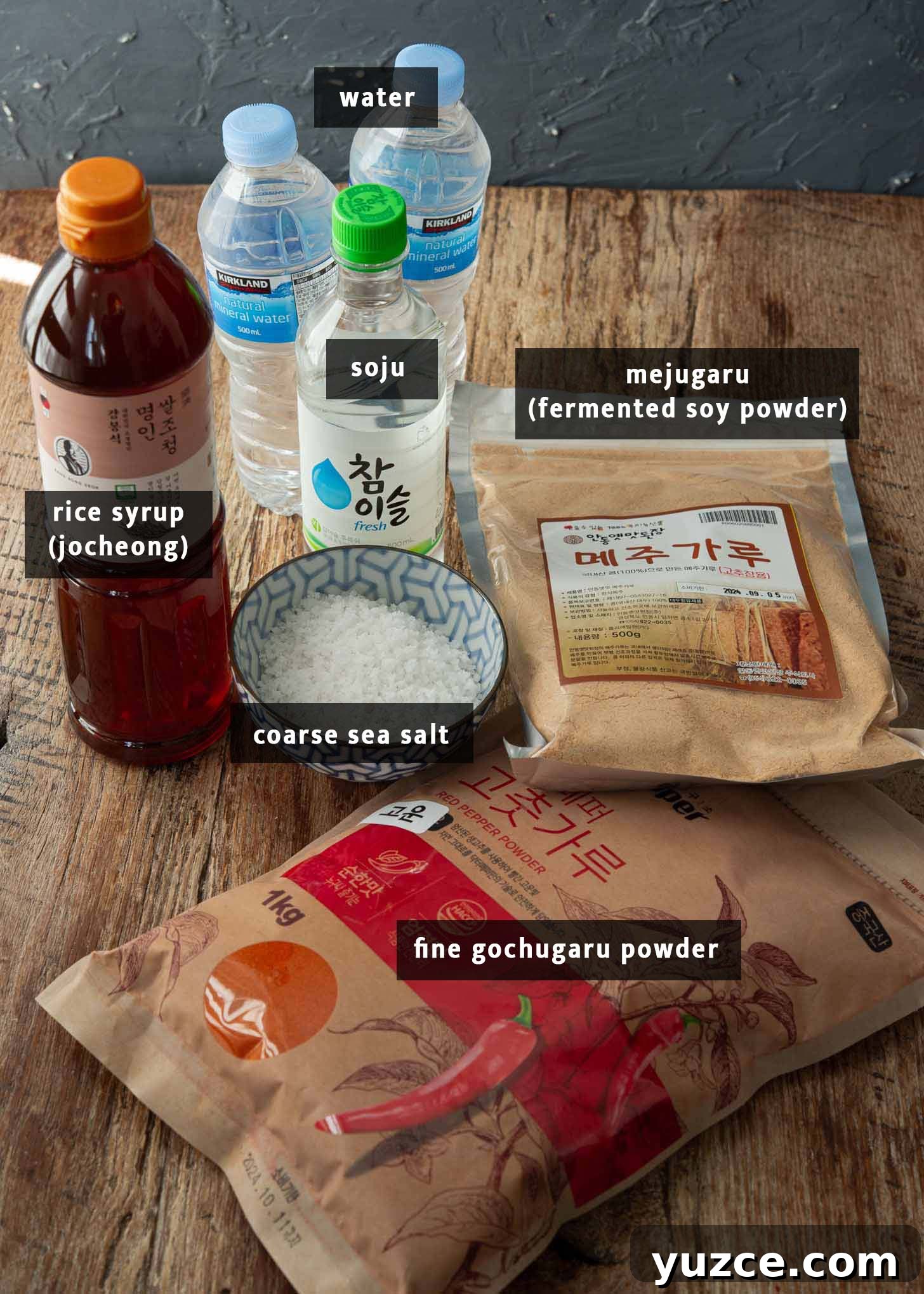
Rice Syrup (Jocheong)
Jocheong (조청) is a thick sweet syrup made from sticky rice. It adds sweetness, a glossy finish, and helps bind the ingredients to the proper consistency. If it’s very thick, warm the bottle in hot water briefly to loosen it.
Korean Coarse Sea Salt (cheonilyum)
Use Korean mineral-rich coarse sea salt (천일염) rather than table salt. It enhances flavor and assists with preservation. If you plan longer room-temperature storage, a modest increase in salt helps prevent spoilage.
Soju (Korean Distilled Alcohol)
Soju (소주) acts as a preservative and contributes a subtle smoothing effect on flavor. If you don’t have soju, a mild sake works well as a substitute.
Korean Plum Extract (Maeshil-Cheong)
Maeshil-cheong (매실청) is a sweet-tart plum extract that adds fruity complexity and natural sugars that support fermentation and deepen flavor as the paste ages.
How to make Gochujang (Easy Method)
Note: You’ll need a large mixing bowl (about 4 quarts or more). This recipe yields roughly 14 cups of gochujang; scale the quantities down if you prefer a smaller batch.
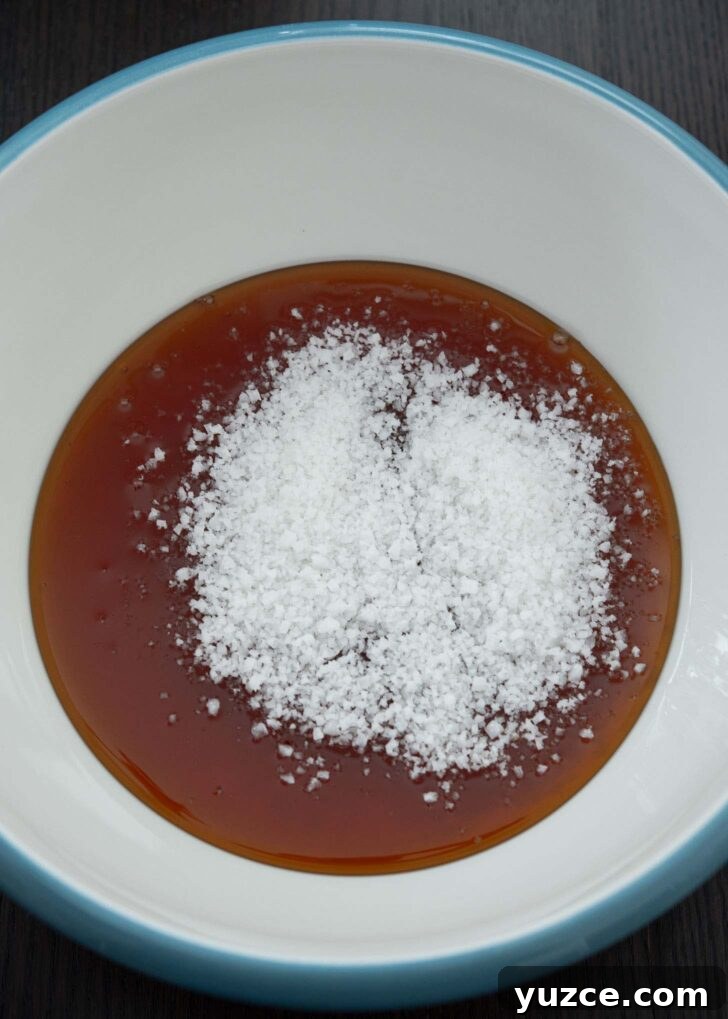
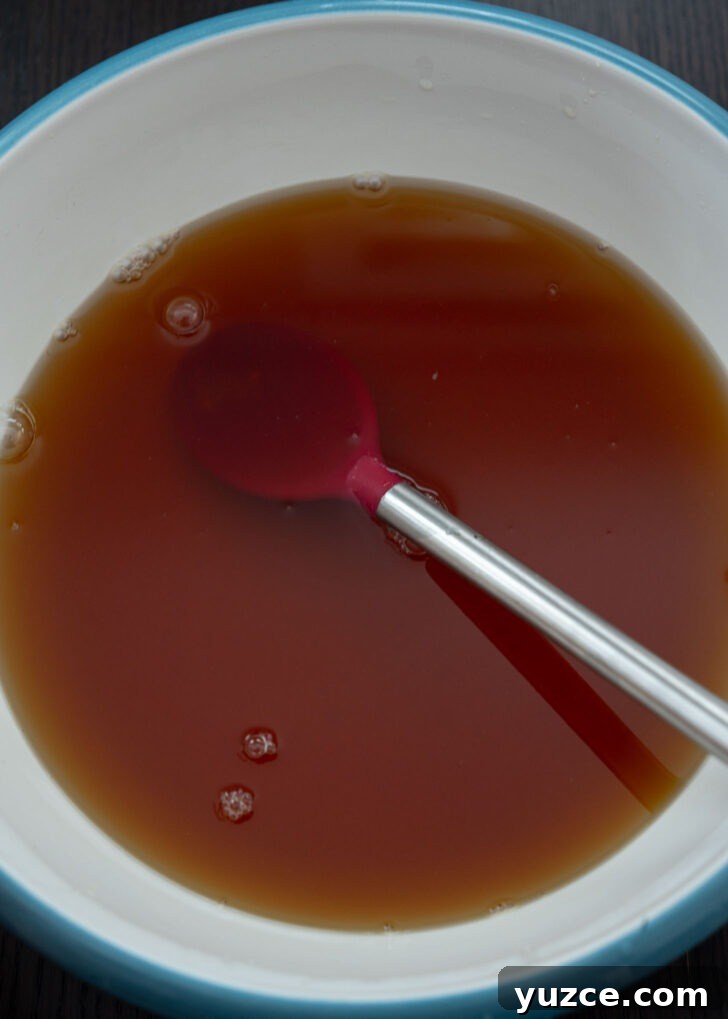
1. Combine rice syrup and salt in the large bowl. Add warm water and stir until the salt dissolves and the syrup blends evenly with the water.
Pro tip: If jocheong is too stiff to pour, warm the bottle in hot water to loosen it.
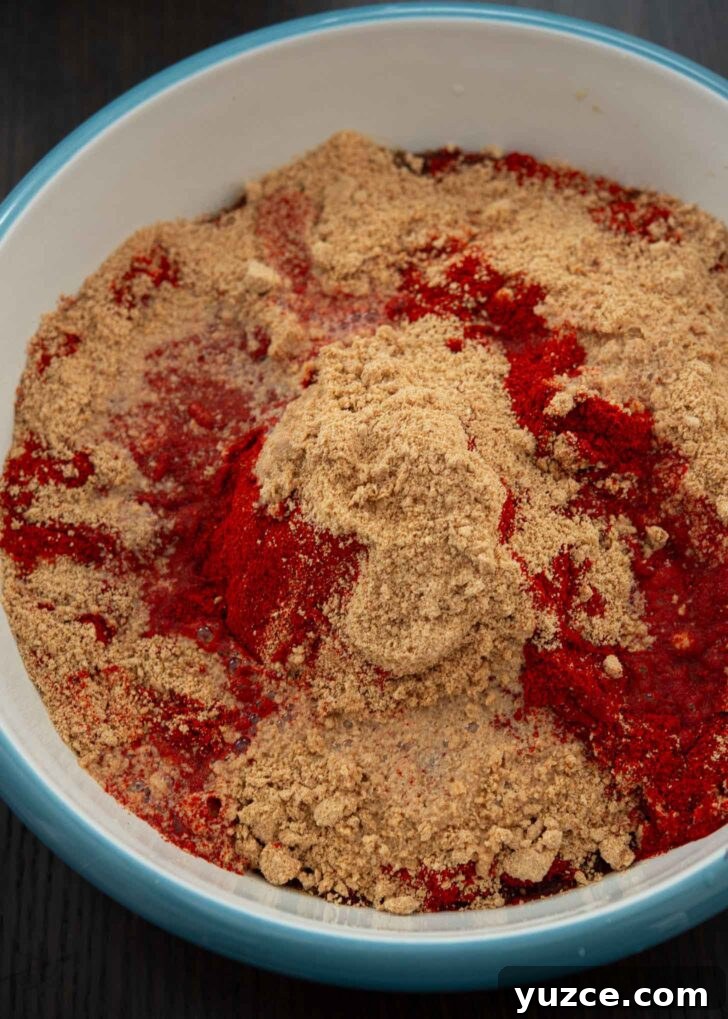
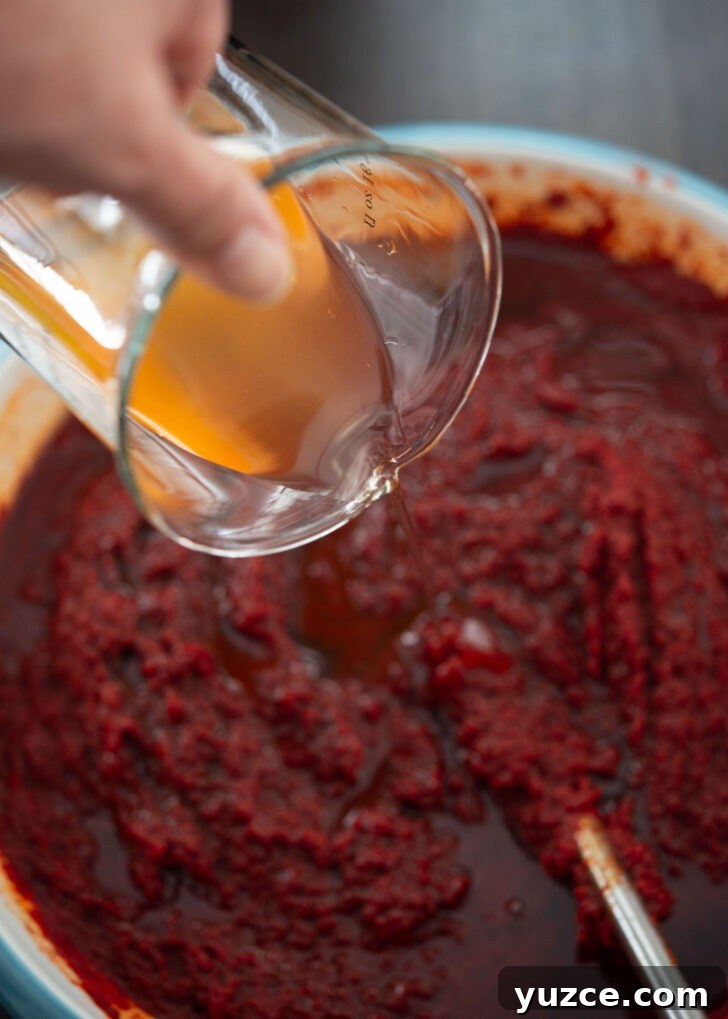
2. Sift the fermented soybean powder into the bowl to prevent clumps. Add the fine chili powder (goun gochugaru), soju (or sake), and plum extract. Stir thoroughly until smooth and uniform with no dry patches. That’s the basic mixture—quick and simple.
Fermentation Process
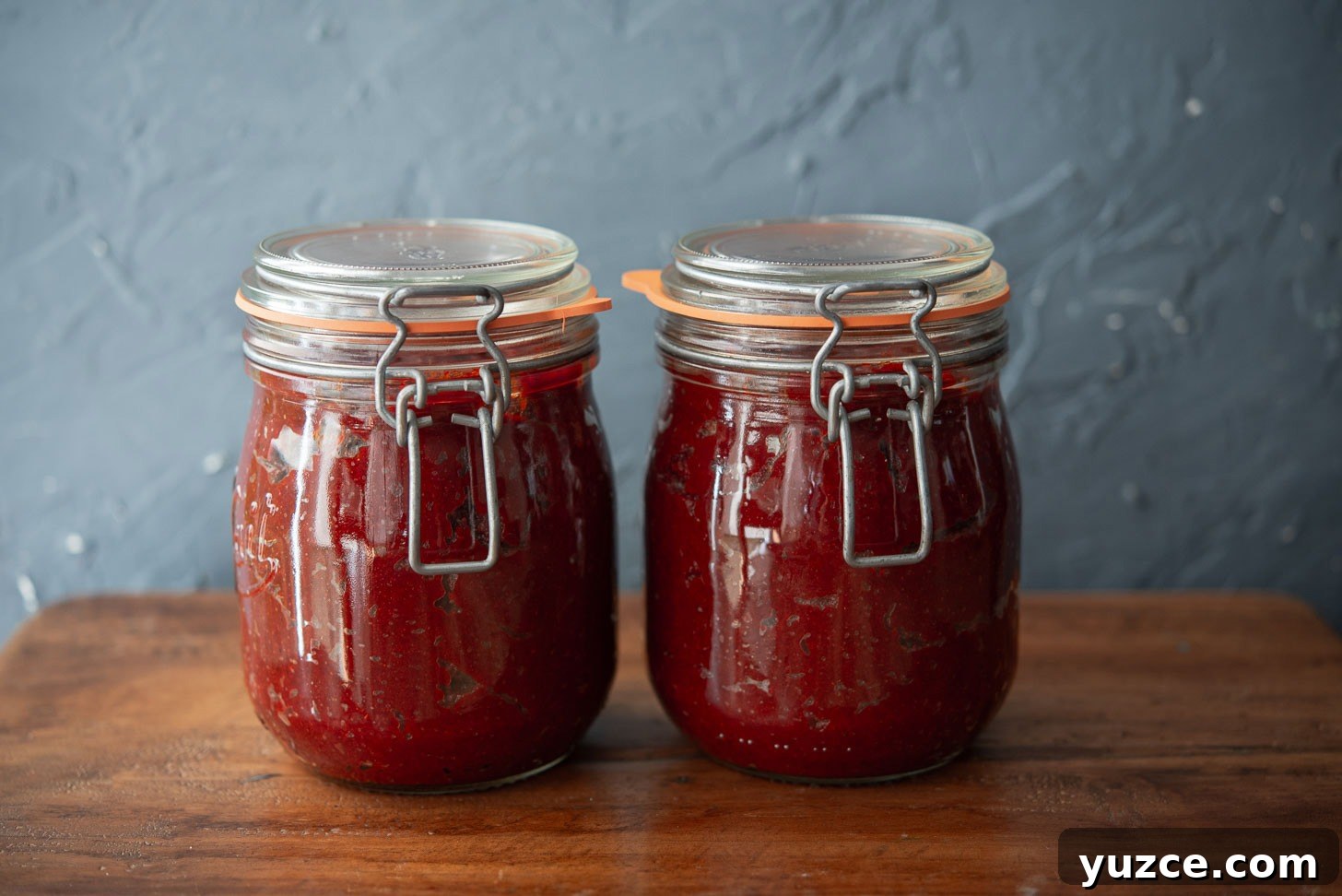
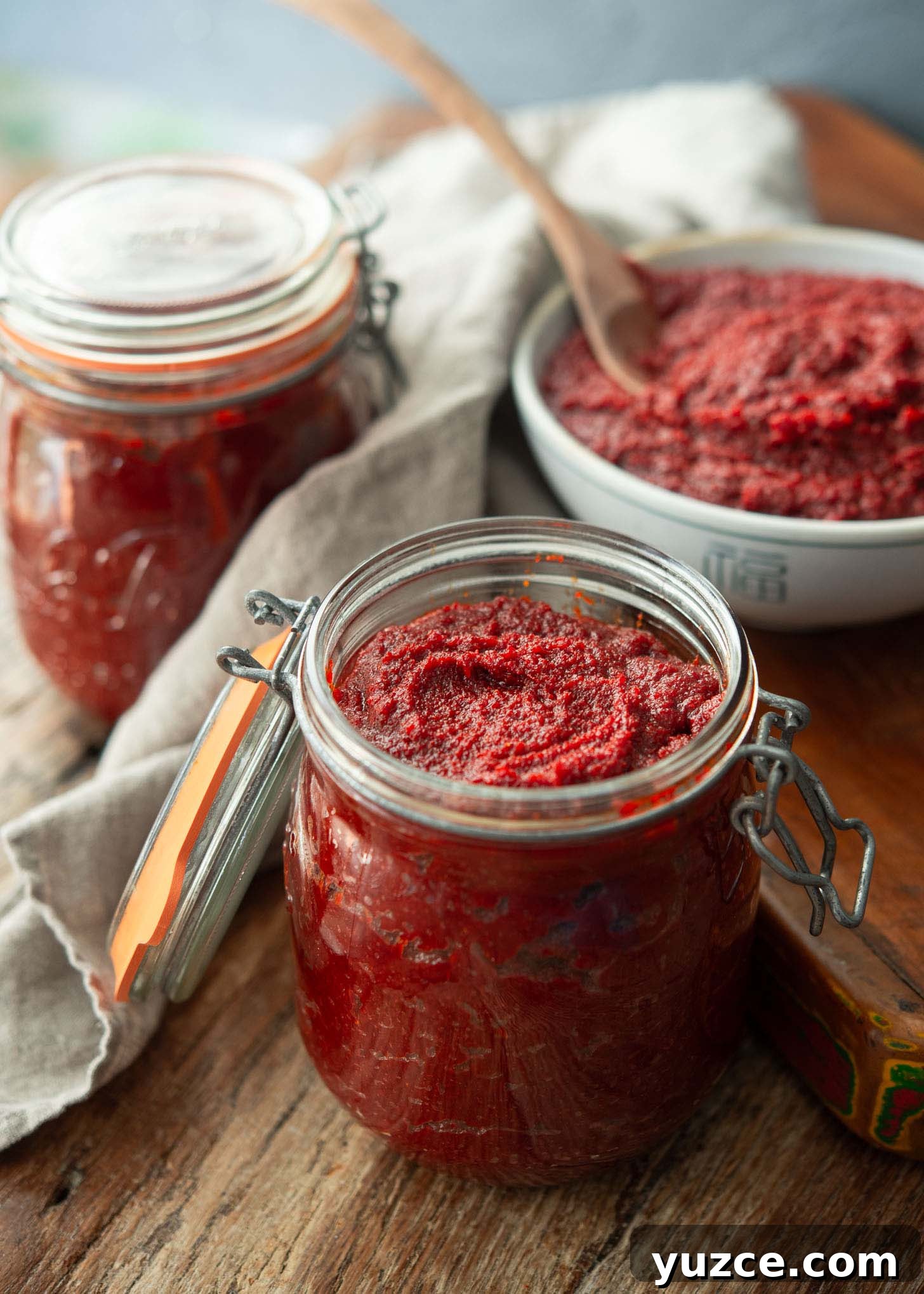
Divide the paste into airtight containers and seal them. Let them sit at room temperature for three days to jump-start fermentation, then move them to the refrigerator to continue aging. You can use the paste right away, but its flavor will deepen and gain more umami over weeks and months.
Storage and Shelf Life
Refrigerated, this quick homemade gochujang keeps up to one year with minimal flavor change. At room temperature it can last several months if properly fermented and stored; however, if leaving at room temperature for longer periods, increase salt and soju by about 10–15% for safer preservation and keep it in a cool, dark spot. Ideal fermentation temperatures are 60–77°F (15–25°C). Discard the paste if you detect mold, unpleasant odors, or major texture changes.
Easy Ways to Use Gochujang
Homemade gochujang brightens many dishes. Use it as a base for bibimbap sauce, spicy pork bulgogi (jeyuk bokkeum), bibim guksu (cold spicy noodles), marinades, stews, dressings or even in creative sweets like gochujang caramel cookies. Its bold flavor pairs well with grilled meats, roasted vegetables and noodle dishes.
- Spicy Pork Bulgogi (Jeyuk Bokkeum)
- Bibimbap Sauce
- Korean Cold Noodles (Bibim Guksu)
- Gochujang Caramel Cookies
Love this recipe? Try it, rate it, and share your comments below. If you post your creation on Instagram, tag @beyondkimchee to show your results.
10-Minute Homemade Gochujang
Yields about 14 cups.
Ingredients
-
2 1/2
lb (1.2 kg)
Korean rice syrup (jocheong) -
1/2
cup (150 g)
Korean coarse sea salt -
4 1/4
cup (1 liter)
warm mineral water -
2 1/4
lb (1 kg)
Korean fine chili powder (goun-gochugaru) -
1/3
lb (150 g)
fermented soybean powder (mejugaru), sifted -
1
cup (240 ml)
Korean plum extract (maeshil cheong) -
1
cup (240 ml)
Korean alcohol (soju) or sake
Equipment
- large mixing bowl (about 4 quarts or larger)
- airtight containers for storage
Instructions
-
In a large mixing bowl, combine rice syrup and salt. Add warm water and stir until the salt dissolves and the syrup is evenly mixed.
-
Sift the fermented soybean powder into the bowl to avoid lumps. Add the fine chili powder, soju (or sake), and plum extract. Stir until smooth with no dry clumps. This yields about 14 cups of gochujang.
To store the gochujang
-
Divide the gochujang into airtight containers and seal. Let sit at room temperature for 3 days, then refrigerate. The paste will continue to mature and can last up to 1 year in the fridge.
-
You can use the paste immediately. Flavor deepens with time as it ferments.
-
For extended room-temperature storage, add about 10% more salt and soju and keep in a cool, dark place to reduce the risk of mold.
Notes
- Adjust the batch size if 14 cups is more than you need.
- Warm very thick jocheong in hot water to make it easier to work with.