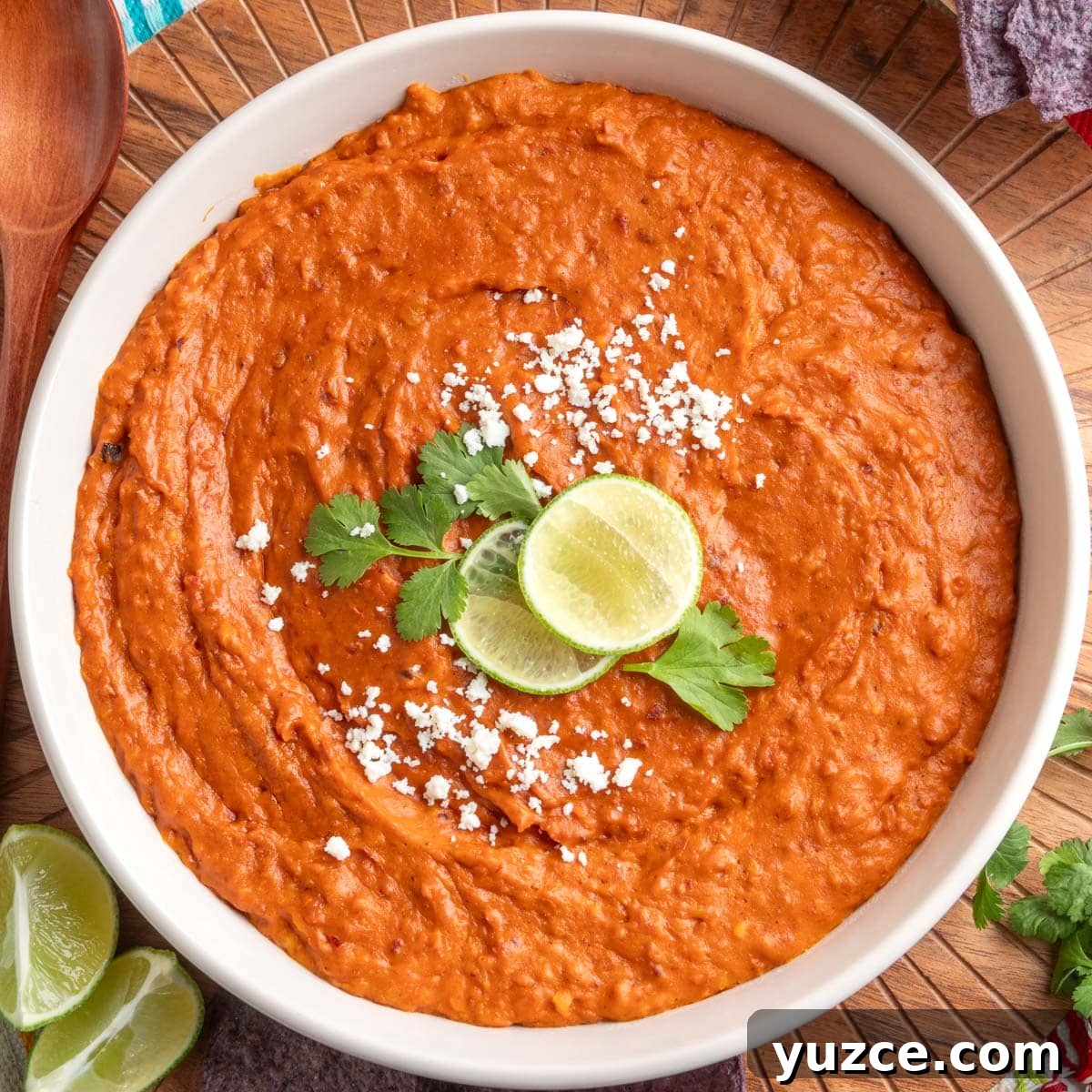
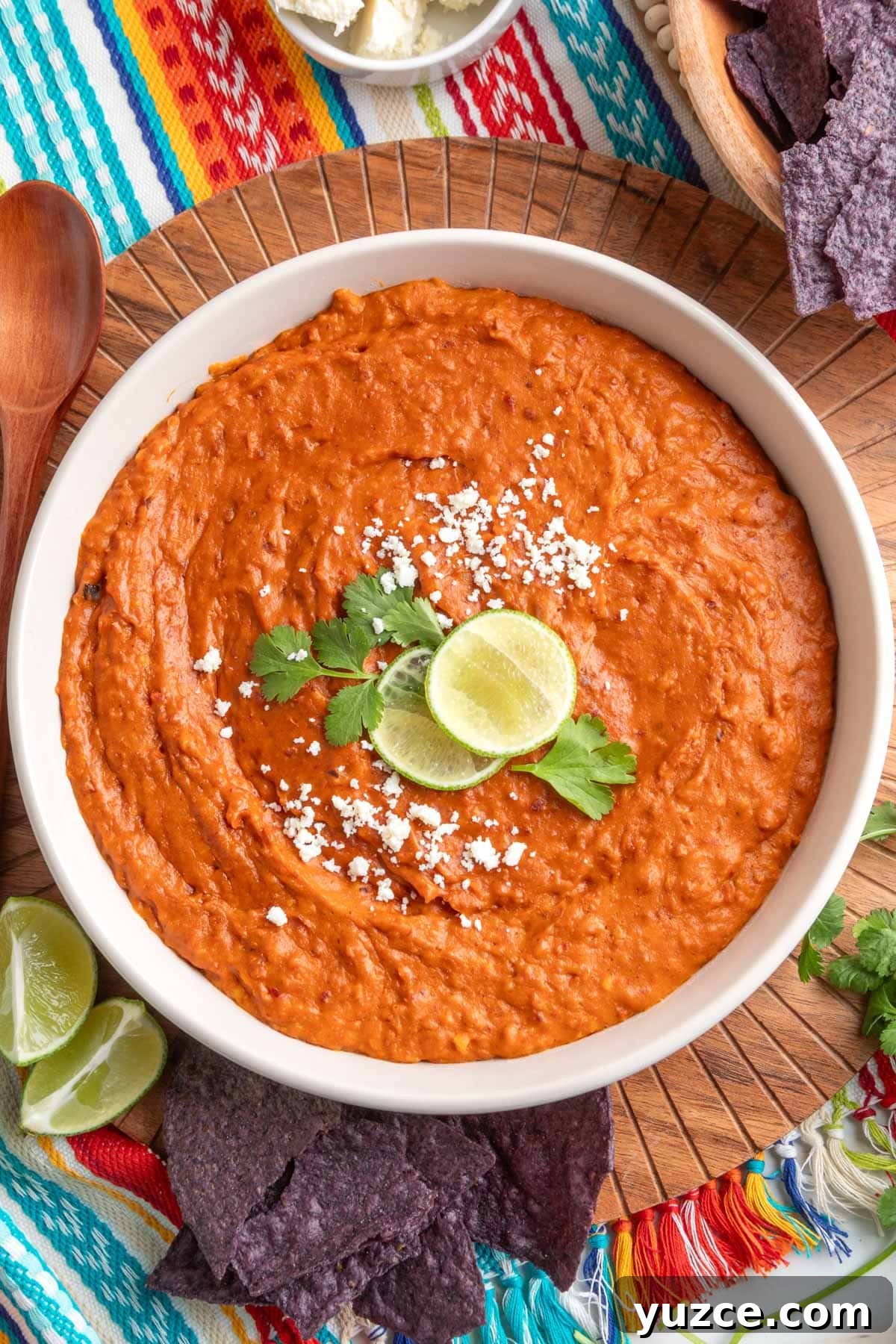
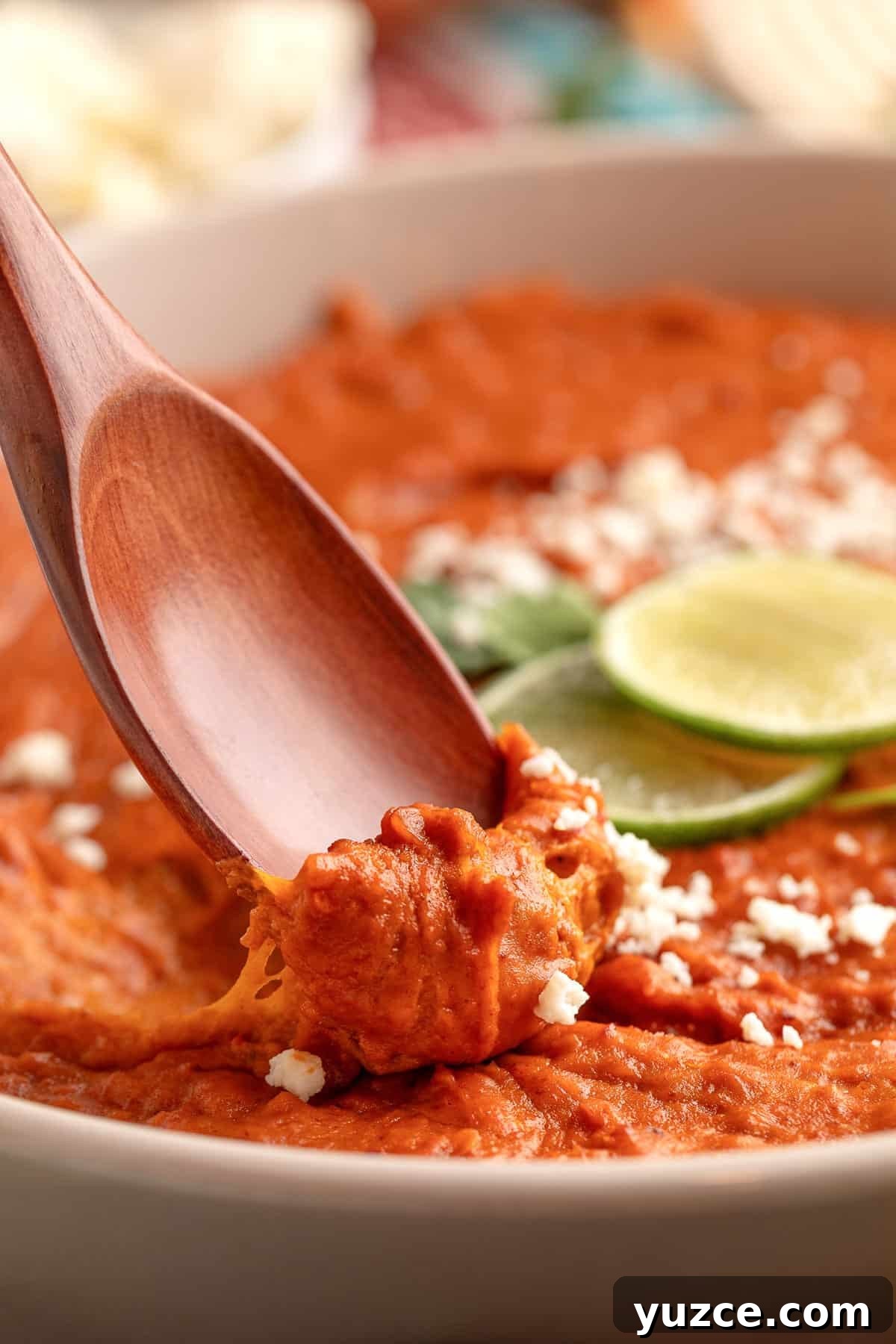
This Chorizo Chipotle Bean Dip is a hot, cheesy crowd-pleaser perfect for game day, barbecues, taco night, and more. Savory pork chorizo, blended pinto beans, smoky chipotle in adobo, and melted quesadilla cheese create a rich, bold dip that’s deeply satisfying.
Before You Start Cooking
This recipe came from friend of Striped Spatula Melinda Reddehase, who builds bold flavor. Notes and small adjustments are included throughout so you can make the dip just the way you like it.
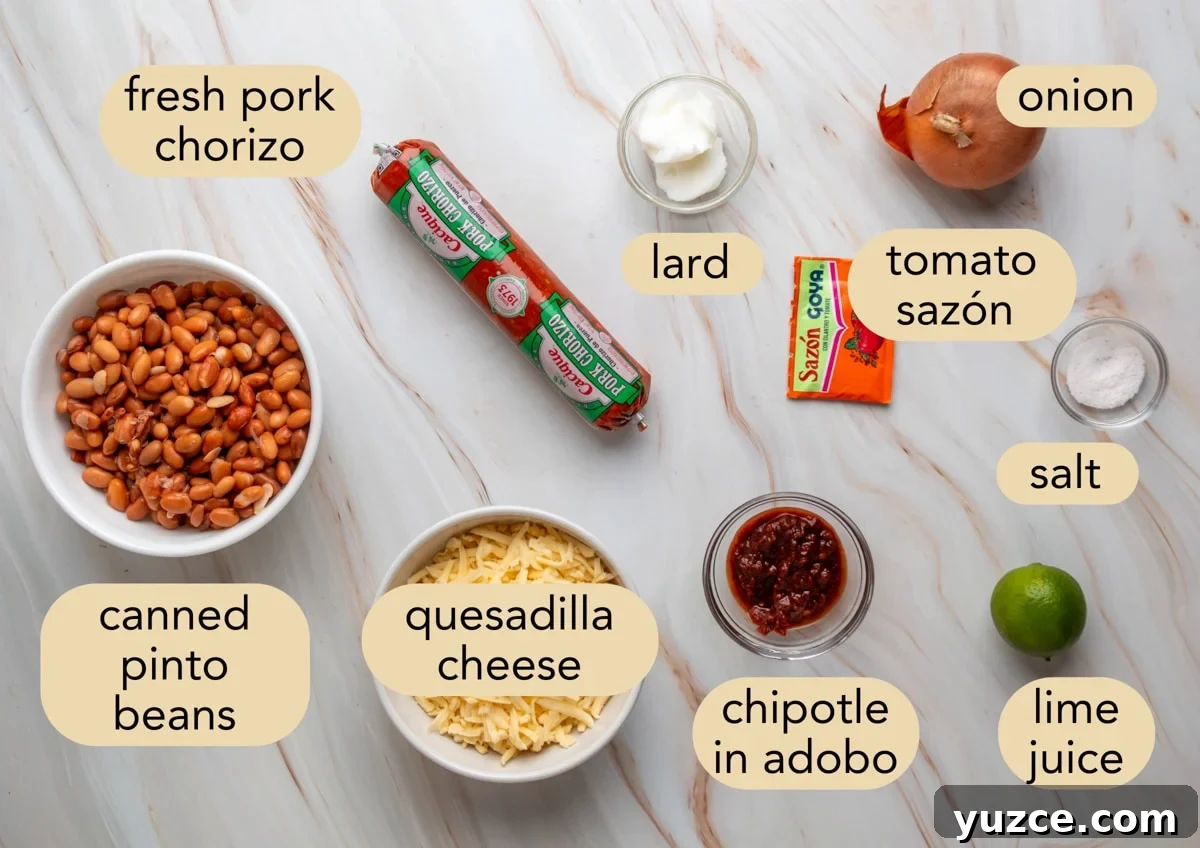
- Blender or food processor: Either works for the bean base. A high-speed blender yields the smoothest, creamiest texture.
- Chorizo: Use fresh Mexican-style pork chorizo for the best flavor, or substitute beef chorizo. If yours comes in links, remove the casings before cooking.
- Quesadilla cheese: Queso quesadilla melts beautifully. If you can’t find it, Queso Asadero or Monterey Jack are excellent substitutes.
- Lard: Traditional refried-bean richness comes from lard. Look in the baking or international aisle labeled “manteca.” If unavailable, bacon drippings can be used for a smoky twist.
How to Make Chorizo Bean Dip
How to Make Chorizo Bean Dip
Step 1: Cook the Onion and Chorizo
Heat 1 tablespoon of lard in a large skillet over medium-low heat. Add diced yellow onion and cook until softened and just beginning to brown at the edges — you want tender, not caramelized. Remove the onion and set it aside.
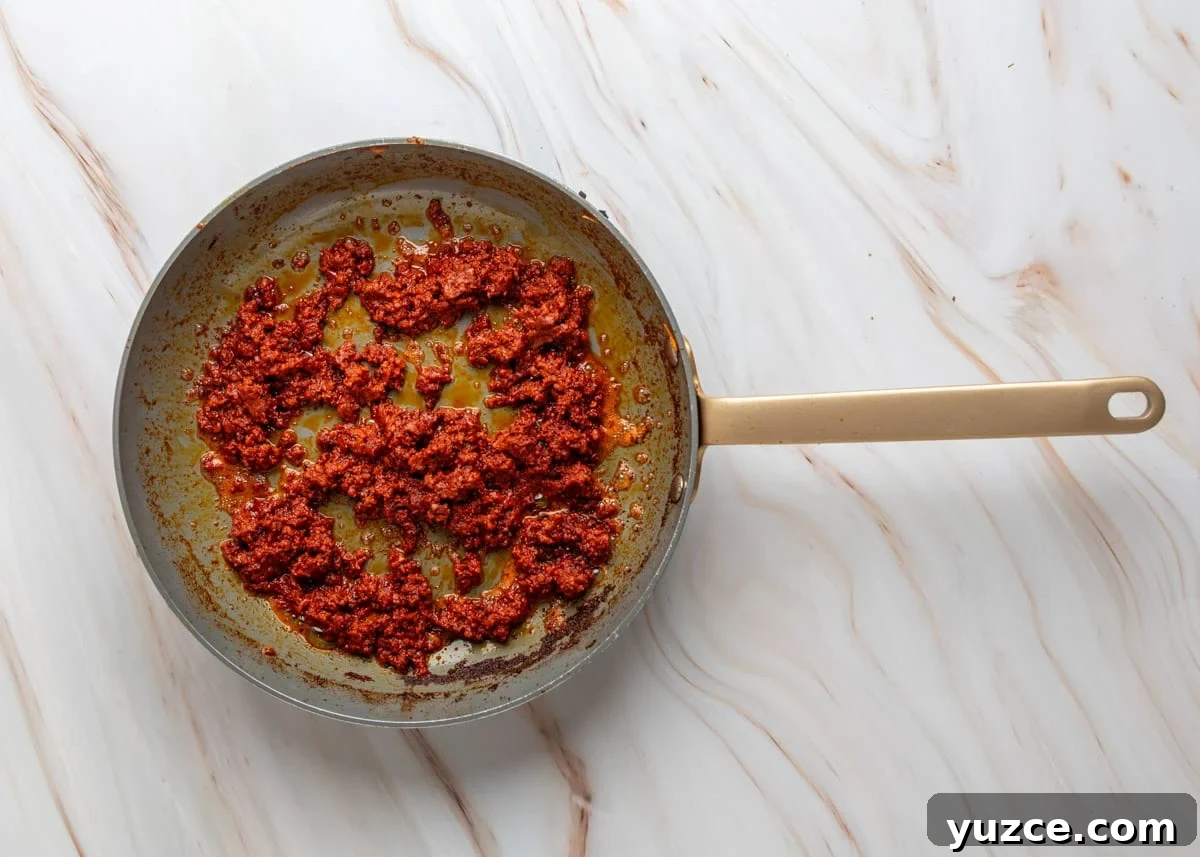
Add the chorizo to the same skillet, breaking it into small crumbles as it cooks. Allow the fat to render and the meat to dry slightly with a bit of crisp at the edges. When the chorizo is done, remove the pan from the heat but leave the chorizo and rendered fat in the skillet for later.
Step 2: Blend the Bean Base
In a blender or food processor, combine the cooked onion with:
- 2 (15-ounce) cans pinto beans, drained and rinsed
- 2 tablespoons chipotle peppers in adobo, roughly chopped, including some adobo sauce
- ½ cup water to help create a smooth purée
- ½ teaspoon fresh lime juice for brightness
- 1 packet Goya Cilantro & Tomato Sazón for warm savory notes and color
- ¼ teaspoon fine sea salt, then adjust at the end
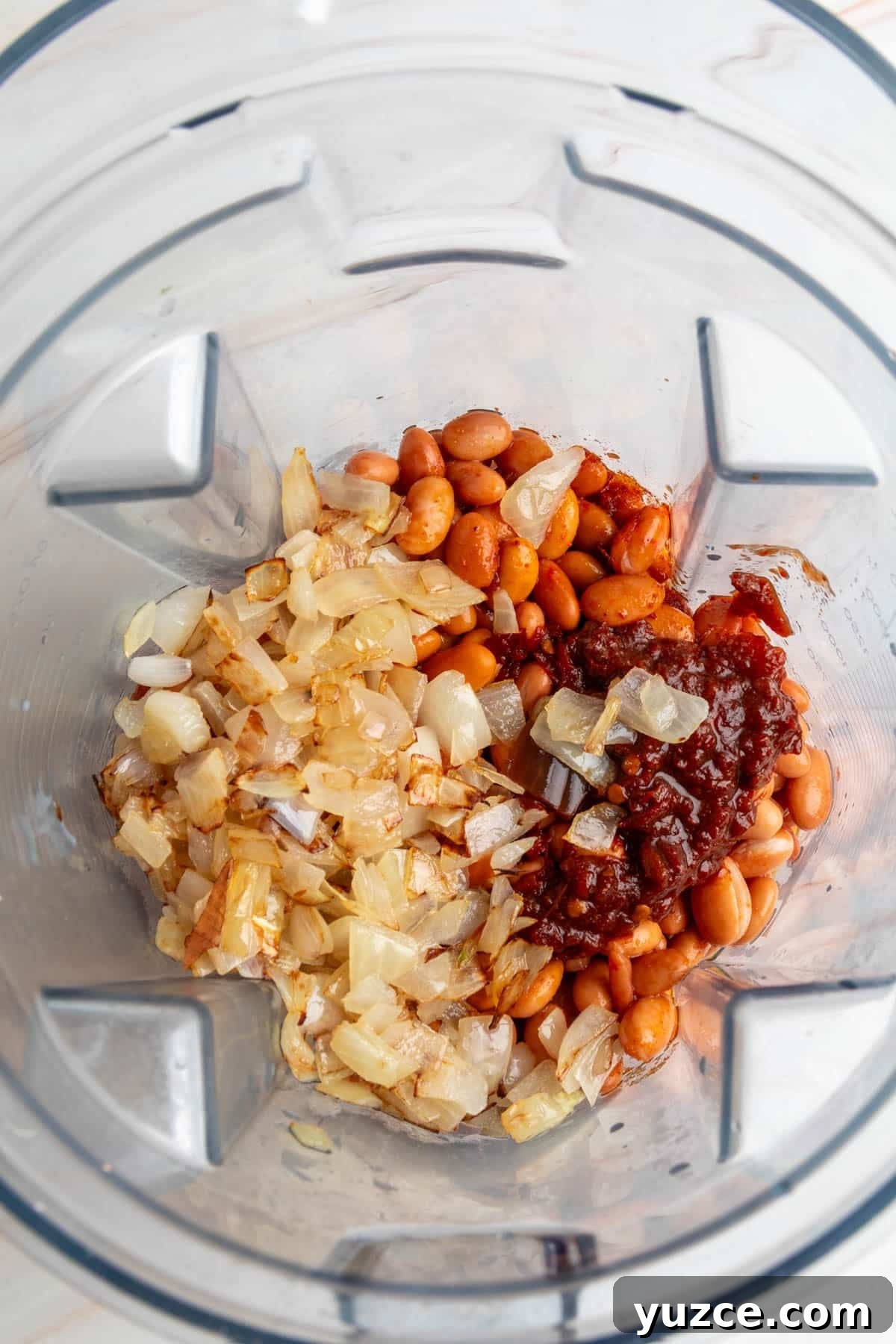
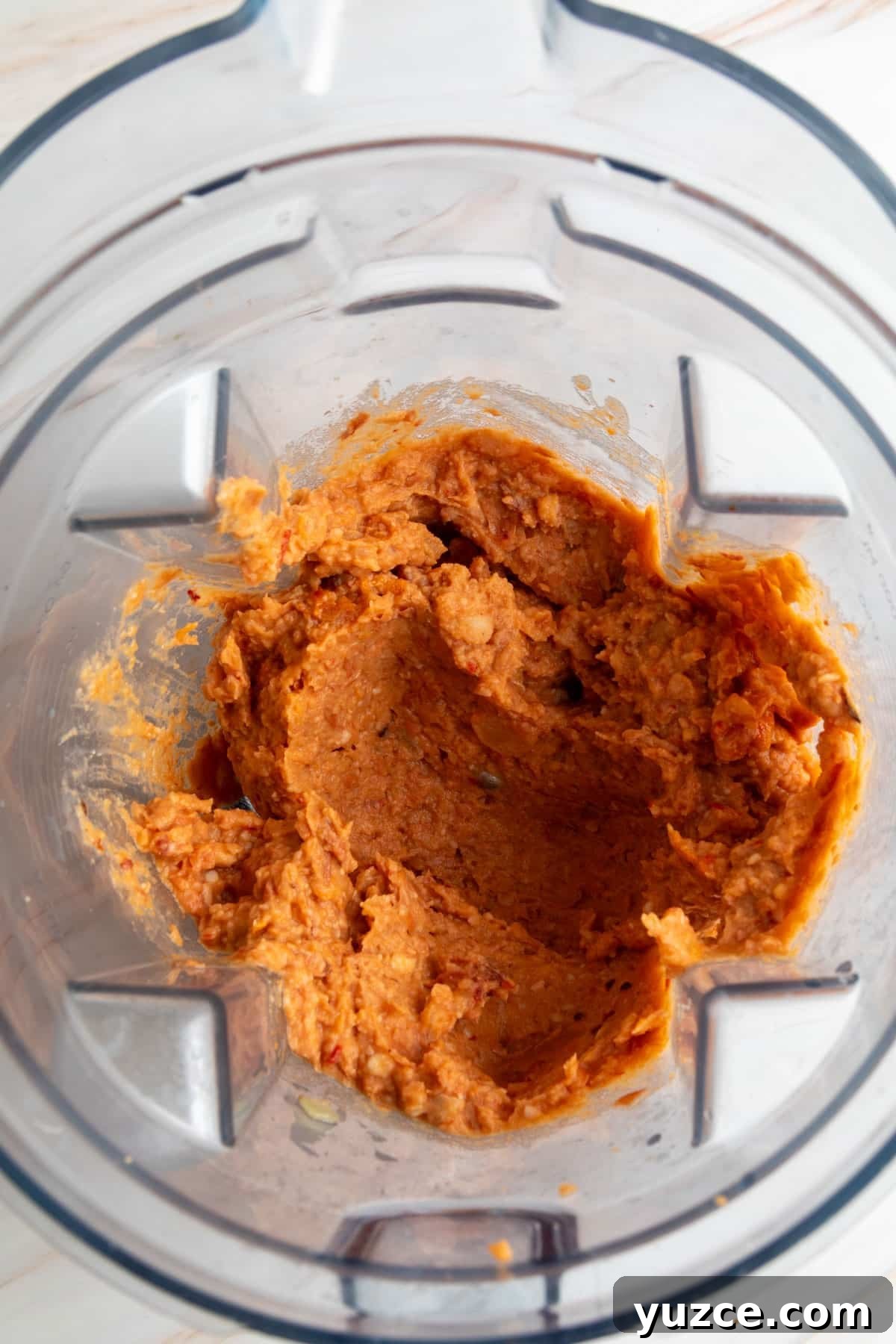
Blend until smooth and creamy, stopping to scrape down the sides as needed. If you have a tamper for a high-speed blender, use it to keep the mixture moving.
Step 3: Finish the Dip
Return the skillet with the cooked chorizo and its rendered fat to low heat. Stir the bean purée into the chorizo, cooking and stirring until warmed through, about 2–4 minutes.
Reduce heat to low, then stir in 8 ounces shredded Mexican-style quesadilla cheese and the remaining 1 tablespoon of lard. Stir constantly until the cheese melts fully and the dip becomes glossy and creamy.
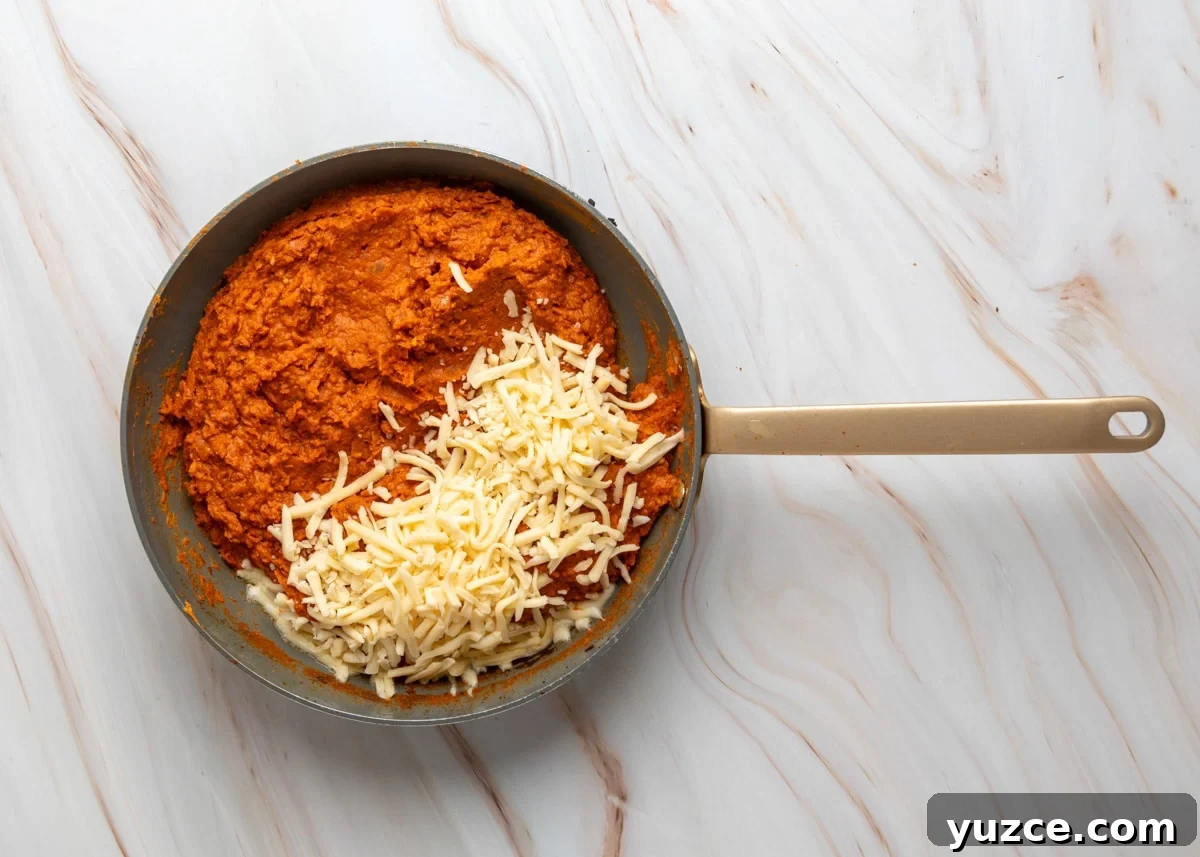
Taste and adjust with extra sea salt or a squeeze more lime juice. For more heat, add extra chopped chipotle when blending or a pinch of cayenne at the end.
Serving Chorizo Bean Dip
Serve the dip hot, straight from the skillet or transferred to a warm serving dish. Top with crumbled queso fresco and chopped fresh cilantro for a fresh contrast, and add lime wedges for guests who like extra acidity.
Sturdy tortilla chips, especially blue corn, are ideal for scooping. The dip also works as a filling for burritos, a layer for nachos, or a flavorful dollop on tacos and tostadas.
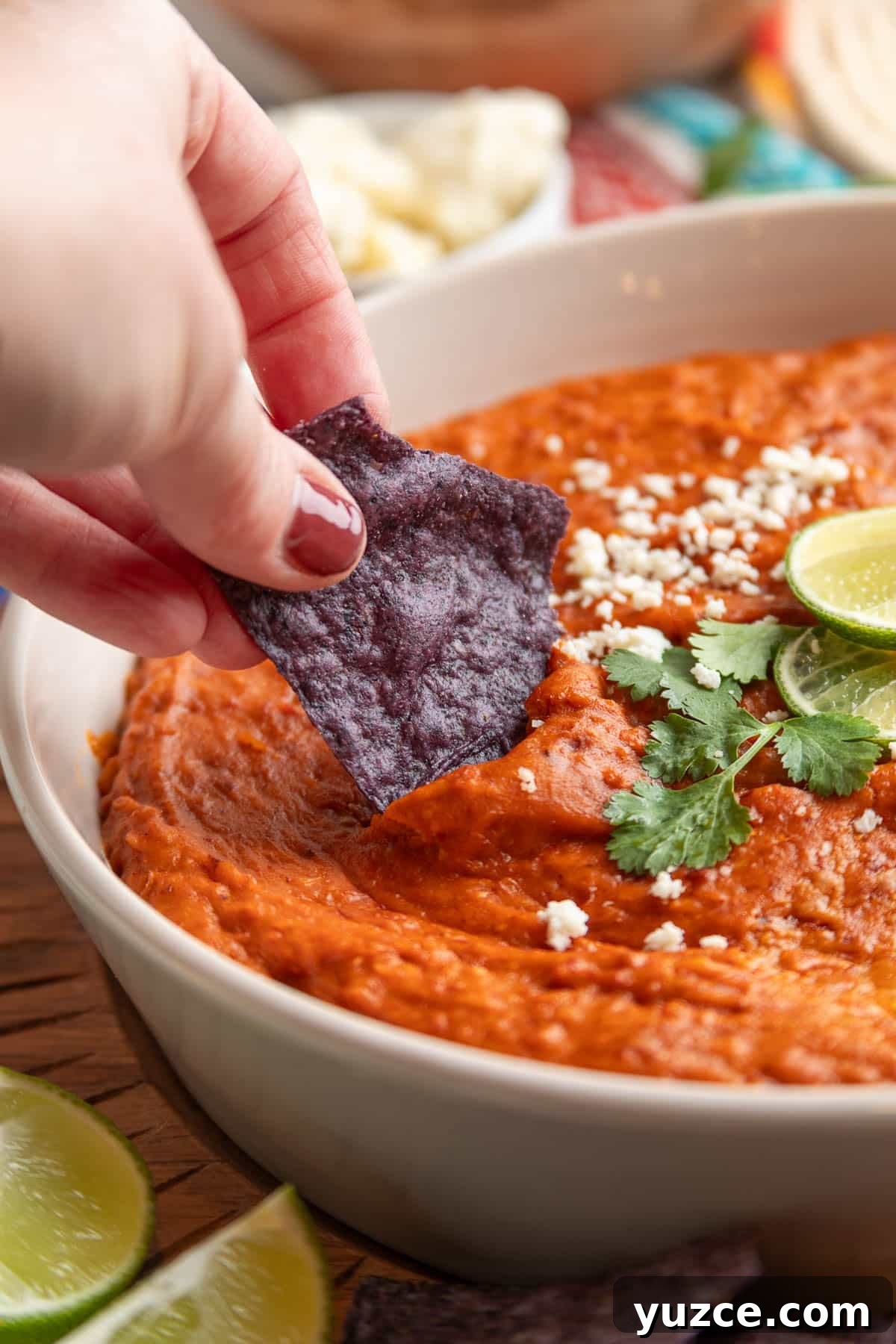
This recipe fills an 8×8-inch dish and serves about 8 to 10 people. It halves easily if you need a smaller batch. For long service at a party or tailgate, keep the dip on warm in a slow cooker and stir occasionally to prevent scorching.
More Hot & Cheesy Dip Recipes
- Boudin Dip with Andouille
- Reuben Dip
- Spinach Artichoke Dip
- Crab and Artichoke Dip
- Mexican Street Corn Dip
Craving more? Explore additional dips and spreads to build a full appetizer menu.
Chorizo Bean Dip
Ingredients
- 2 (15 ounce) cans pinto beans, drained and rinsed
- 1 packet Goya Sazon Cilantro & Tomato seasoning
- ½ cup water
- ½ cup diced yellow onion
- 2 tablespoons lard, divided
- 2 tablespoons chipotle peppers in adobo sauce
- 9 ounces fresh Mexican pork chorizo
- 8 ounces shredded Mexican-style quesadilla cheese
- ½ teaspoon freshly-squeezed lime juice, plus more to taste
- ¼ teaspoon fine sea salt, plus more to taste
- Crumbled queso fresco and fresh cilantro leaves, for garnish (optional)
Instructions
- Heat 1 tablespoon of lard in a large skillet over medium-low heat. Add the diced onion and cook until softened with light browning. Remove and set aside.
- Add the chorizo to the skillet, breaking it into crumbles. Cook until the fat renders and the meat is slightly dry with light crisping. Remove the pan from heat but leave the chorizo and fat in the skillet.
- In a blender or food processor, combine the pinto beans, water, Goya Sazon, chipotle peppers with adobo, lime juice, salt, and cooked onion. Blend until smooth and creamy, scraping down the sides as needed.
- Return the skillet to low heat. Stir in the bean purée and combine it with the chorizo. Cook 2–4 minutes, stirring often, until warmed through.
- Stir in the shredded quesadilla cheese and remaining 1 tablespoon of lard. Continue stirring until the cheese is fully melted and the dip is creamy.
- Taste and adjust with additional salt or lime juice. Top with crumbled queso fresco and fresh cilantro if desired, and serve hot with tortilla chips.
Notes
2. Chipotle peppers in adobo. They come whole in the can; roughly chop before measuring and include some of the adobo sauce for deeper flavor.
3. Chorizo. Use fresh Mexican-style pork chorizo (not cured Spanish chorizo). If using links, remove casings before cooking. Beef chorizo works as a substitute.
4. Mexican-style quesadilla cheese. Available in the dairy or deli section; Queso Asadero or Monterey Jack are good alternatives that melt well.
5. Make it spicy. The dip is mild-to-moderate as written. Add more chipotle when blending or a pinch of cayenne when seasoning to increase heat.
Nutrition Estimate
|
Calories: 196 kcal
|
Carbohydrates: 3 g
|
Protein: 12 g
|
Fat: 15 g
|
Sodium: 538 mg
Nutrition information is automatically calculated and should be used as an approximation.
Please note recipes use US customary measurements and have not been tested for high-altitude cooking.
Like this? Rate and comment below!