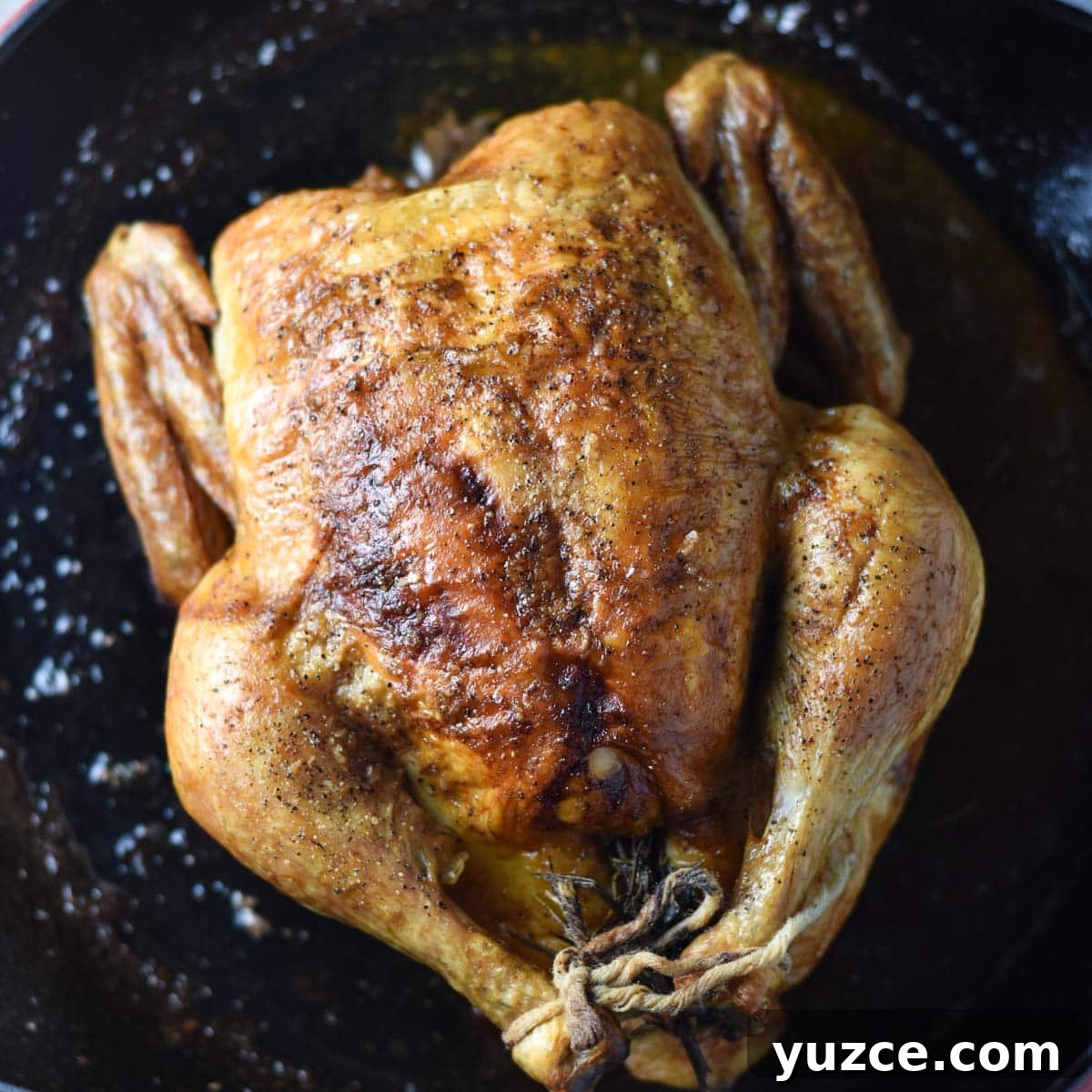
This cast iron roast chicken is an easy, four-ingredient recipe that works equally well for a special dinner or for meal prep. With just a whole chicken, fat, salt and pepper, the method highlights simple roasted chicken flavors and relies on a cast iron pan to deliver crispy skin and concentrated pan juices.
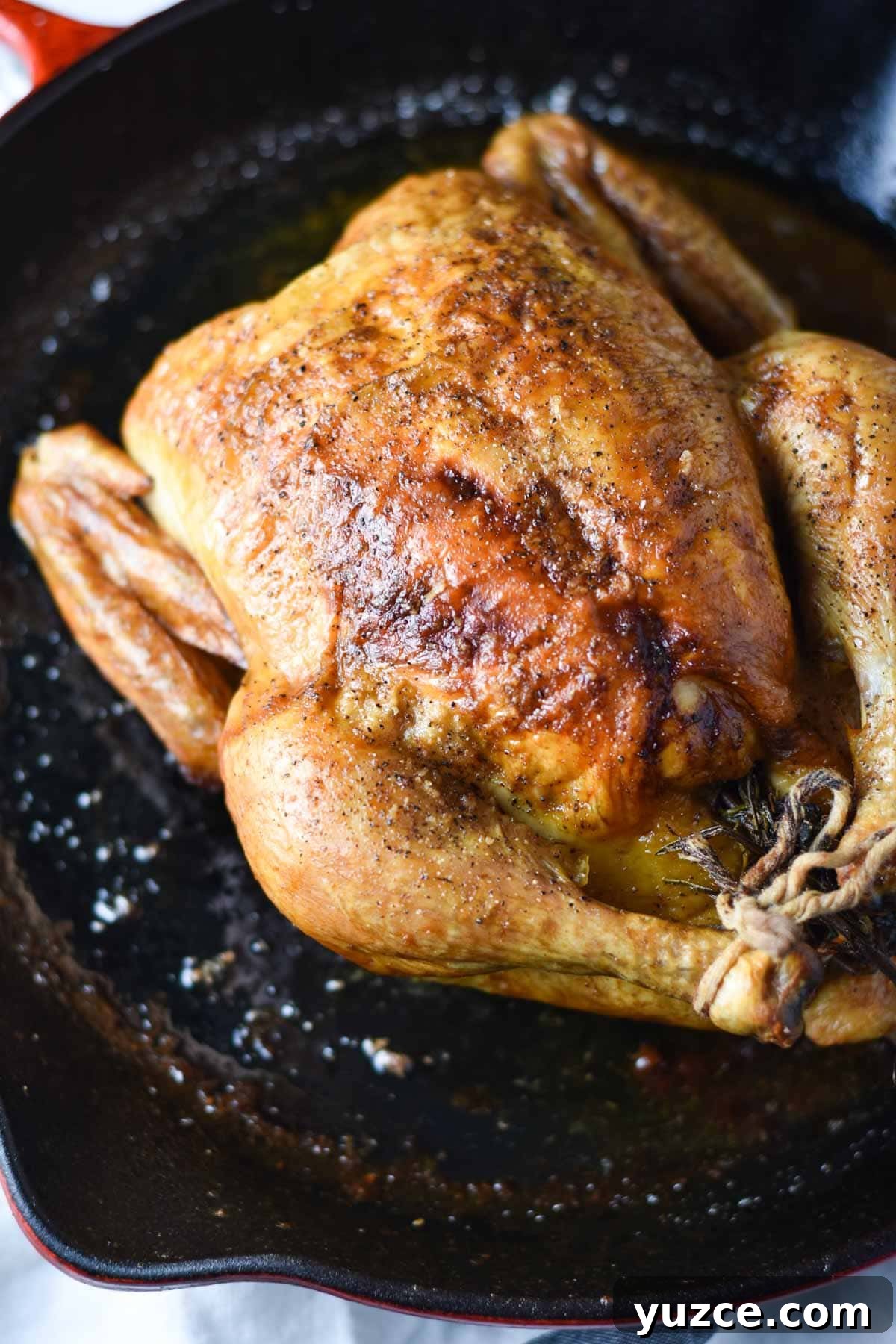
Cooking in a cast iron skillet concentrates the drippings so you can make a quick homemade gravy in the same pan, saving dishes and preserving flavor. The pan’s heat retention also speeds cooking and helps the skin become beautifully crisp.
Below you’ll find practical tips for choosing and preparing the bird, simple ingredient notes, variations, and serving ideas so you can master this straightforward roast chicken. Serve it with simple sides such as creamy pasta, mashed potatoes, or a crisp salad for a complete meal.
Table of Contents
- Why Use a Cast Iron for Roast Chicken?
- Ingredients
- How to Cook A Whole Chicken in a Cast Iron Pan
- How to Make Gravy from Pan Drippings
- Expert Tips for Perfect Roasted Chicken
- Storage and Freezing
- Serving Suggestions
- Recipe FAQ
- Cast Iron Recipes
- Cast Iron Roast Chicken Recipe
Why Use a Cast Iron for Roast Chicken?
Roasting a chicken in cast iron simplifies the process and delivers excellent results. It browns the skin quickly and cooks the bird evenly, while collecting flavorful drippings for gravy so you don’t have to move juices between pans. Benefits include:
- Cost-effective: Roasting your own chicken is usually less expensive and yields a larger, higher-quality bird than many store-bought rotisserie options.
- Minimal ingredients: This recipe uses four core ingredients—chicken, fat (butter or oil), salt, and pepper—so it’s easy and pantry-friendly.
- Versatile: Serve the bird whole for a special meal or shred it for sandwiches, salads, or soups during the week.
- Multi-purpose: Save the carcass and bones to make a homemade stock or broth, extending the value of the meal.
When a recipe calls for a “naked chicken” for later use, a simple roasted whole bird is a great alternative to buying rotisserie chicken.
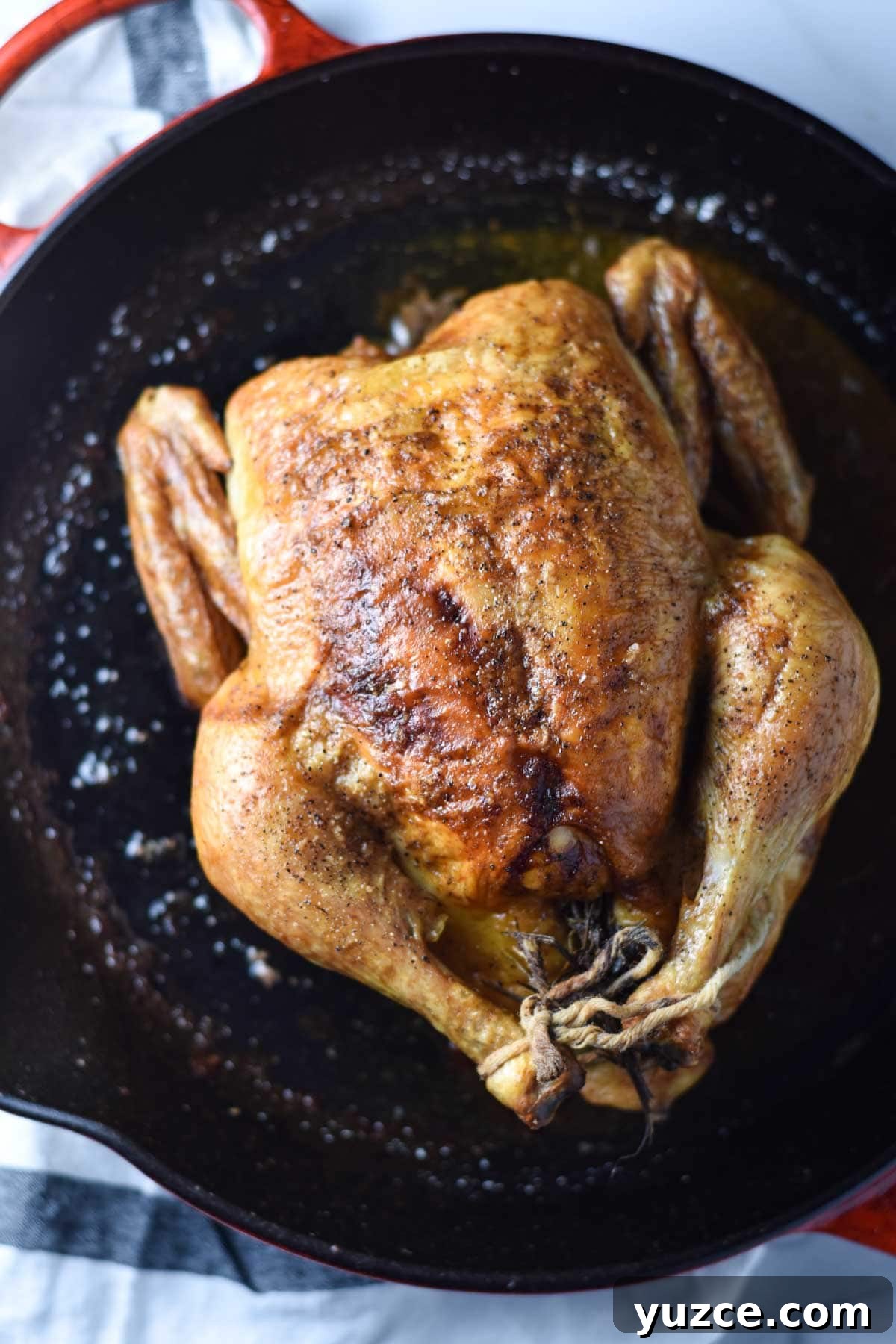
Ingredients
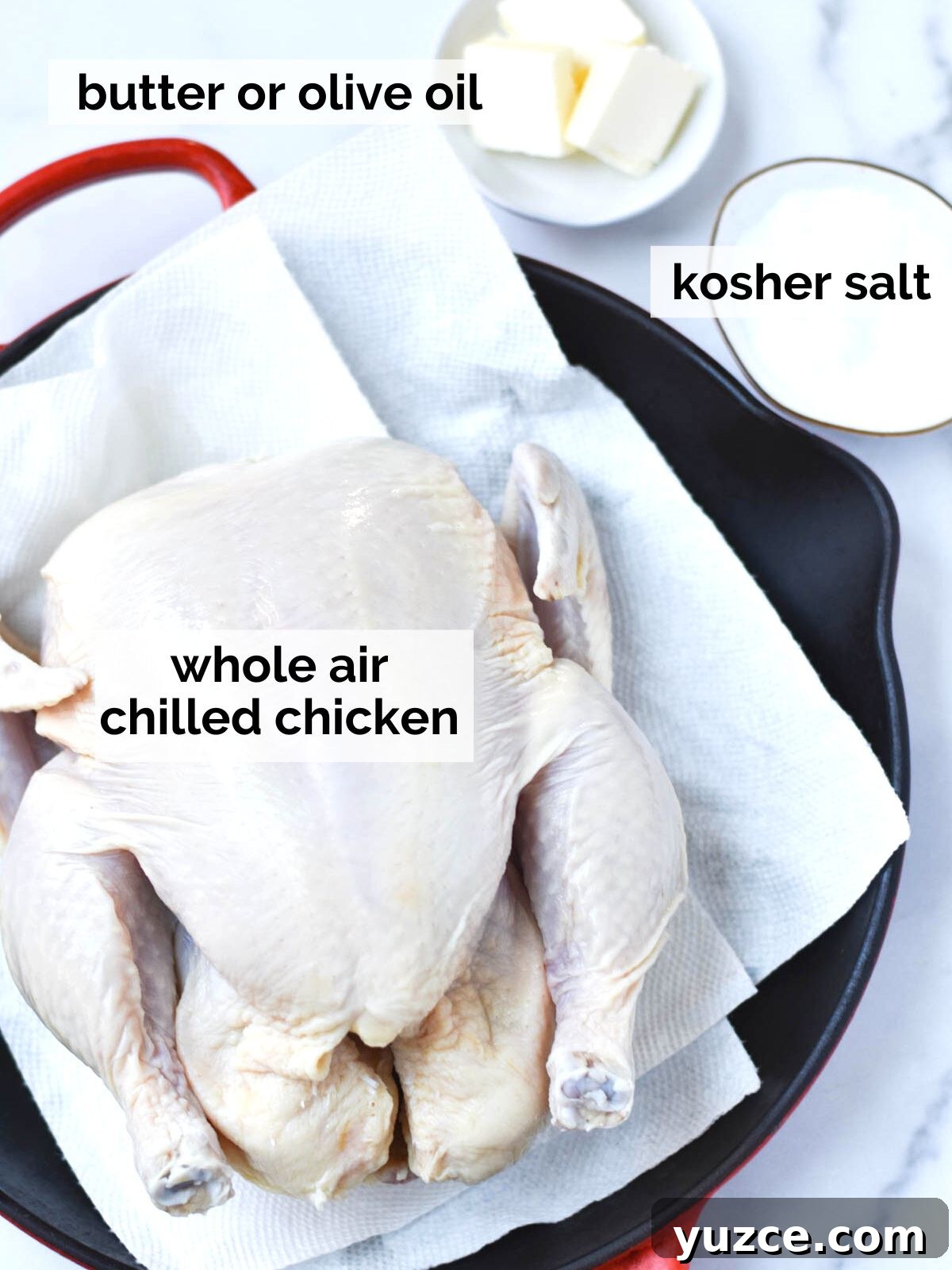
- Whole roasting chicken: 4–5 pounds is typical. Air-chilled chickens brown and taste better; avoid birds injected with brines or additives. Check the cavity for any packaging before cooking.
- Olive oil or butter: One tablespoon to rub under and over the skin.
- Kosher salt and freshly cracked pepper: Simple seasoning is all this recipe needs.
Optional extras: Fresh herbs like thyme, rosemary, sage, oregano, or parsley can be tucked into the cavity. You can also add large chunks of root vegetables (potatoes, carrots, beets, parsnips) to roast alongside the bird—cut them into roughly 2-inch pieces so they roast evenly without becoming mushy.
How to Cook A Whole Chicken in a Cast Iron Pan
Step 1: Prepare the chicken
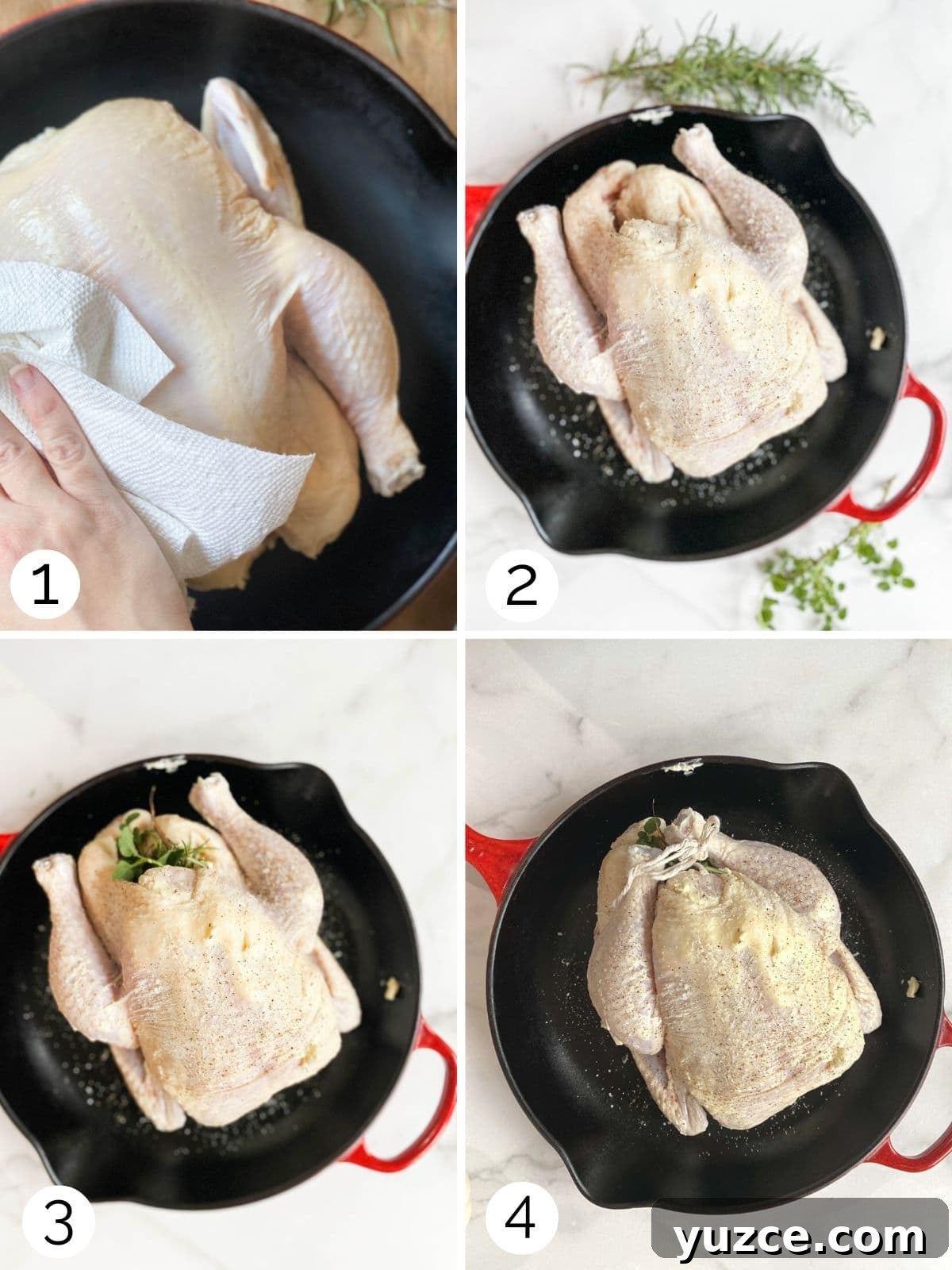
Preheat the oven to 425°F. Remove any packaging from inside the cavity and pat the bird completely dry with paper towels. Place the chicken breast side up in a large cast iron skillet. Tuck the wings under the bird and tie the legs together with kitchen string.
Gently slide your fingers under the breast skin to separate it from the meat, taking care not to tear it. Rub room-temperature butter or oil underneath and all over the skin, then season generously with kosher salt and freshly cracked pepper.
Step 2: Roast
Put the skillet on the middle oven rack and roast for about 1 hour to 1 hour and 10 minutes, depending on size (a 4-pound bird usually finishes in about 55–60 minutes; a 5-pound bird takes closer to 70 minutes). The chicken is done when an instant-read thermometer reads 165°F inserted into the thickest part of the breast or between the leg and breast, not touching bone.
If the skin is browning too quickly before the meat is cooked through, tent the bird loosely with foil to prevent burning.
Step 3: Cut the chicken
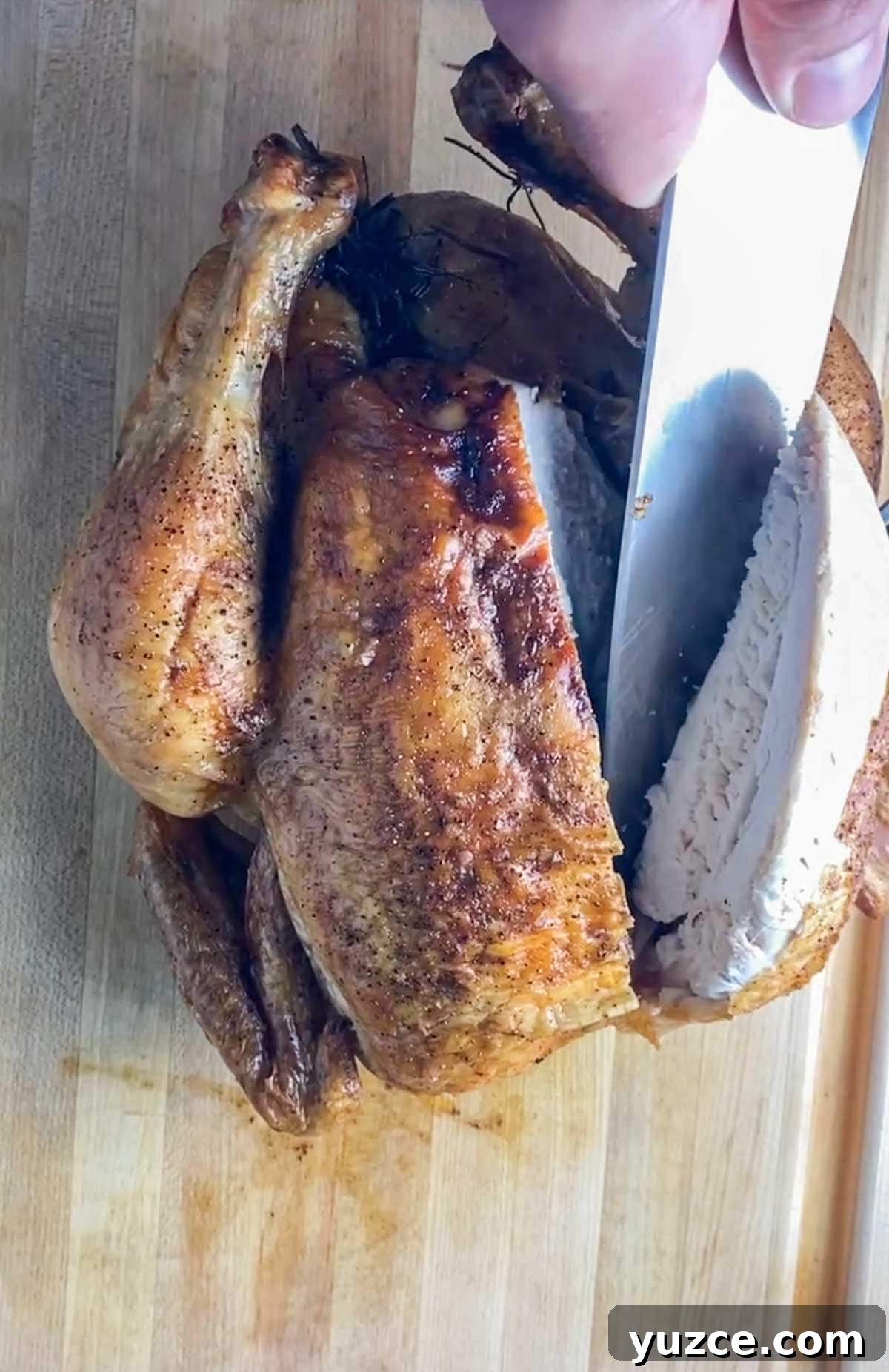
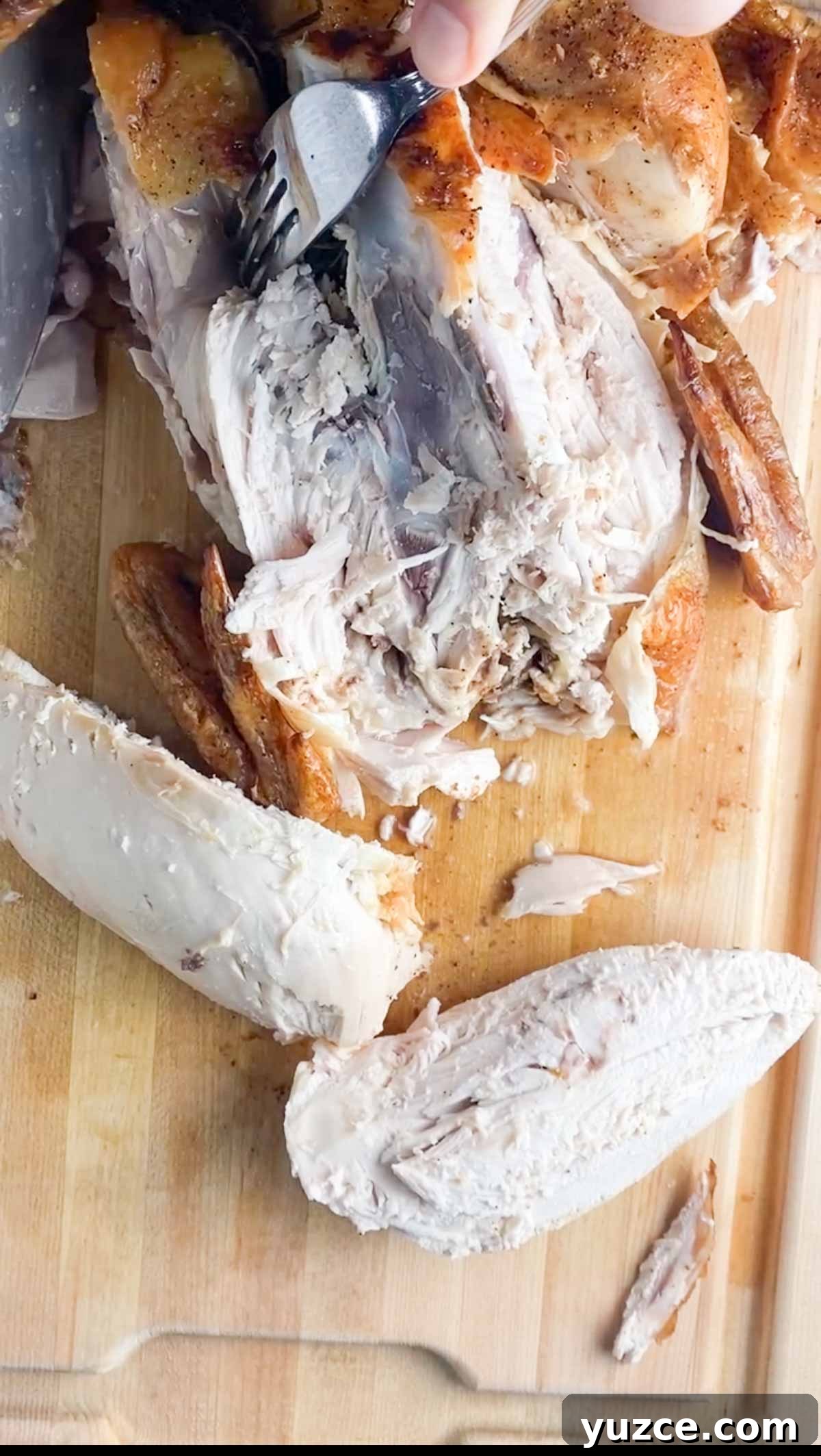
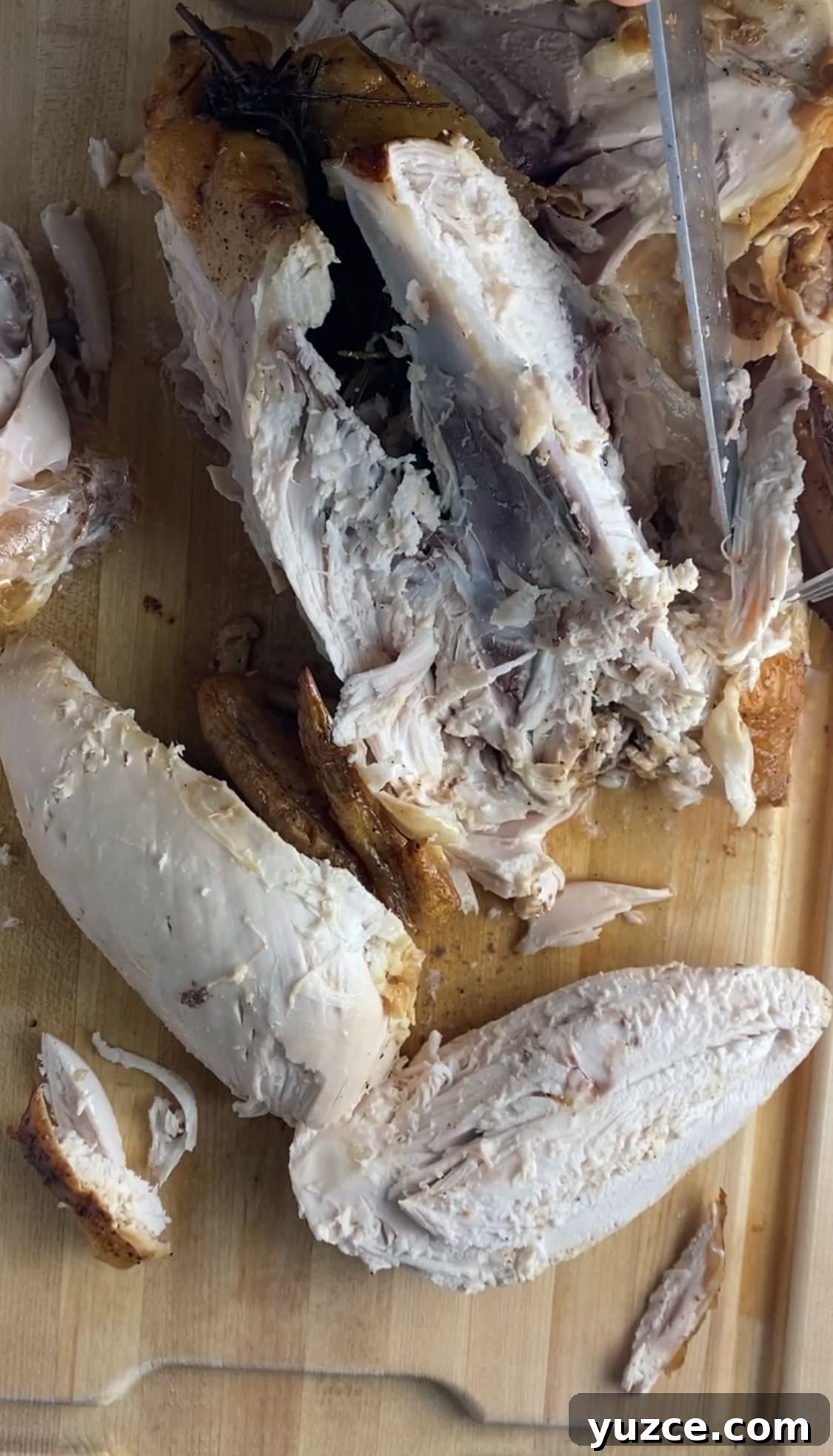
Let the chicken rest briefly, then use a sharp chef’s knife to remove the legs and wings and carve the breasts. Slide the knife along one side of the spine down and cut toward the breast to remove each half. Pull any remaining meat from the carcass with your fingers for sandwiches or soups.
Save the carcass for homemade stock or freeze it for later use.
How to Make Gravy from Pan Drippings
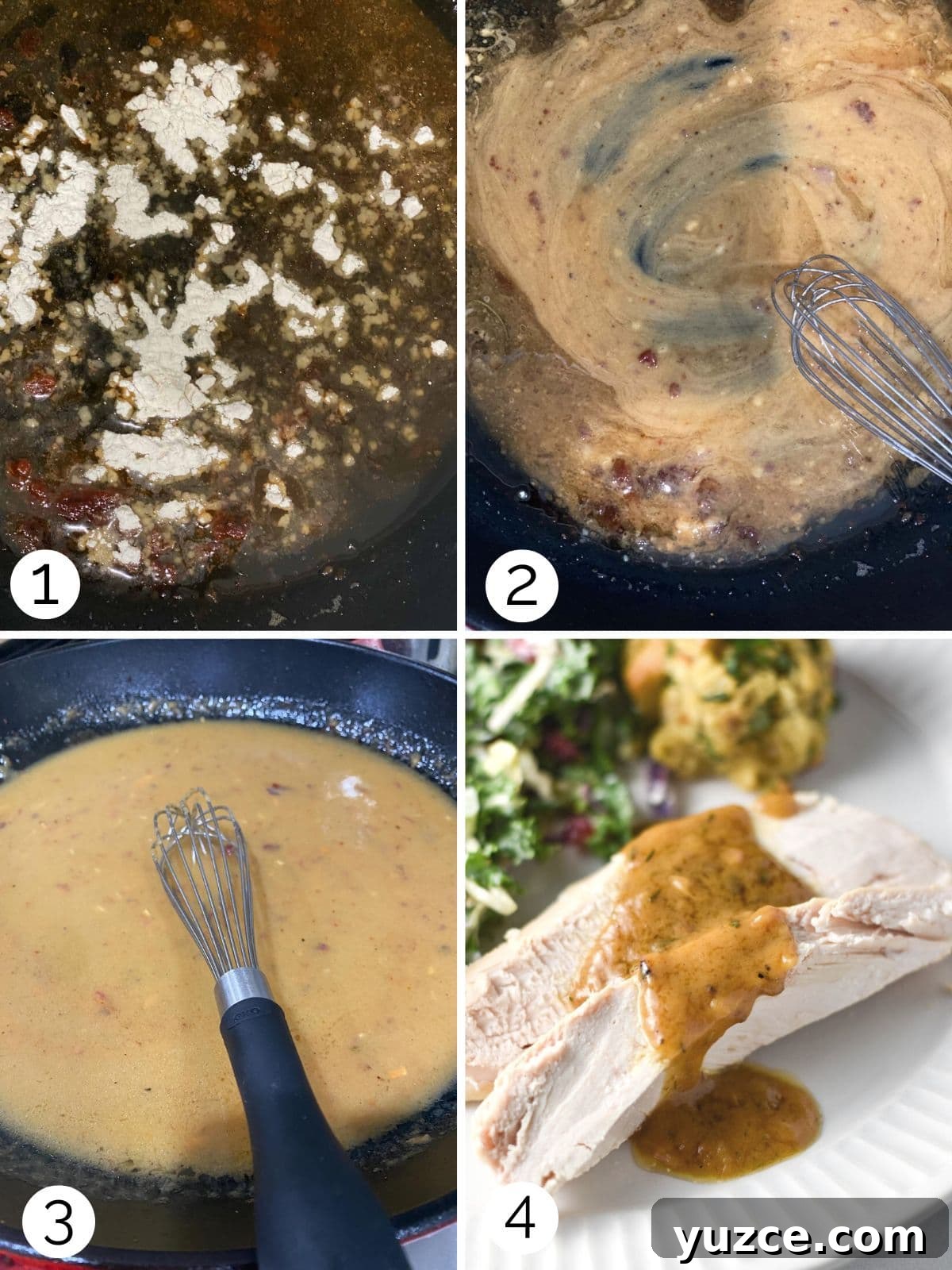
After roasting, you’ll typically have 1–2 tablespoons of pan drippings. If there’s more, save some in a jar for later. To make a quick gravy:
- Sauté 1 small chopped shallot in the skillet drippings over medium heat for about 2 minutes.
- Add 1 tablespoon flour (or arrowroot for gluten-free) and stir to coat the shallots, then pour in 1 cup broth. Bring to a simmer and reduce until thickened, about 3–5 minutes.
- Adjust consistency with more broth if needed, season with salt and pepper, and stir in 1 tablespoon fresh herbs if desired. Serve alongside or spoon over the carved chicken.
Expert Tips for Perfect Roasted Chicken
- Start with a clean oven: Roasting can cause splatter and smoke on older oven residue, so a clean oven reduces unwanted smoking.
- Tent with foil if needed: If the skin darkens too fast, loosely cover the bird to allow the interior to finish cooking without burning the skin.
- Choose a seasoned pan: A pre-seasoned cast iron skillet reduces sticking; maintain seasoning periodically for best results.
Storage and Freezing
Refrigerator: Pull the meat from the bones and store in an airtight container for up to 3 days.
Freezer: Pat the meat dry, place in freezer bags or airtight containers, and freeze up to 6 months.
To defrost: Thaw overnight in the refrigerator or submerge the sealed bag in warm water for 30–60 minutes.
Serving Suggestions
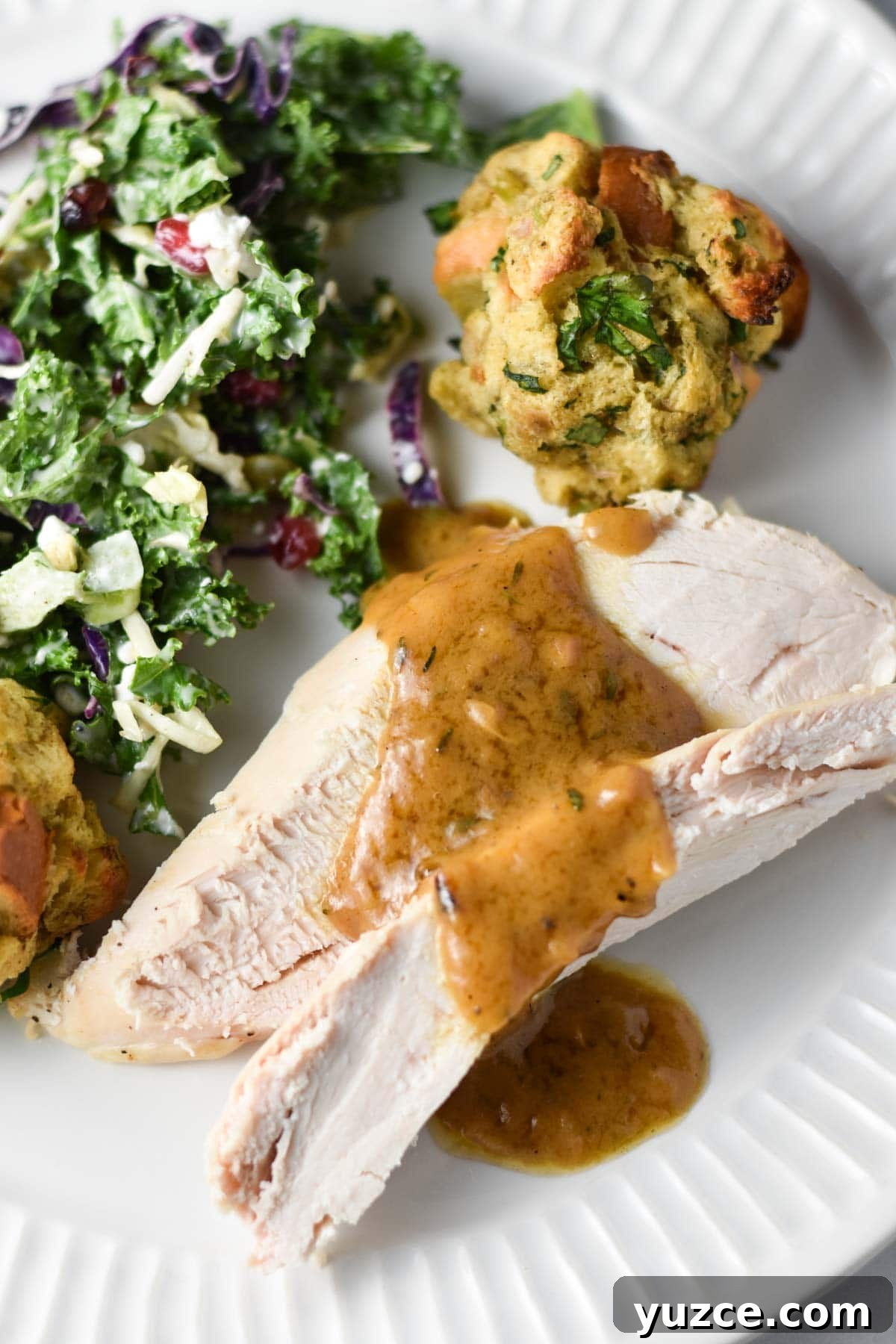
This cast iron roast chicken pairs well with roasted root vegetables, a green salad, or a creamy starch. It can also stand in for turkey at a smaller holiday table. Leftovers work well in wraps, salads, soups, or casseroles.
Recipe FAQ
Generally no—roasting uncovered yields crisp, browned skin. If the top is browning too quickly, move the rack lower or tent the bird with foil.
Use a meat thermometer; the thickest part of the breast or the area between the thigh and breast should reach 165°F without touching bone.
No. You can use a roasting pan or a large casserole dish, but a snug fit helps the bird brown and keeps drippings from spreading and burning.
Use olive oil in place of butter and substitute arrowroot or another gluten-free thickener for flour when making the gravy.
Cast Iron Recipes
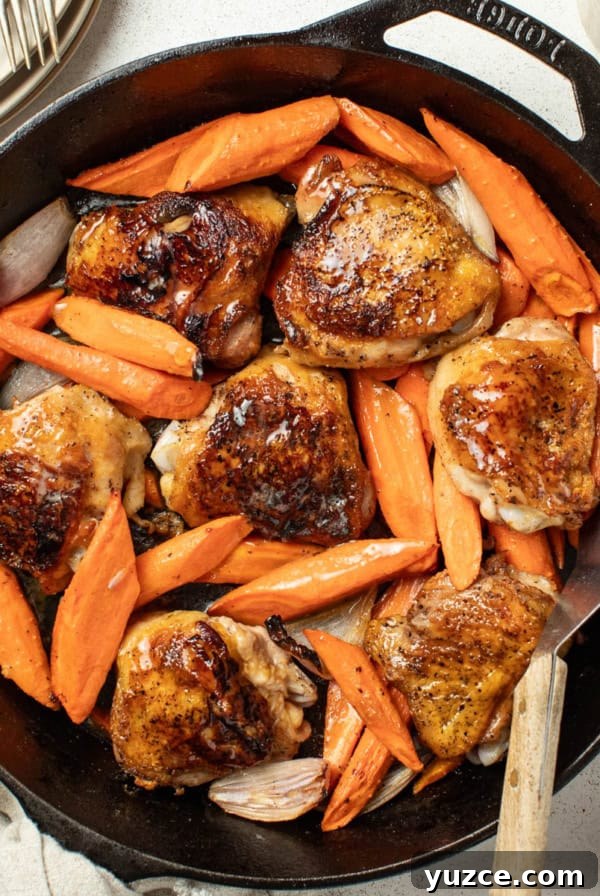
Chicken
Crispy Cast Iron Skillet Chicken Thighs
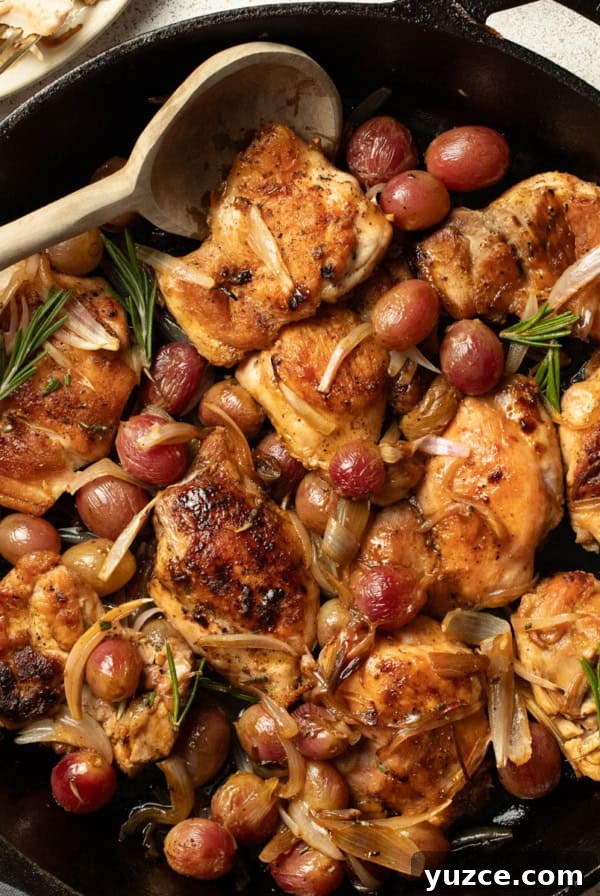
Gluten Free
Pan-Roasted Chicken with Grapes and Rosemary
Recipes
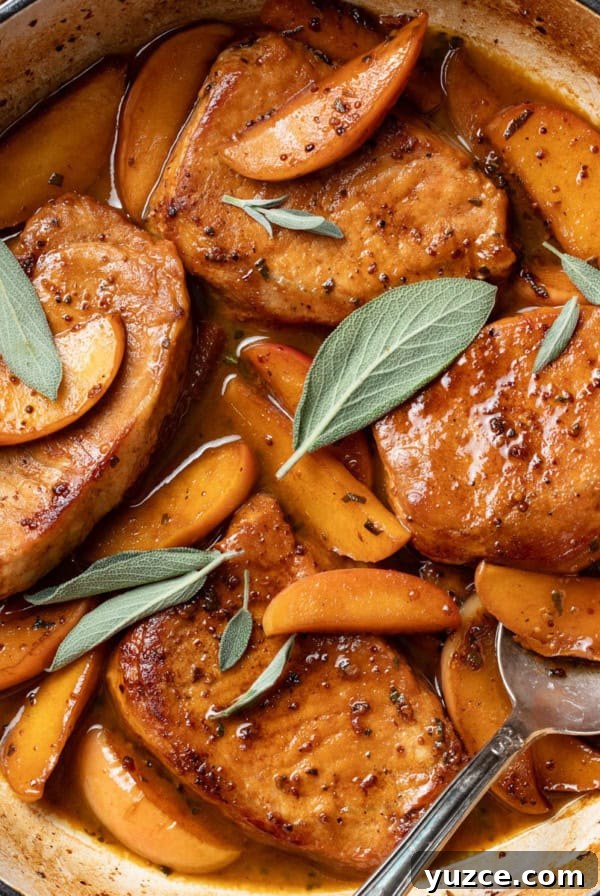
Apple Cider Pork Chops
Chicken
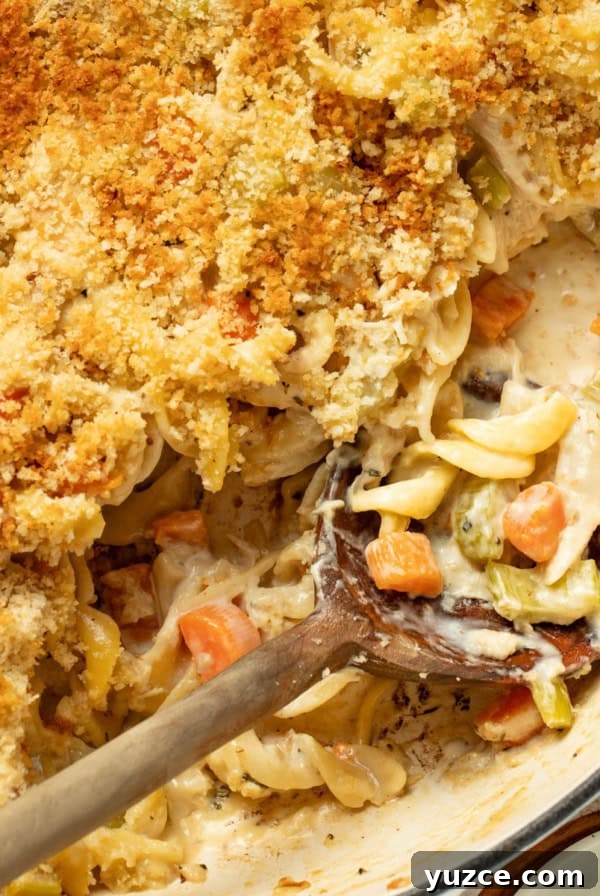
Skillet Chicken Pot Pie Noodles
Love this recipe? Please leave a 5-star review in the recipe card and tag the author on social media to share your results.
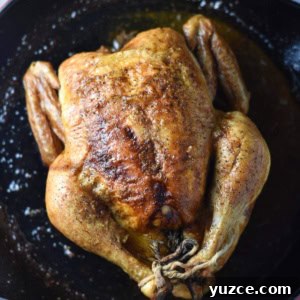
Cast Iron Roast Chicken
Ingredients
Chicken
- 4–5 pound whole chicken, patted dry
- 1 tablespoon room-temperature butter or olive oil
- Kosher salt and freshly cracked black pepper
- Optional: fresh herbs such as thyme, rosemary, parsley, or sage
Gravy
- Pan drippings from the chicken
- 1 cup vegetable or chicken broth
- 1 shallot, chopped
- 1 tablespoon all-purpose flour or arrowroot (for gluten-free)
- 1 tablespoon fresh herbs (rosemary, thyme, or parsley)
Instructions
- Preheat oven to 425°F. Pat the chicken dry and remove any packaging from the cavity. Place the bird breast-side up in a cast iron skillet, tuck the wings under, and tie the legs with kitchen string. If using herbs, stuff them in the cavity.
- Gently loosen the breast skin and rub softened butter or oil underneath and over the skin. Season generously with kosher salt and cracked pepper.
- Roast on the middle rack for about 1 hour; check for doneness at 55 minutes for a 4-pound bird or 70 minutes for a 5-pound bird. The internal temperature should read 165°F in the thickest part of the breast or between the leg and breast. Tent with foil if the skin darkens too fast.
- Remove the chicken and let it rest, loosely covered with foil, for about 10 minutes before carving.
- For gravy: Sauté the shallot in the pan drippings for 2 minutes. Stir in the flour to coat, then add the broth. Simmer until thickened, 3–5 minutes. Stir in herbs and season to taste. Serve with the carved chicken.
Notes
- Air-chilled, organic chicken is preferred for better flavor and browning.
- Use any fresh herbs you have on hand. Root vegetables roast well in the same pan—season and add them at the start.
- Pick remaining meat from the carcass for sandwiches, salads, or soup. Freeze the carcass for stock if not using within a few days.
- For extra brightness (if not on a restricted diet), add 1 tablespoon fresh lemon juice to the gravy before serving.
Nutrition
Carbohydrates: 5 g,
Protein: 41 g,
Fat: 39 g
Nutrition information is an approximation and should be used as a guide.
Like this? Leave a comment below!