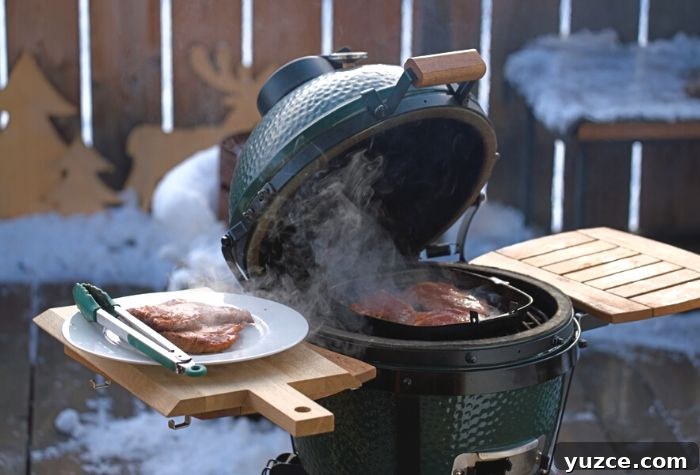
Embrace winter grilling with confidence. This guide covers practical do’s and don’ts, essential tips, and simple strategies to help you grill safely and successfully in cold weather.
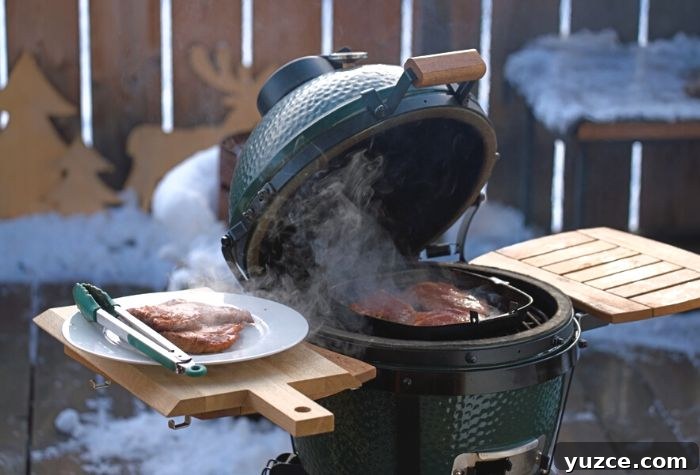
- Can You Grill in the Winter?
- Find the Right Location
- Consider Grill Type
- Ensure Good Visibility
- Check Your Fuel
- Have Your Tools on Hand
- Do Some Winter Cleaning
- Check for Extra Guests
- Keep Your Grill Covered
- Allow Extra Time to Preheat Your Grill
- Grill With the Lid Closed
- Adjust Your Cooking Times
- Stay Food Safe
- Pick an Easy Recipe
- Dress for the Job
- Check Hoses & Regulators
- Be Prepared
- Never Bring the Grill Inside
Winter grilling brings new challenges: colder ambient temperatures, wind, ice, and shorter daylight. These conditions affect heat retention, fuel consumption, and safety. With a few adjustments and the right mindset, you can produce the same great results you expect in summer.
Mastering cold-weather grilling means planning: protect your grill from the elements, allow more preheat time, use appropriate lighting and tools, and monitor temperatures closely. Follow the tips below to make winter barbecues enjoyable and reliable.
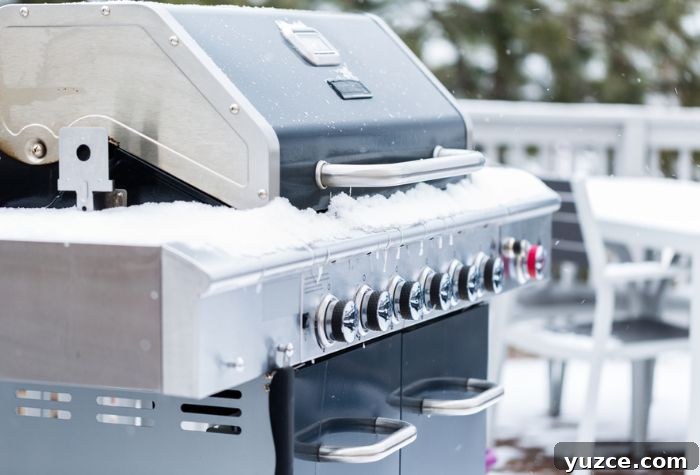
Can You Grill in the Winter?
Yes. Many home cooks and barbecue fans grill year-round. Winter grilling requires more attention to preheating, wind protection, and surface safety, but it is fully achievable. With the right prep—extra fuel, shelter from wind, reliable lighting, and accurate thermometers—you can enjoy grilled meals throughout the cold months.
Find the Right Location
Choose a spot with some shelter from wind and a safe, clear path to your door. Shovel snow and clear ice so you can move safely between the grill and the house. Position the grill where walls or buildings block prevailing winds while keeping the unit a safe distance from combustible surfaces.
Consider Grill Type
Different grill types perform differently in winter. Charcoal grills take longer to come up to temperature and use more fuel. Gas grills can suffer reduced flow if propane tanks get cold. Pellet grills need power and dry pellets. Know how your grill behaves in low temperatures and plan accordingly.
Ensure Good Visibility
Shorter days mean you’ll often be grilling in low light. Install outdoor lighting, wear a headlamp, or use a heat-resistant grill light mounted to the hood. Proper lighting helps you monitor food and prevents accidents.
Check Your Fuel
Cold weather increases fuel consumption. Stock extra charcoal and keep it dry. For gas grills, make sure propane tanks are full and consider a spare tank. A fuel gauge or scale can help avoid mid-cook surprises.
Have Your Tools on Hand
Gather spatulas, tongs, thermometers, seasonings, and any other essentials before you head outside. Avoid repeated trips indoors over slippery surfaces. Use a grill caddy or apron with pockets to keep tools organized and within reach.
Do Some Winter Cleaning
Clear snow and ice from the grill before use. Defrost frozen hinges or knobs in a warm area if needed, using warm water or gentle heat. Remove grease and food debris that can cause flare-ups; frozen grease can be harder to clean but should be scraped away before lighting the grill. On gas units, inspect burner ports and jets—yellow flames indicate a clog.
Check for Extra Guests
Small animals and insects sometimes seek shelter inside unused grills. Open and inspect the grill and remove any nests or debris before lighting to avoid hazards and odors.
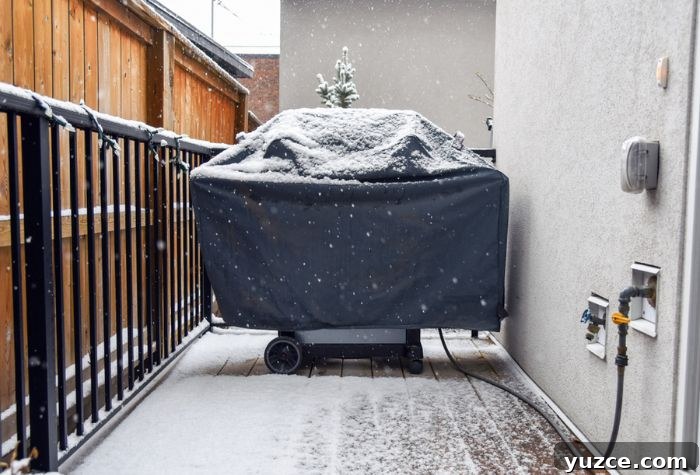
Keep Your Grill Covered
Use a well-fitting, weatherproof cover when the grill is not in use. A cover protects the unit from snow, ice, and moisture, reducing prep time and prolonging the grill’s life.
Allow Extra Time to Preheat Your Grill
Preheat times can double in cold conditions. Give the grill ample time to reach and stabilize at cooking temperature before you put food on. This improves searing and helps maintain consistent heat during cooking.
Grill With the Lid Closed
Keep the lid closed as much as possible to retain heat and reduce the effect of cold air on internal temperatures. Opening the lid frequently lets heat escape and lengthens cook times.
Adjust Your Cooking Times
Expect longer cook times in winter. Use a quality probe thermometer to verify internal temperatures rather than relying solely on grill gauges. For smokers or long cooks, insulating the unit with a purpose-made jacket or heat-resistant blanket can help maintain stable temperatures.
Stay Food Safe
Because cooking can take longer, always confirm doneness with a probe thermometer. Follow safe internal temperature guidelines for different proteins to reduce the risk of foodborne illness.
Pick an Easy Recipe
Winter isn’t the best time to experiment with complex techniques. Choose reliable, well-practiced recipes that are forgiving and quick to execute. Simpler dishes reduce stress and make the most of limited daylight and colder conditions.
Dress for the Job
Wear appropriate, close-fitting clothing and heat-resistant BBQ gloves. Avoid scarves or loose garments that can catch sparks. A thick apron protects clothing from splatters and helps keep you comfortable while working outside.
Check Hoses & Regulators
Inspect hoses and regulators for cracking or damage, as cold temperatures can worsen wear. Replace any suspect parts before operating the grill to prevent leaks and ensure safe operation.
Be Prepared
Always keep a suitable fire extinguisher nearby when grilling. Grease fires can occur regardless of weather, so have a safety plan and the proper tools on hand to respond quickly.
Never Bring the Grill Inside
Never use an outdoor grill indoors or in an enclosed space. Carbon monoxide and fire risks make indoor grilling dangerous. If conditions are too harsh outside, use the oven or another indoor cooking method instead.