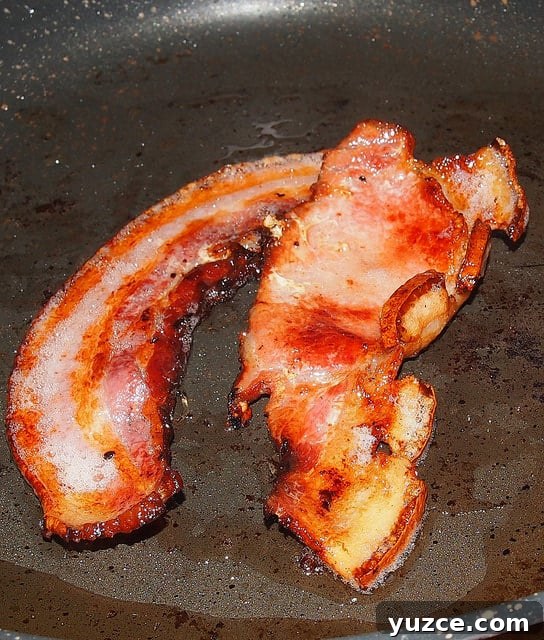
I recently appeared on CBC News Network to discuss a major announcement from the World Health Organization: processed meat is now classified as a carcinogen, alongside substances such as tobacco and asbestos.
When I arrived at the studio, a security guard asked what my interview was about. When I said processed meat, he joked, “You’re not gonna be too popular at the local deli now!” As a dietitian and a foodie, I admit I still enjoy the occasional Canadian bacon.
So is bacon the new smoking?
Not exactly. I tell clients and patients — and I said this on air — that overall diet and lifestyle matter most. Following a balanced approach, such as an 80/20 guideline where about 80 percent of your choices are vegetables, beans and lentils, fruit, nuts and seeds, fish and lean poultry, leaves room for less-healthy options about 20 percent of the time. No diet is perfectly strict, and occasional treats like bacon or sweets can fit into a healthy pattern.
Putting the WHO findings in perspective: roughly 34,000 cancer deaths worldwide each year are linked to diets high in processed meat, compared with about 1 million cancer deaths annually attributed to smoking. That means processed meat is a meaningful risk factor, though not on the same scale as tobacco.
I was asked if the WHO announcement surprised me. The short answer is no. Organizations such as Dietitians of Canada and the World Cancer Research Fund have long recommended limiting processed meat because of links to stomach and colorectal cancers. Processed meats also tend to be high in saturated fat and sodium, which can affect heart health when consumed regularly.
That said, cancer risk is rarely caused by a single food. It’s a pattern over time. How much processed meat is too much? Evidence suggests that consuming about 50 grams a day — roughly two slices of salami or one hot dog — is associated with an 18 percent increase in lifetime colorectal cancer risk. The more processed meat consumed, the greater the risk.
My view: enjoying a couple of strips of bacon on the weekend is fine. Regular daily consumption of processed meats, like salami-filled sandwiches or bologna in a child’s lunchbox, is where concern grows. Consider replacing frequent cold cuts with healthier alternatives: roast chicken leftovers for sandwiches, tuna or egg salad made with Greek yogurt, or spreads like hummus. These swaps reduce processed meat intake while keeping lunches satisfying and nutritious.
What about red meat?
Red meat is categorized differently: the WHO considers it “probably carcinogenic” based on links to pancreatic, colon and prostate cancers. The American Institute for Cancer Research recommends limiting red meat to 18 ounces (cooked weight) per week to lower colorectal cancer risk. To visualize portion size, three ounces is about the size of a deck of cards, so that would allow up to six such servings per week.
Make “Meatless Mondays” a habit
Replacing some red meat meals with plant-based options can further reduce cancer risk. Foods like beans, lentils, chickpeas, and modest amounts of nuts and seeds provide fibre, phytochemicals, antioxidants and lower saturated fat. These benefits make plant-forward meals a valuable part of a cancer-conscious eating pattern.
Processed meat defined:
“Anything transformed to improve its flavour or to preserve it, including sausages, canned meat, beef jerky and anything smoked.”
Red meat defined: Beef, veal, pork, lamb, mutton, horse and goat.
The WHO report also advised avoiding high-temperature cooking methods such as pan-frying and grilling, which can produce chemicals linked to cancer. Simple measures can reduce formation of these compounds: using antioxidant-rich marinades, for example, has been shown to significantly lower the creation of potentially harmful chemicals during cooking.
Have the headlines about processed meat made you reconsider your eating choices? I welcome your thoughts on whether this has changed how you plan meals for yourself or your family.
(Photo credits: Caro Wallis, Lamerie, Taryn and Alpha via Flickr)
This article was originally published on Huffington Post under the title “Get the Cured Pork Off Your Fork”.