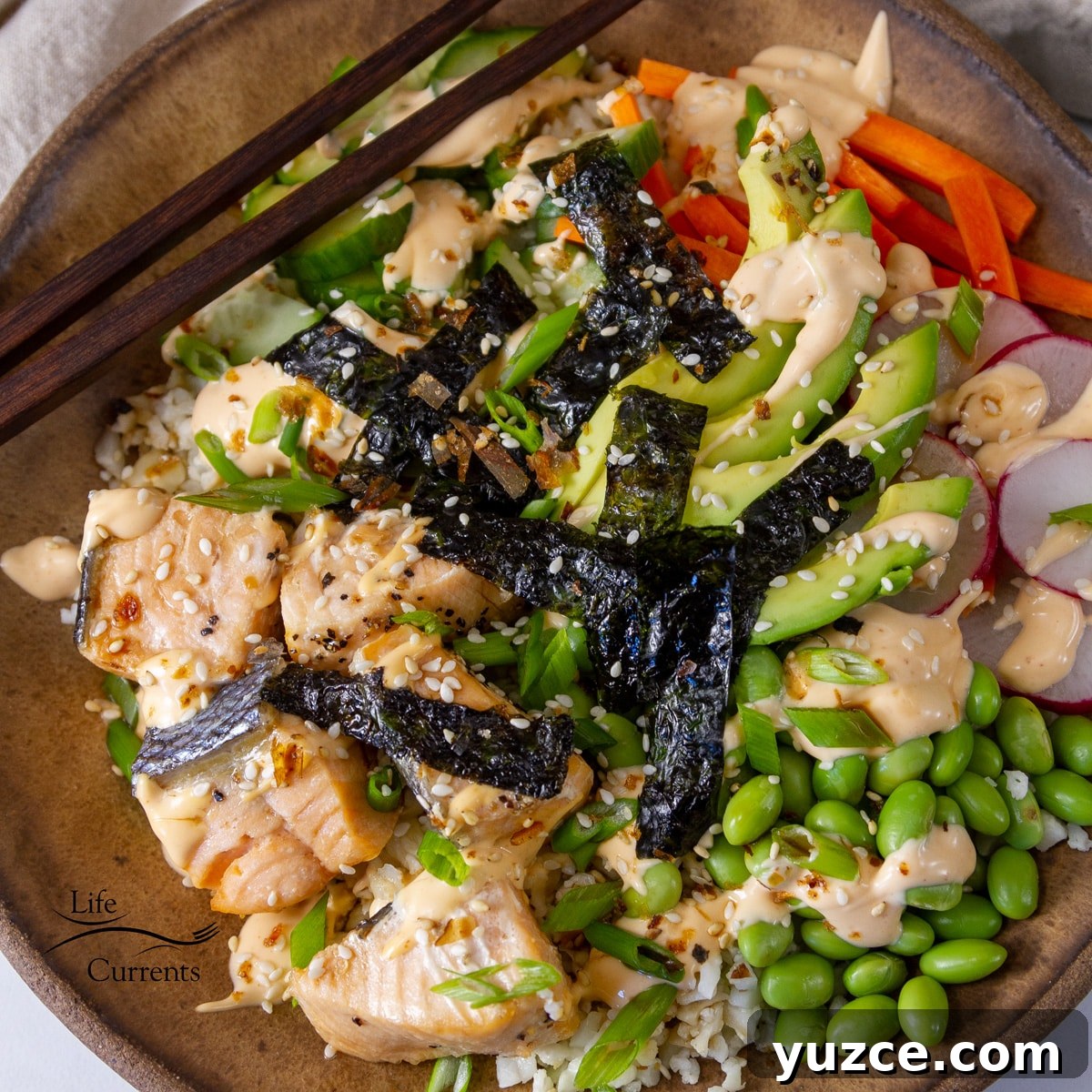
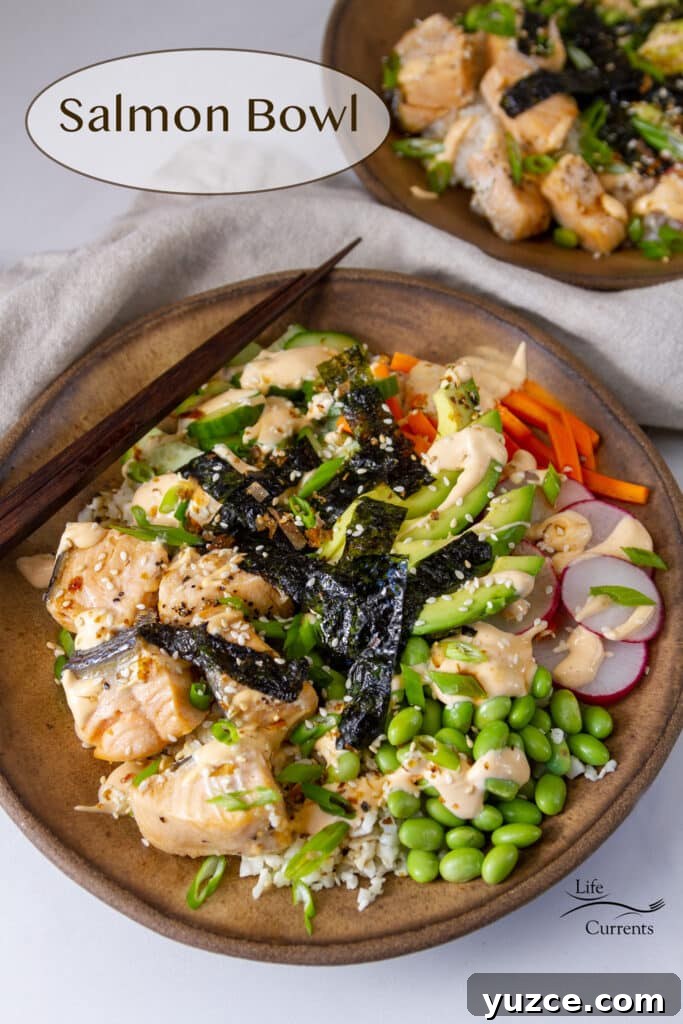
This Salmon Bowl captures the flavors of a California roll in a quick, easy bowl. Choose a base of cauliflower rice or brown rice and layer it with bold sushi-inspired flavors and textures for a healthy, satisfying meal.
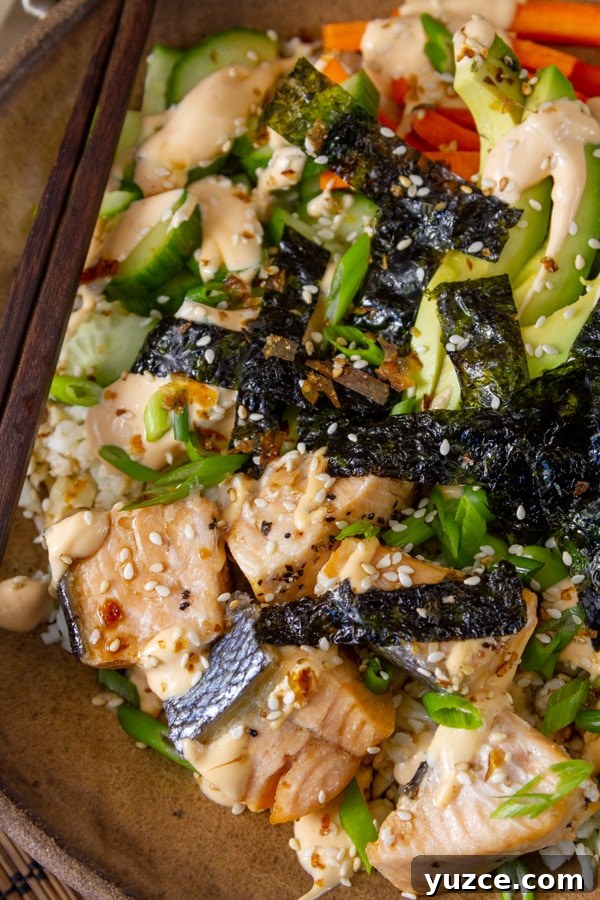
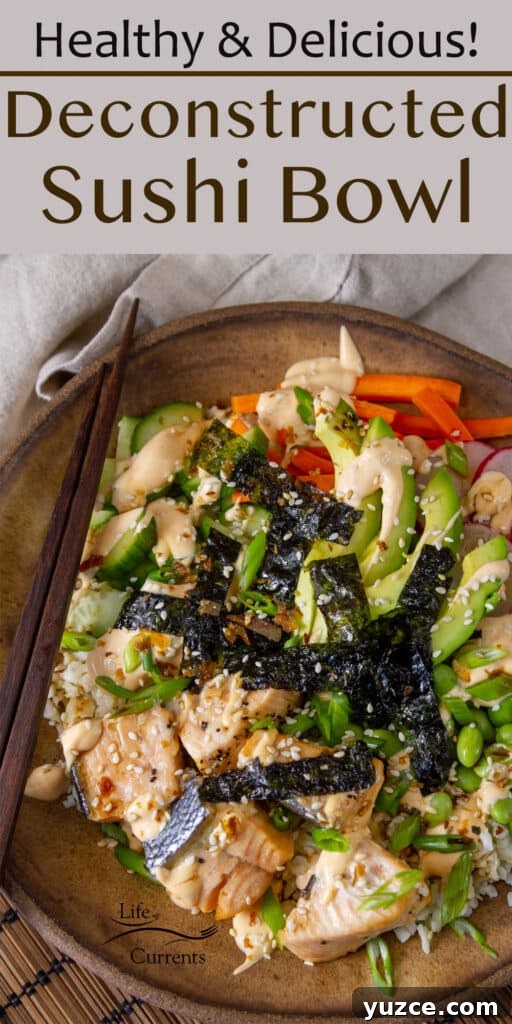
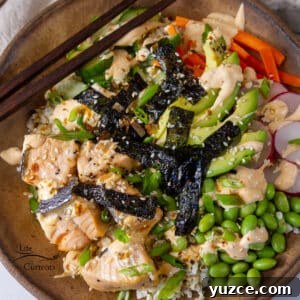
These Deconstructed Sushi Bowls start with fluffy riced cauliflower (or brown rice) and are topped with buttery, cooked salmon nuggets, crisp vegetables, torn roasted seaweed, and a drizzle of spicy sriracha mayo.
This healthy recipe is adapted from Mia Syn’s cookbook Mostly Plant-Based: 100 Delicious Plant-Forward Recipes Using 10 Ingredients or Less. The book offers practical, plant-forward meals and useful guidance on sustainable eating while still allowing for animal foods when desired.
We appreciate your support
If you have questions about the recipe, please leave a comment. I read and respond to comments and try to help readers of all experience levels. If you need clarification on any step, I’ll do my best to answer.
What is a Sushi Bowl?
A sushi bowl is essentially a deconstructed sushi roll: a rice or grain base topped with seafood and fresh vegetables, finished with a small amount of sauce. For this recipe the fish is cooked, which makes the bowl accessible and quick to prepare.
These bowls are light, healthy, and versatile. Swap the cauliflower rice for brown rice or quinoa if you prefer whole grains, add extra avocado, or include pickled or sautéed vegetables to suit your taste. They’re an easy way to boost your daily vegetable intake and customize meals for the whole family.
Easy to make
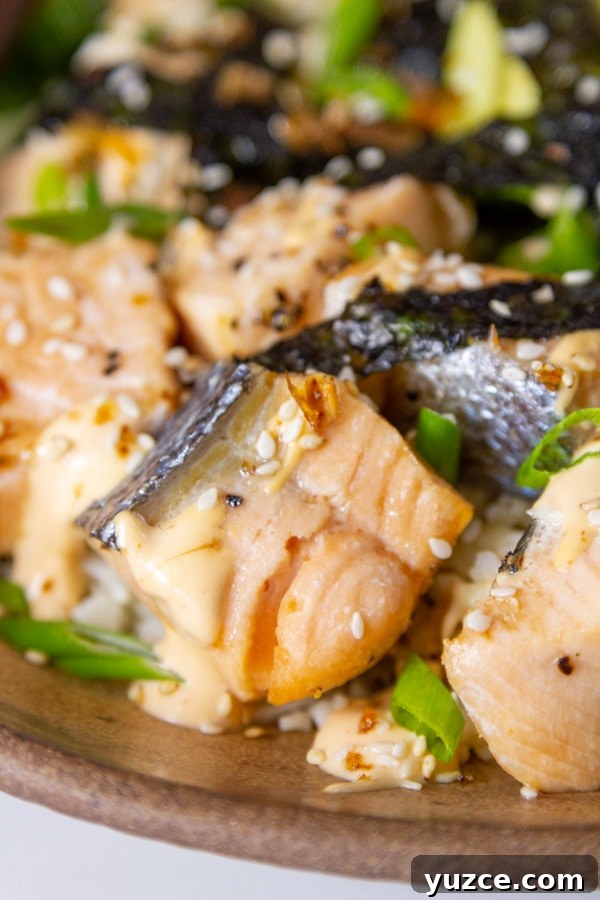
This spicy salmon sushi bowl is a fast way to satisfy sushi cravings at home. Cube, season, and cook salmon in under 10 minutes using either the stovetop or an air fryer. Then assemble the bowls—no rolling required.
For the photos a rich King Salmon was used, but any good-quality salmon or preferred fish will work well. Cooked salmon makes this recipe simple and approachable for most home cooks.
Yes. Salmon bowls are a nutritious meal option: salmon provides omega-3 fatty acids and protein, vegetables supply fiber and vitamins, and cauliflower or brown rice offers a filling base. This recipe emphasizes whole foods and can be adjusted to fit different nutrition goals and budgets.
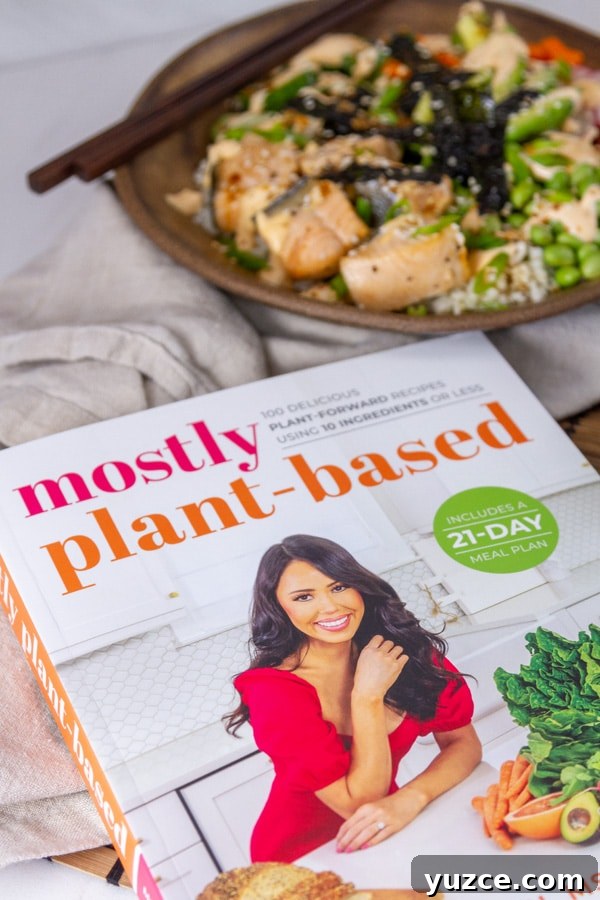
Mostly Plant-Based
This cookbook includes 100 recipes, a 21-day meal plan, and guidance for adopting a plant-forward approach without rigid restrictions. The focus on vegetables, fruits, and whole grains makes it easy to build balanced meals while still enjoying meat, eggs, and dairy in moderation.
I appreciated the customizable suggestions and approachable tone—use what works for you and adjust portions or ingredients to fit your preferences.
How to make
The full printable recipe and detailed measurements are included in the recipe card below. Here are the key steps and helpful tips so you can make the bowl quickly at home.
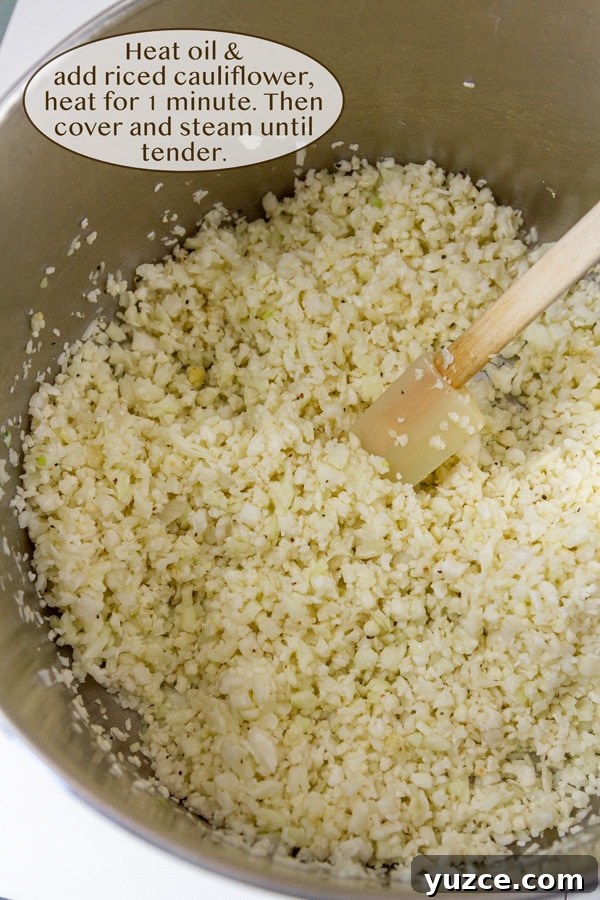
Prepare rice:
Time-saving tip: buy pre-riced cauliflower in the produce section to skip processing at home.
If using riced cauliflower, heat 1 tablespoon oil in a skillet and sauté for 1 minute, then cover and steam until tender, about 5–8 minutes. Season with salt and pepper. If using cooked brown rice, simply warm and season it. While the rice cooks, prep the salmon.
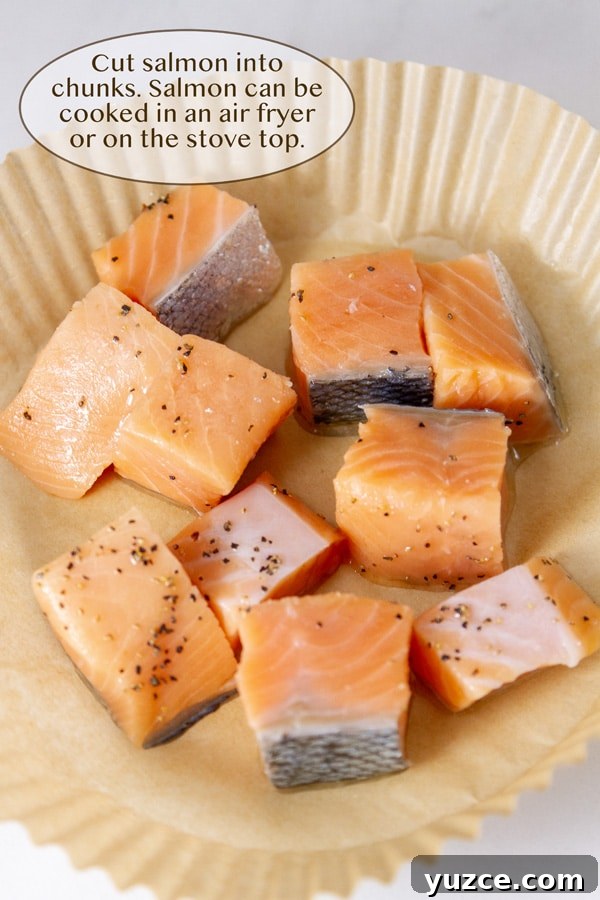
Salmon:
Cut salmon into 1-inch chunks, pat dry, and season with salt and pepper. Avoid cutting pieces too small so they hold together during cooking. If you prefer, remove skin before or after cooking; the skin is edible but depends on personal preference and fish quality.
Stovetop salmon nuggets:
Heat 1 tablespoon oil in a large skillet over medium-high heat. Work in batches, searing salmon in a single layer about 15–20 seconds per side until golden and cooked to 125–130°F internal temperature (roughly 3 minutes per batch).
Air fryer salmon nuggets:
Preheat the air fryer to 350°F. Place cubed salmon on parchment or a liner, drizzle with 1 tablespoon oil, and toss to coat. Air fry 6–8 minutes until the internal temperature reaches 125–130°F. Cooking time varies by thickness and air fryer model.
Assemble the bowls:
Divide the rice between two bowls, top each with half the salmon, carrots, cucumbers, avocado, and soy sauce. For gluten-free bowls use tamari or liquid aminos. Use pre-shredded carrots and seedless cucumbers for convenience if desired.
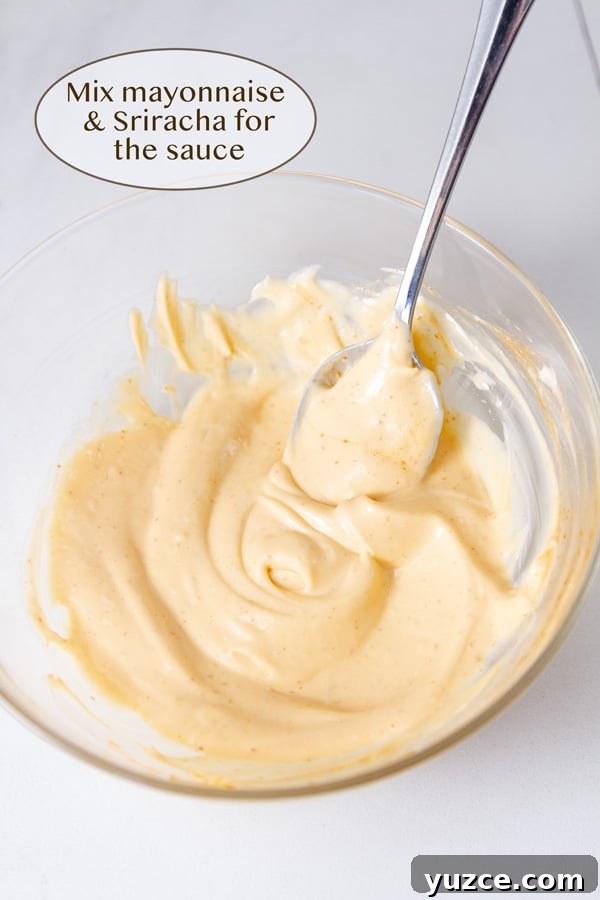
Make the spicy mayo:
Mix mayonnaise and Sriracha in a small bowl, adjusting the Sriracha to your preferred heat. Drizzle over the assembled bowls and finish with torn roasted seaweed.
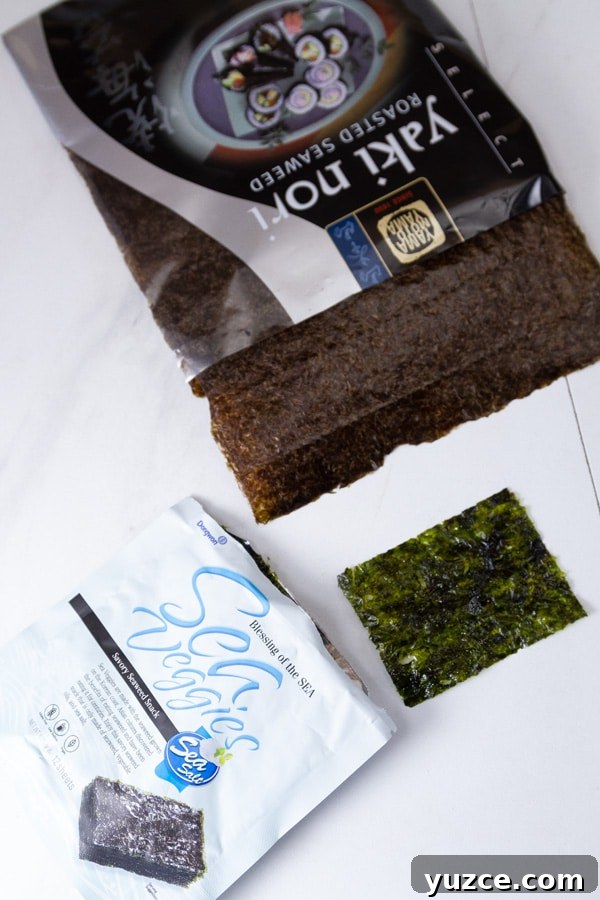
Roasted seaweed notes:
Roasted seaweed snacks are easy to find in well-stocked grocery stores. Use several small snack sheets or half of a full nori sheet, torn into pieces to sprinkle over the bowls for an authentic sushi flavor.
Changes to the recipe
This bowl is highly customizable. Swap or add vegetables and toppings like sweet potato, steamed edamame, green onions, pickled ginger, radishes, sesame seeds, diced mango, furikake, or sliced jalapeños. Swap proteins for shrimp, tempeh, smoked salmon, tofu, or leftover cooked fish. Change the base to quinoa, farro, black rice, or bulgur to vary texture and nutrition.
Yes. Omit the salmon and substitute 1 cup steamed edamame or air-fryer tofu for protein, and use vegan mayonnaise for the spicy sauce.
Can this be made ahead of time?
These bowls are best served immediately. For meal prep, chop and store vegetables separately (slice avocado just before serving), prepare spicy mayo a couple days ahead, and refrigerate cooked components for up to 3 days. Assemble just before serving to preserve texture.
More Favorite Grain Bowls
If you enjoy this deconstructed sushi bowl, try other grain bowls that offer similar variety and nutrition, swapping bases and toppings seasonally to keep meals interesting.
Let’s keep in touch
If you try this recipe, please come back and leave a comment to let us know how it went. Share a photo on Instagram and tag @LifeCurrents — I love seeing your versions.
Recipe
Salmon Bowl
Debi
Pin Recipe
Rate this Recipe
Ingredients
- 1 or 2 tablespoons avocado oil divided use
- 1 pound cauliflower florets from about 1 large head, riced in a food processor, or 2 cups cooked brown rice, warmed
- 8 ounces salmon fillets
- Finely ground Himalayan pink salt and ground black pepper
- ½ cup julienned carrots
- 1 Persian cucumber sliced into half-moons (about ½ cup)
- ½ medium ripe avocado thinly sliced
- 2 tablespoons low-sodium soy sauce
- 4 small sheets roasted seaweed torn or cut into small pieces or strips
Suggested add-ins:
- Sliced green onion
- Steamed shelled edamame
- Pickled ginger
- Sliced radishes
- Sesame seeds
- Diced mango
Easy spicy mayo sauce:
- ¼ cup avocado oil mayonnaise
- 1 to 2 teaspoons Sriracha sauce to taste
Instructions
Prepare rice & prep salmon:
-
If using riced cauliflower, heat 1 tablespoon oil in a skillet, sauté 1 minute, then cover and steam 5–8 minutes until tender. Season with salt and pepper. If using brown rice, warm and season.
-
While the rice cooks, cut salmon into 1-inch chunks, pat dry, and season with salt and pepper.
Stovetop directions for salmon:
-
Heat 1 tablespoon oil in a large skillet over medium-high heat. In batches, sear salmon 15–20 seconds per side until golden and cooked to 125–130°F, about 3 minutes per batch.
Air fryer directions for salmon:
-
Preheat air fryer to 350°F. Place salmon on parchment, drizzle with 1 tablespoon oil, and toss to coat. Air fry 6–8 minutes until internal temperature reaches 125–130°F.
Assemble the bowls:
-
Divide rice between two bowls. Top each with half the salmon, carrots, cucumbers, avocado, soy sauce, and any add-ins. Finish with spicy mayo and torn roasted seaweed.
Make the spicy mayo:
-
Stir together mayonnaise and Sriracha to taste. Drizzle over the bowls and top with roasted seaweed.
Nutrition
Nutritional information is an estimate and will vary based on ingredient brands, portion sizes, and preparation methods.