“I will always choose a lazy person to do a difficult job because he will find an easy way to do it.” – Ziad K. Abdelnour
There are several reasons I don’t post many cheesecakes on the blog: they can be high-maintenance. Traditional cheesecakes often require making and prebaking a crust, baking in a water bath, hitting the exact doneness, and careful cooling.
I do have a couple of no-bake cheesecakes here — a pastel no-bake cheesecake and a dependable no-bake Oreo cheesecake — but for bakers who prefer minimal fuss, there’s an even better option.
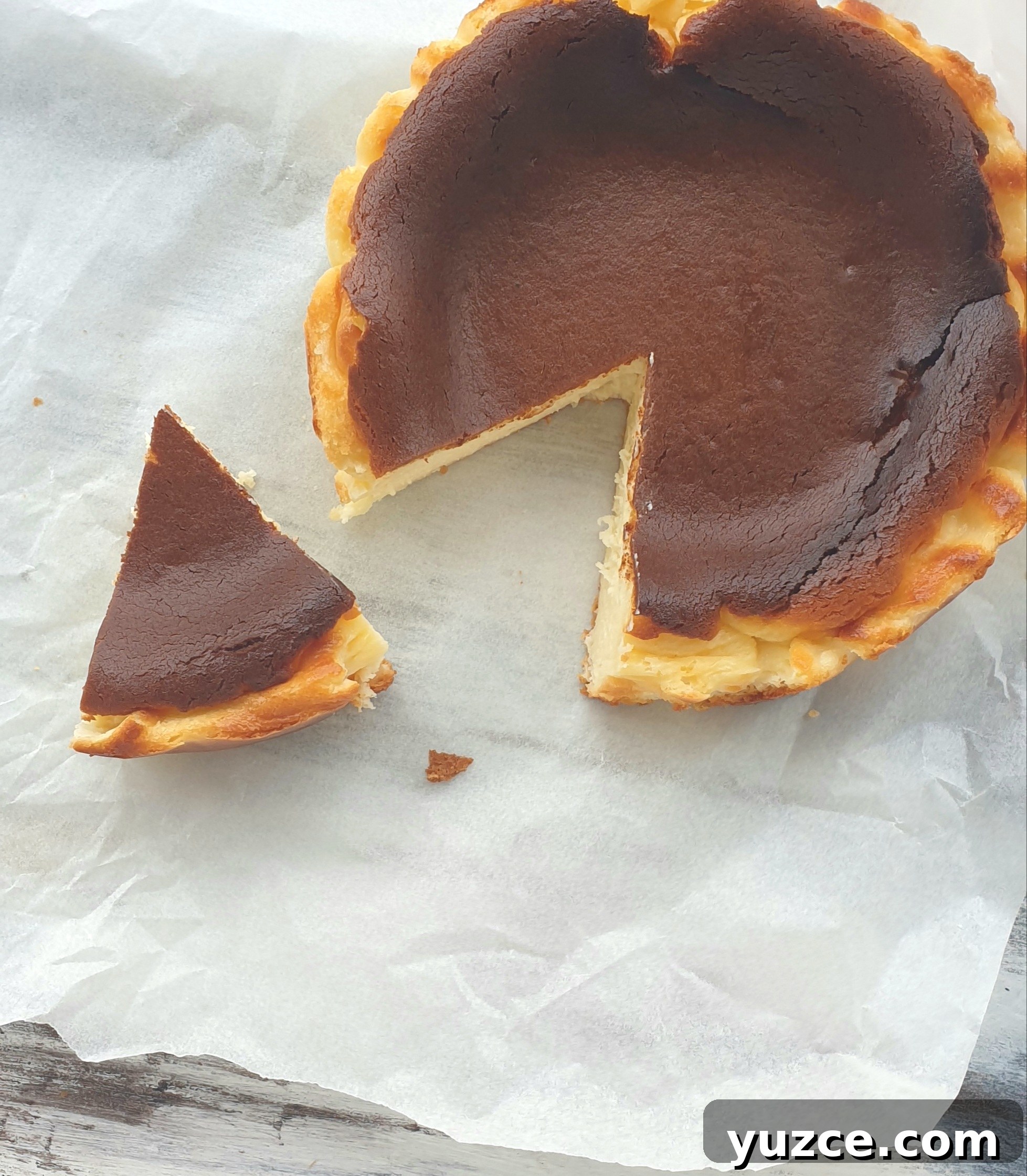
Enter the Burnt Basque cheesecake. This is the anti-cheesecake: no crust, no water bath, no precise temperature drama, and no lengthy chilling required. All the creamy, indulgent flavor of cheesecake without the ceremony.
This cake is meant to be deeply browned on top — it’s called “burnt” or “burnished” for a reason. The first time I made it I used only the bottom heating element and ended up with a cake that was delicious but not browned; I updated the photos in this post after getting the right finish.
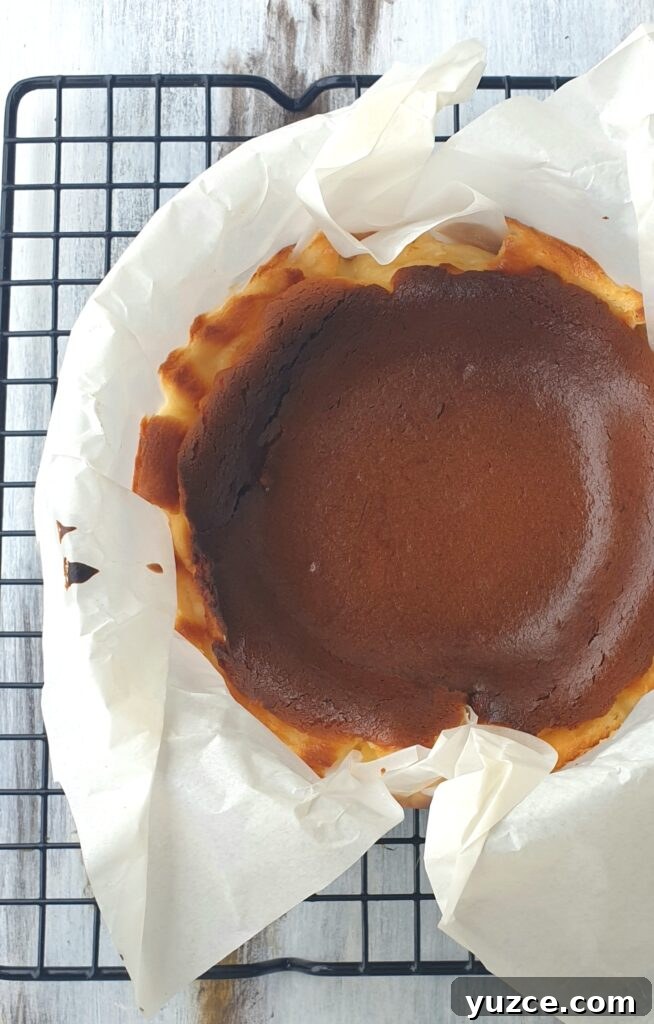
Cheesecakes are usually baked in a springform or removable-base pan. If you have one, use it. If you don’t, you can still make this: press a large sheet of parchment firmly into a regular pan, smoothing the bottom. Don’t worry about crumpled sides — this cake puffs and then collapses a bit as it cools, so the rustic look is expected. Make sure the parchment extends at least a couple of inches above the pan edge because the batter rises significantly during baking.
The original recipe calls for heavy cream; I used 35% cream. If you can’t find heavy cream, you can use a lower-fat cream or substitute 3/4 cup milk with 1/4 cup melted butter. The cake may release a bit of liquid initially, but it firms up as it cools.
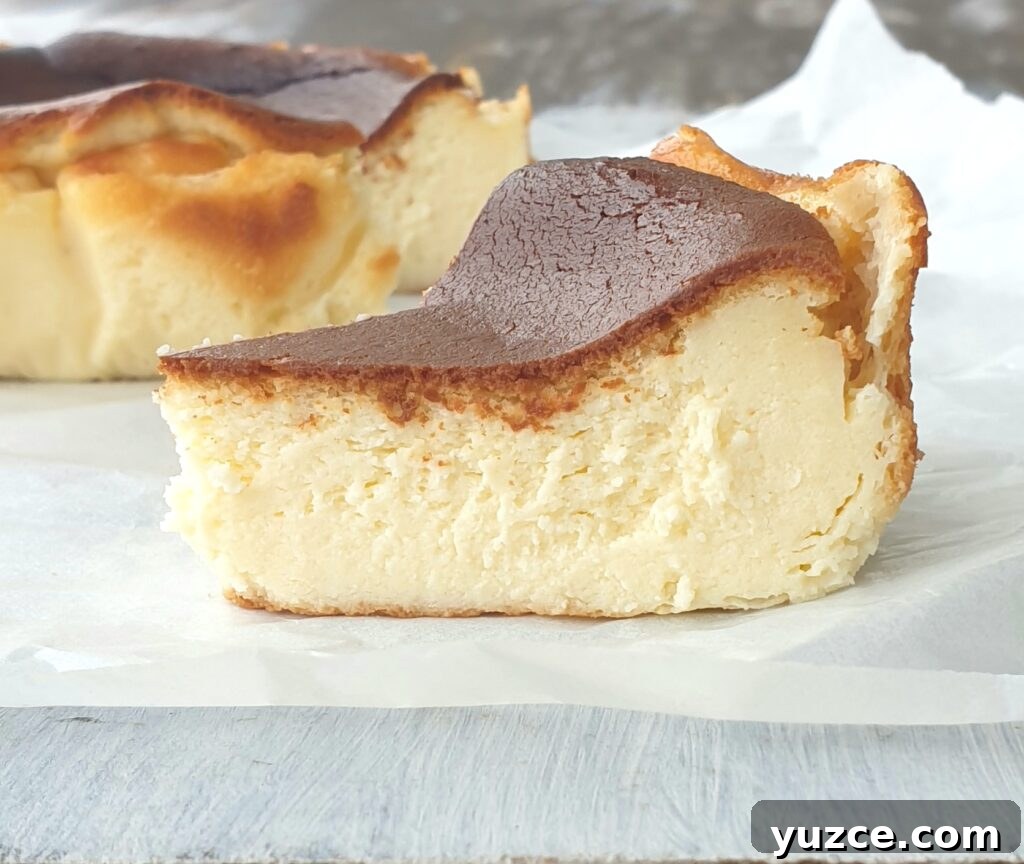
You can serve the Burnt Basque cheesecake warm, right after it’s out of the oven and settled for a few minutes, or chilled after it has set. It’s light and slightly airy yet luxuriously smooth and creamy — and much more forgiving than traditional cheesecakes.
The easiest cheesecake ever!
Ingredients
- 450 grams cream cheese room temperature (about 2 cups)
- 150 grams sugar (castor or granulated; about 3/4 cup)
- 3 eggs at room temperature
- 240 ml cream (about 1 cup; heavy cream preferred)
- 1/4 teaspoon salt
- 1 teaspoon vanilla extract
- 3 tablespoons all-purpose flour
Instructions
- Preheat your oven to 200°C (400°F).
- Grease an 8-inch round pan (springform, loose-bottom, or regular). Line it with a large sheet of parchment, pressing it into the bottom and up the sides so it extends at least 2 inches above the rim. If using a springform, you can line bottom and sides separately. Place the pan on a baking sheet.
- In a bowl, beat the cream cheese and sugar until completely smooth and no sugar granules remain.
- Add the eggs one at a time, beating after each addition until incorporated.
- Beat in the cream, salt, and vanilla until combined.
- Sift the flour over the batter and mix on low speed until just incorporated. The batter should be smooth and fairly thick.
- Pour the batter into the prepared pan.
- Bake for 60–65 minutes. The center should still wobble slightly when you gently shake the pan; the top will be dark brown.
- Let the cake cool for about 5 minutes, then unmold gently and transfer to a wire rack to cool completely.
- Carefully peel away the parchment from the sides before serving.
- Serve at room temperature, or chill and serve later.
Notes
The cheesecake can be made 2–3 days ahead and refrigerated. If you can’t find heavy cream (35% fat), use 20% cream or substitute 3/4 cup milk plus 1/4 cup melted butter. If using a regular pan, allow the cake to cool in the pan and lift it out using the excess parchment. The cheesecake rises a lot during baking and will sink slightly as it cools. For a darker, more “burnt” top, use the top oven element and allow the top to brown deeply. My measuring cup equals 240 ml.
So, ready to try this easy cheesecake? The original recipe is often called “foolproof.” I won’t jinx it, but this style of cheesecake is very forgiving and hard to get really wrong.