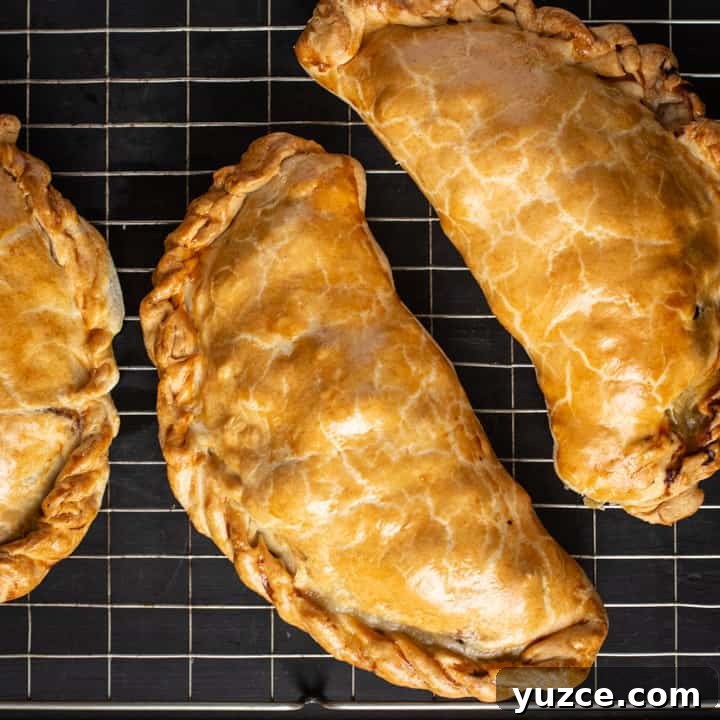
This easy Cornish pasty recipe is delicious and makes an ideal packed lunch, picnic food, or make-ahead camping meal.
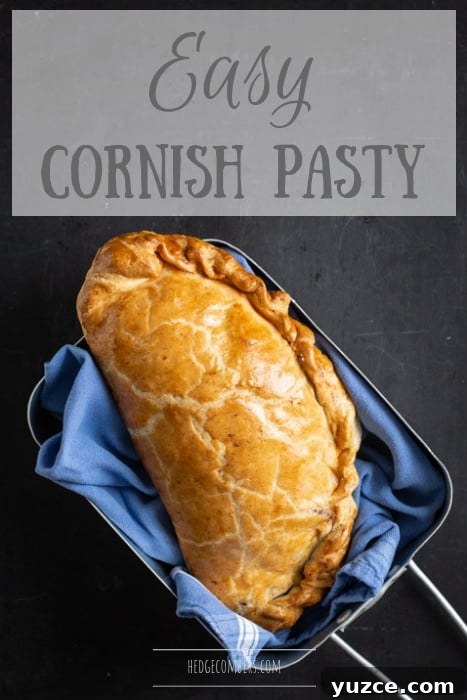
Post updated for 2020
The Cornish pasty is a traditional handheld meal from Cornwall, at the southwest tip of England. It was originally baked for miners to take underground: the crust was designed to be held and discarded, while the filling was eaten. In the 19th century miners often had dirty hands from working with metals and had no access to clean water in the mines, so the thick crimped edge was practical as well as filling.
How to make a great Cornish pasty
Three elements make a truly great pasty:
Pastry. Use a buttery shortcrust that is slightly flaky and turns a deep golden brown in the oven. Avoid pale, underbaked-looking pastry.
Meat. Traditionally beef skirt is used. Remove any gristle, dice the meat finely and distribute it evenly so every bite has a good balance of meat and vegetables.
Seasoning. This is crucial. A proper sprinkle of salt and plenty of black pepper transforms the filling—without it a pasty will taste flat.
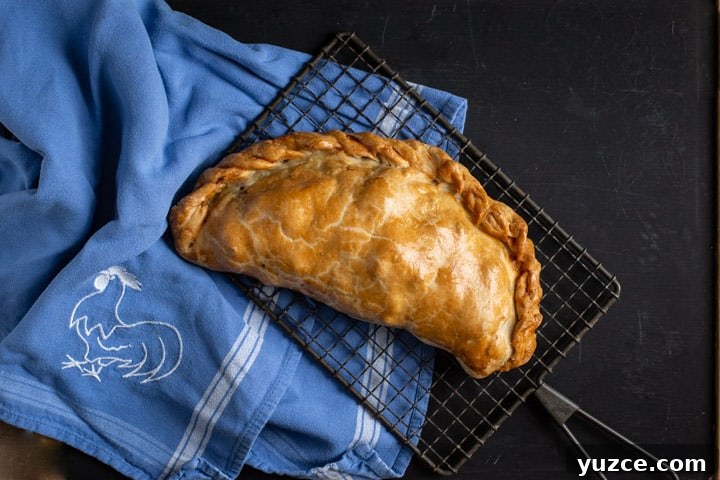
What’s in a Cornish pasty?
Along with pastry, beef skirt and good seasoning, the classic filling includes:
- Potatoes. Use a waxy potato rather than a floury variety so it holds its shape during baking. You can either dice or “chip” the potatoes—the traditional method is to chip small petal-like pieces from a paring knife.
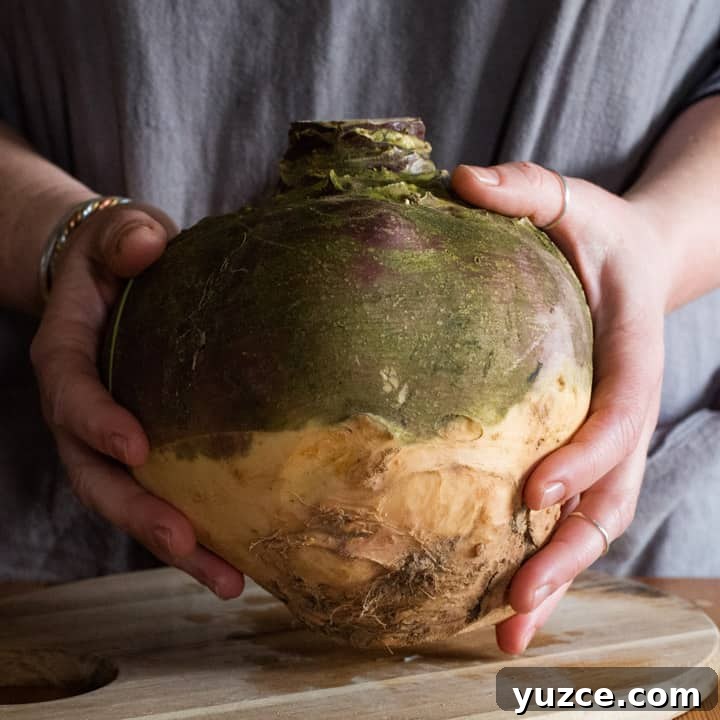
- Swede (yellow-fleshed turnip). For authenticity choose the yellow-fleshed swede rather than a white-fleshed turnip. A little goes a long way in a pasty.
What NOT to put in a Cornish pasty
Avoid carrots and peas in a traditional Cornish pasty. These vegetables are not part of the classic recipe and won’t give you the authentic flavour or texture.
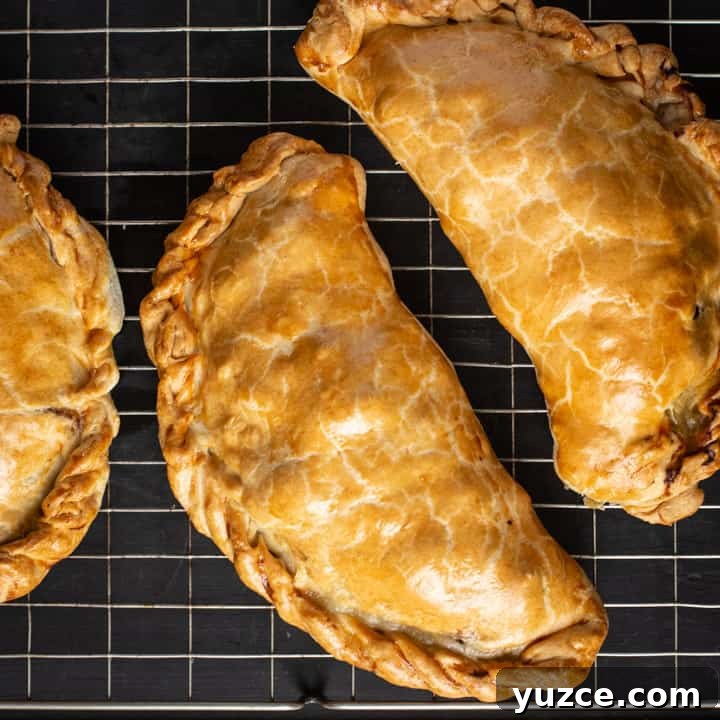
Step-by-step: Traditional Cornish pasty
1: Prep the filling
Chip or dice the potatoes using a small paring knife, removing small pieces that resemble petals. Repeat with the swede. Finely dice the onion. Trim and dice the beef skirt, removing any tough or gristly bits so the meat is tender and evenly distributed.
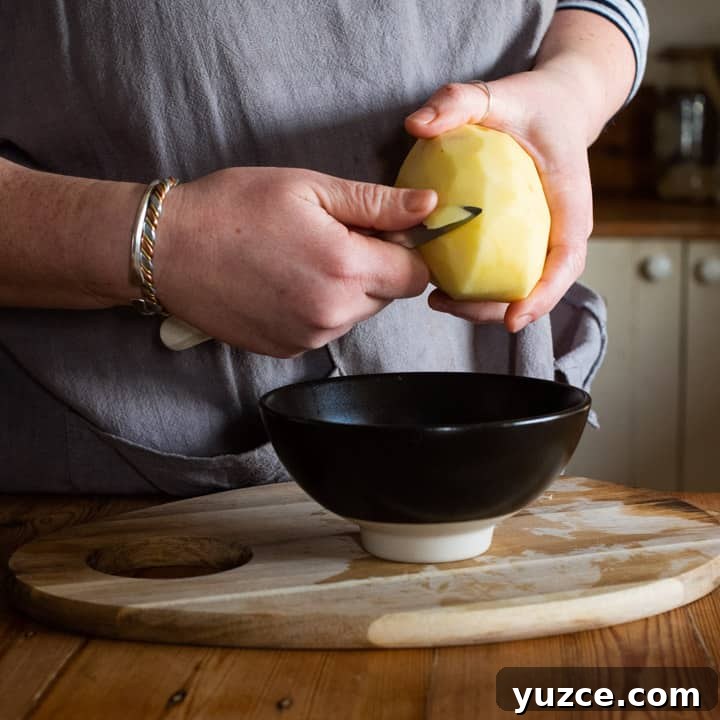
2: Roll out the pastry
Use homemade shortcrust or ready-made pastry. Roll it out and cut circles about 20cm in diameter (trace around a plate if it helps). Lay pastry rounds onto a lightly floured surface.
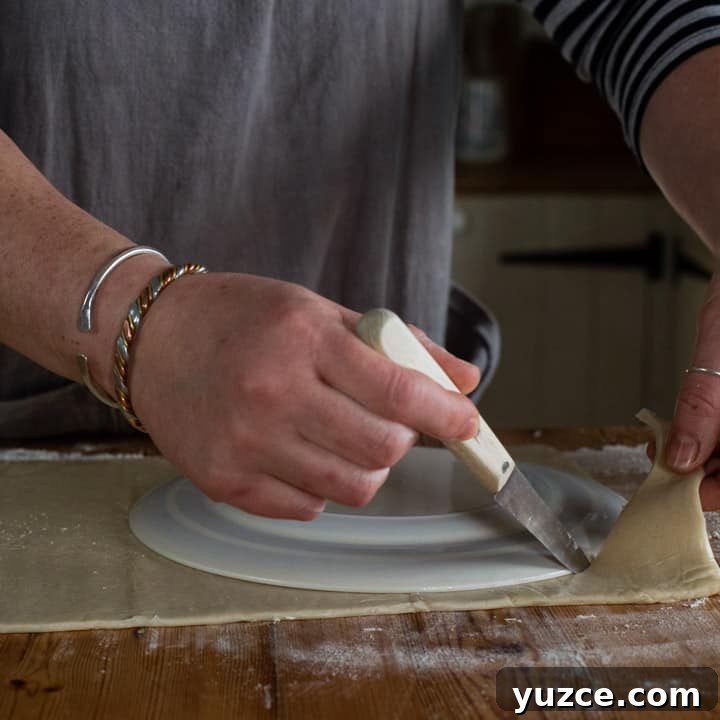
3: Add the filling
Layer the filling roughly in this order if you like: potato first (so it soaks up meat juices), then onion, swede and finally the beef. Spread ingredients evenly so each bite contains a balanced mix.
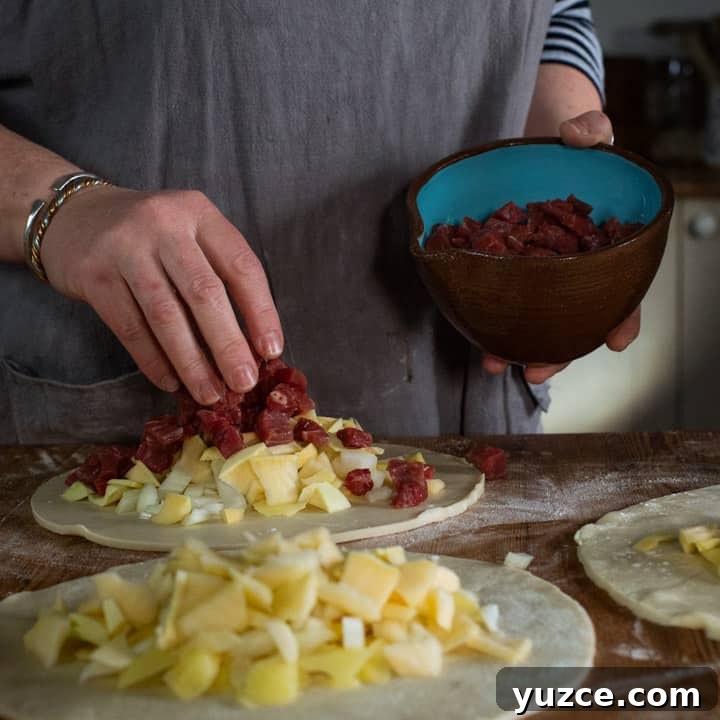
4: Seasoning and fat
Season generously with black pepper and salt. Add a knob of butter to each pasty—divide the butter so it flavors the filling evenly. Traditional recipes sometimes use clotted cream instead of butter. The fat will baste the filling during baking and keep it moist.
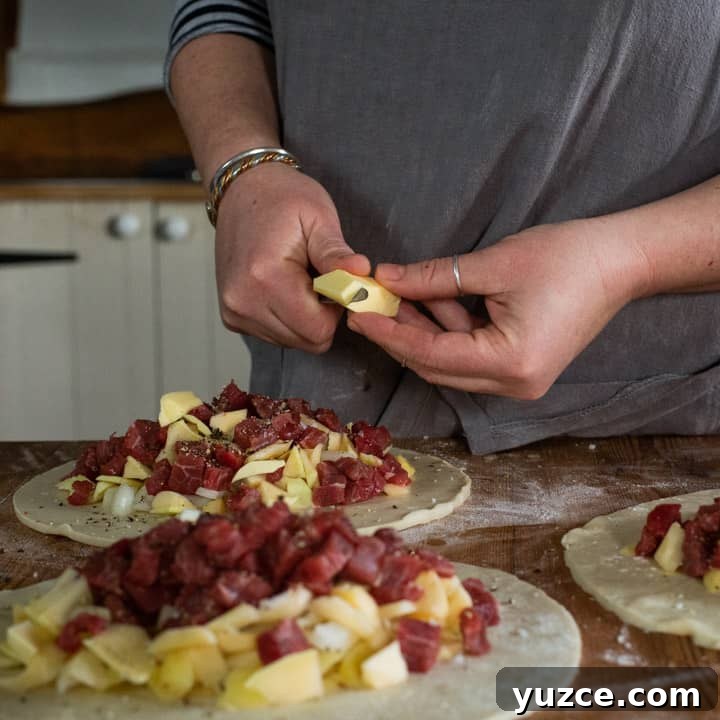
5: Fold and seal
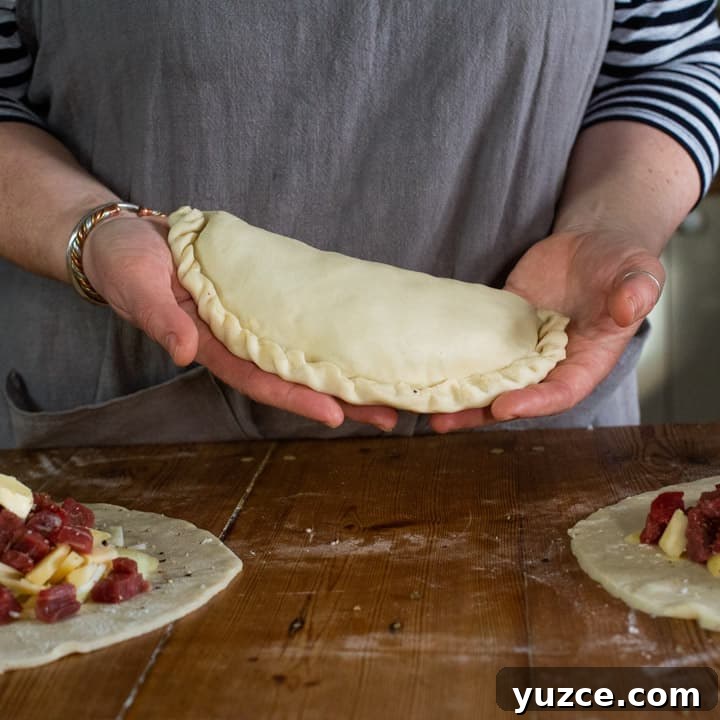
Fold one side of the pastry over the filling to meet the opposite edge. Press the edges together firmly to seal and push any stray bits back inside.
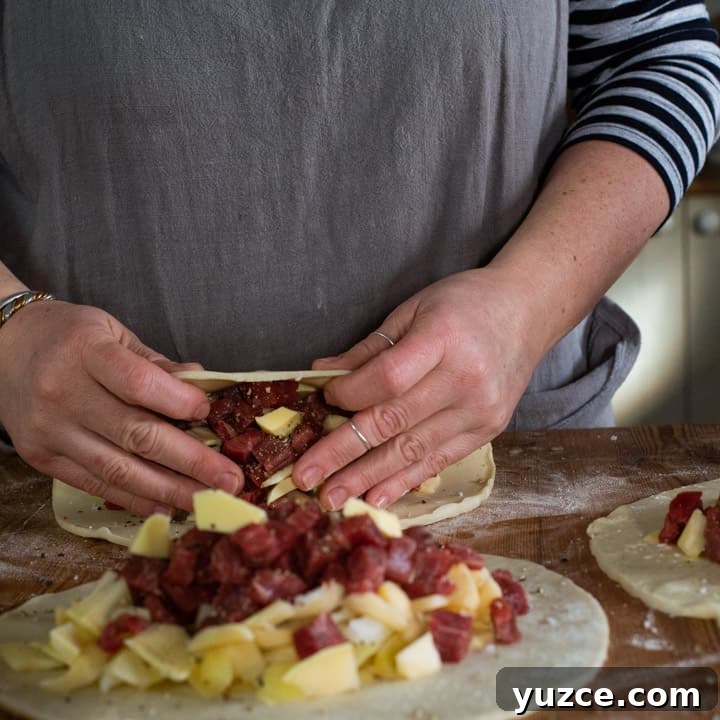
Pinch the seam along the length to close it before crimping.
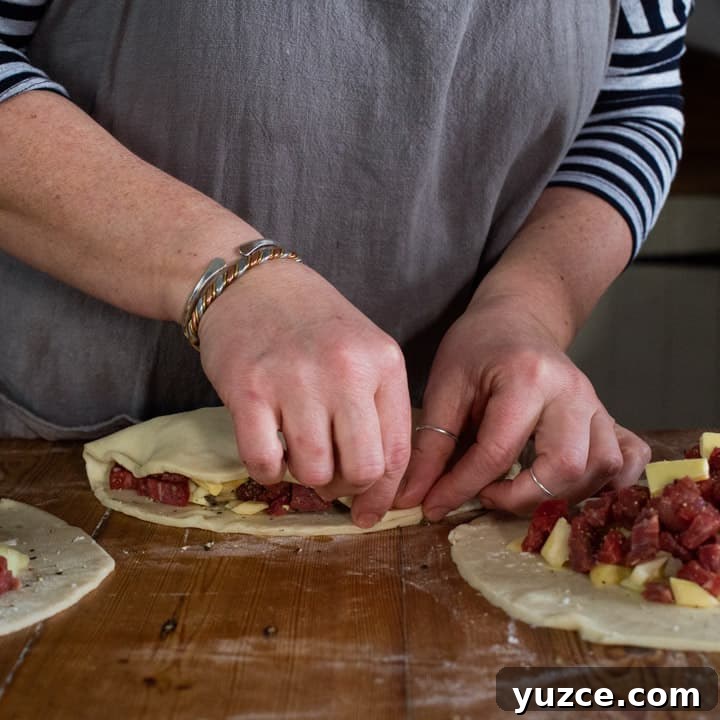
6: How to crimp a pasty
Start at one end. Fold the very end inch of the seam over itself and press down, then fold and press the next inch, repeating along the seam to create the traditional crimp. Tuck any remaining flap underneath for a neat finish.
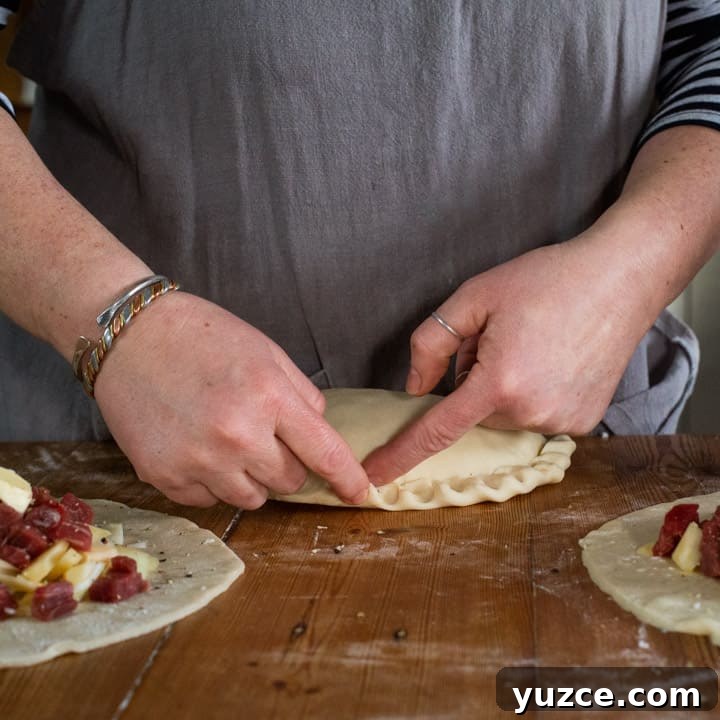
7: Egg wash and bake
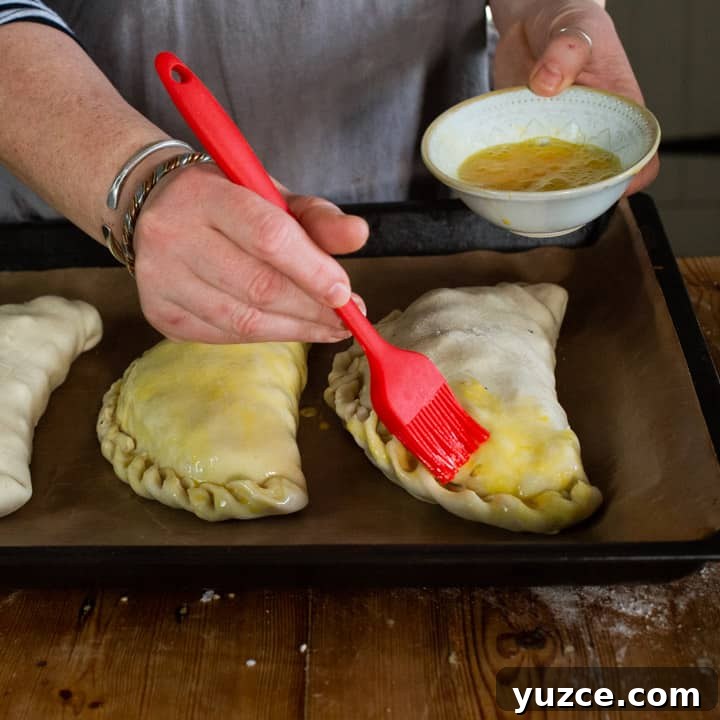
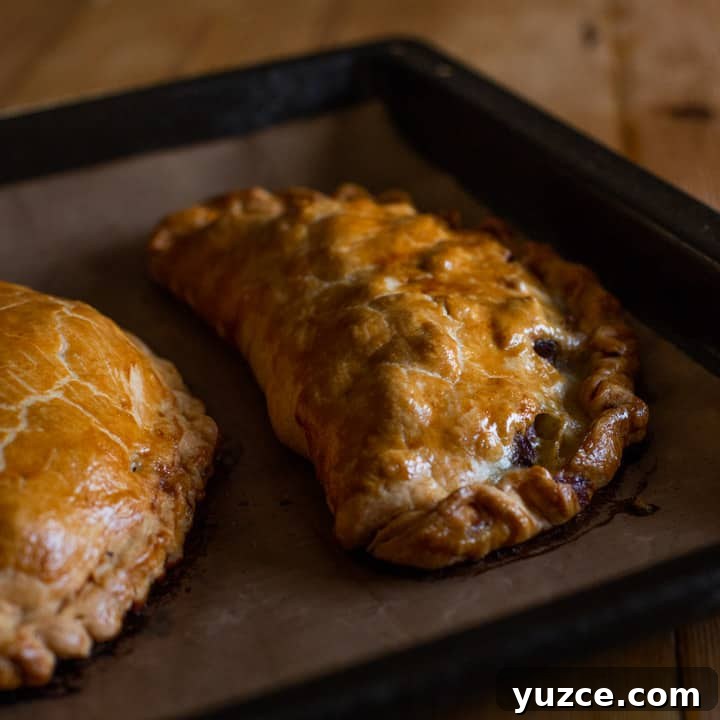
Beat an egg (or use milk if preferred) and brush the whole pasty generously. Place pasties on a baking sheet lined with parchment and bake at 165°C (330°F) for about 50 minutes, until the pastry is deep golden and the filling is piping hot.
Serve hot or allow to cool. Pasties are a full meal on their own, though a simple side salad works well if you want extra vegetables.
Freezing and reheating
Yes—Cornish pasties freeze well. Cool baked pasties to room temperature, chill in the refrigerator, then wrap individually in cling film or foil and freeze. Space them out in the freezer until solid to prevent squashing, then consolidate into a bag if desired.
Defrosting
Defrost overnight in the fridge. Eat cold or reheat by placing an unwrapped pasty on a baking tray in a preheated oven at 180°C (350°F) for about 15 minutes, until heated through.
Cooking from frozen
Preheat the oven to 180°C (350°F) and bake a frozen pasty for about 40 minutes, or until the centre is piping hot.

British, Cornish, English
Easy Cornish Pasty Recipe
-
500
g
shortcrust pastry -
150
g
potato
chipped or diced -
75
g
swede
chipped or diced -
75
g
onion
diced -
200
g
beef skirt
diced -
30
g
butter -
1
egg
beaten -
salt and pepper
generous amounts
-
Preheat the oven to 165°C and line a large baking sheet with baking paper.
-
Roll out the shortcrust pastry and cut three 20cm circles. Lay them on a lightly floured surface.

-
Place 1/3 of the potato, swede, onion and beef skirt in the centre of each circle, spreading the filling evenly so each bite has a mix of flavours.
-
Add a small knob of butter to each pile of ingredients.
-
Season well with salt and a generous amount of black pepper. This step is essential—the pepper should be noticeable.
-
Fold one side of pastry over to enclose the filling, press the edges together and poke any stray pieces back inside.
-
Starting at one end, fold the seam inch by inch to crimp and seal the pasty along its length.
-
Place pasties on the lined baking sheet and brush generously with beaten egg. Do not pierce them—keep the pastry intact where possible.
-
Bake for 50 minutes at 165°C until golden brown. Serve hot or cool fully on a wire rack before packing.







Calories from Fat 198